
Last updated November 25, 2026
 Whole-home duct cleaning
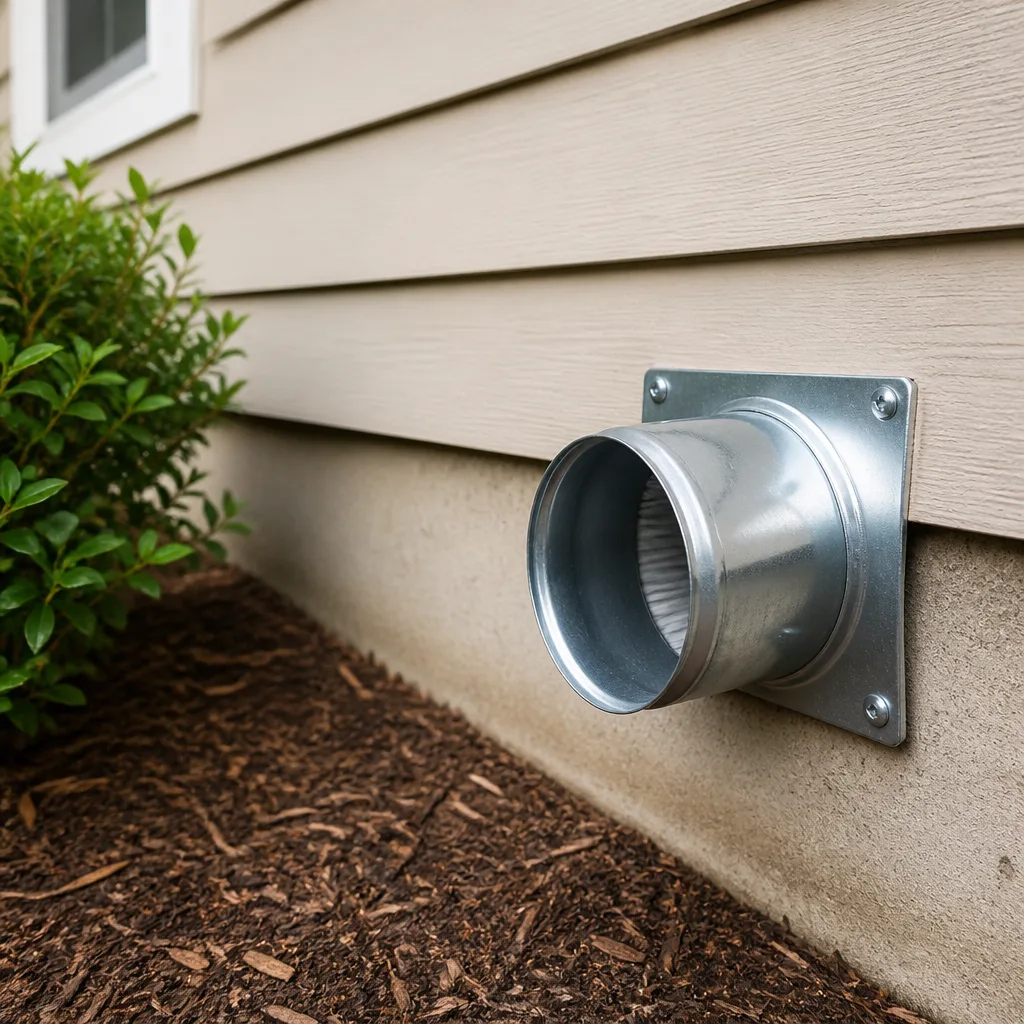 Dryer vent cleaning
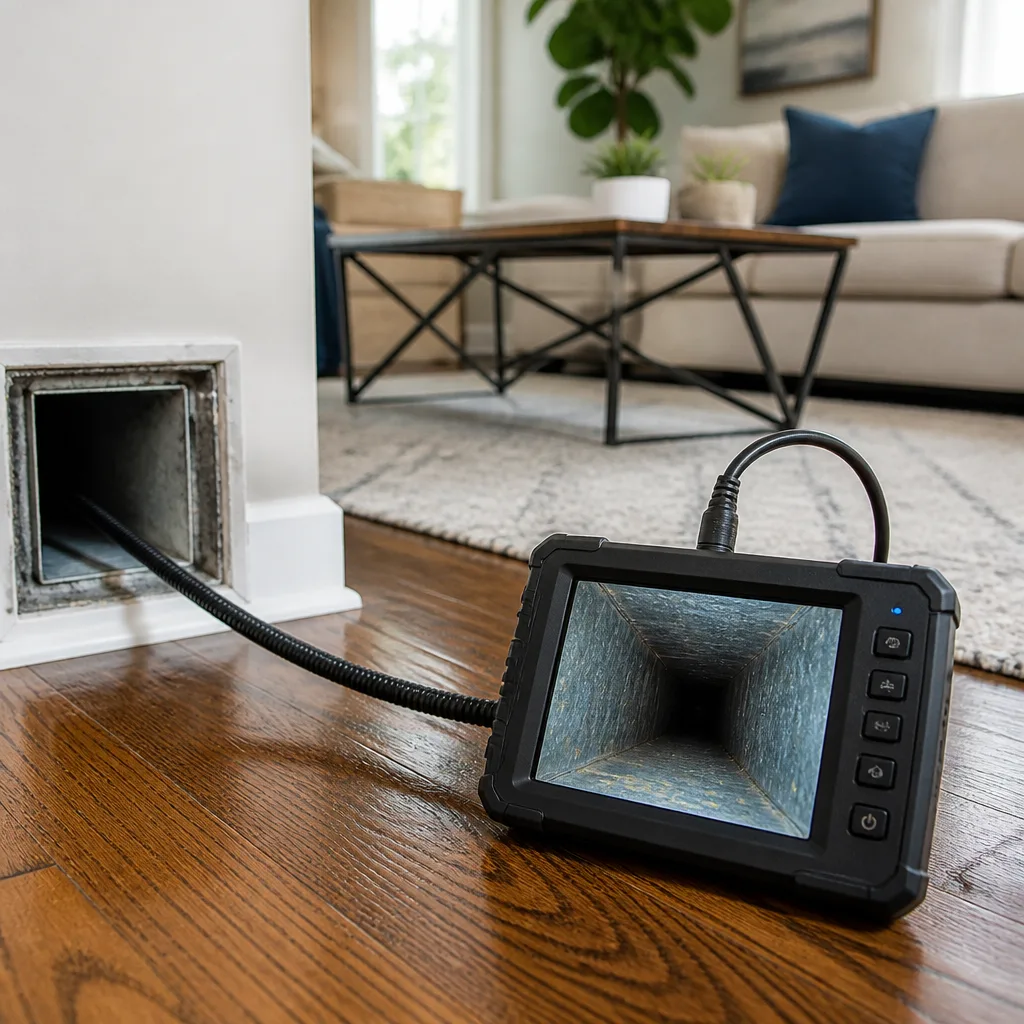 Camera inspection
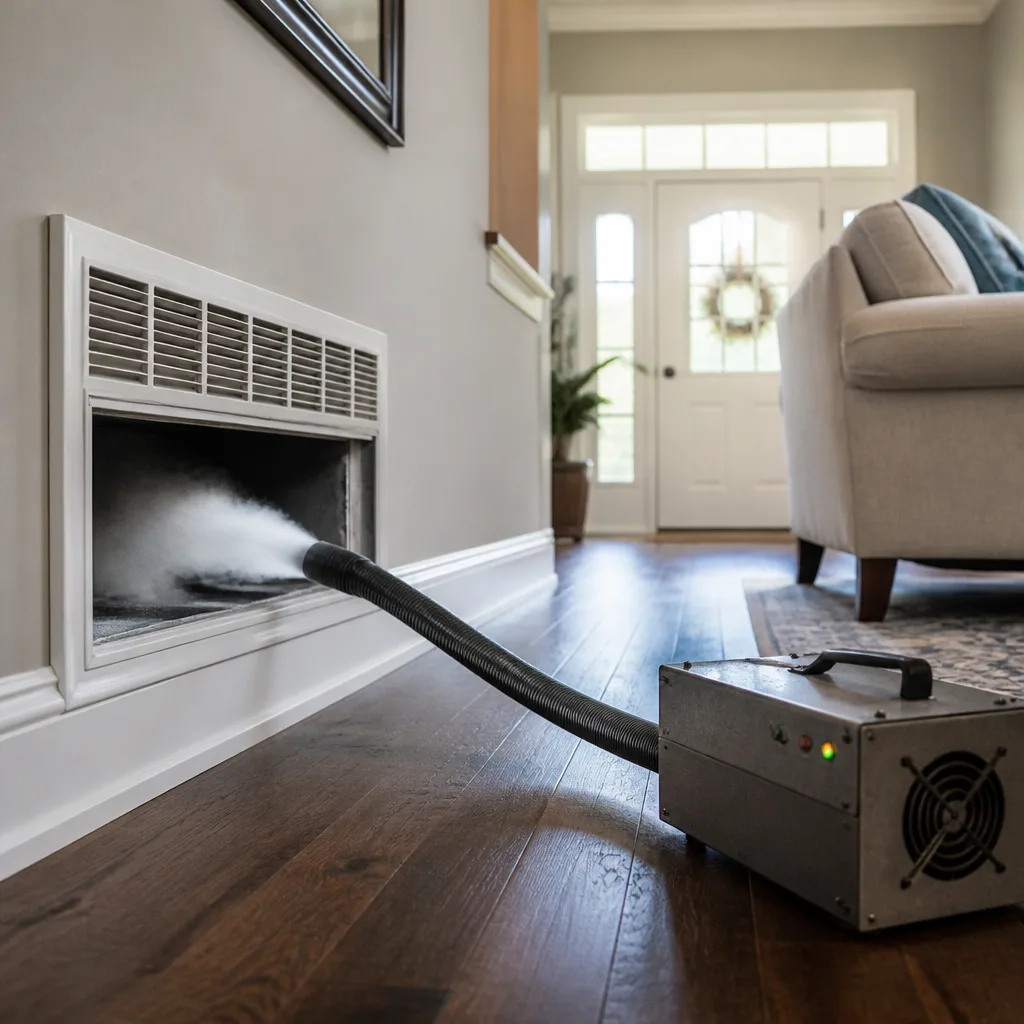 Sanitizing & deodorizing
Whole-system duct and dryer vent check with before-and-after photos - you see exactly what came out of your vents
That "$99 whole-house special" is a bait ad - the real number appears once they are in your hallway, or the "clean" is a shop-vac at the register. We photograph the inside of your ducts before and after instead.
Air Duct Cleaning Warning Signs: A Buena Park Homeowner’s Reference Guide
If a room in your home is consistently 3-5 degrees warmer than the thermostat setting and your HVAC service history is clean, the problem is almost certainly in the duct system, not the equipment. No refrigerant recharge will fix it. Most homeowners in Buena Park misread duct problems as HVAC performance issues, seasonal allergies, or just “an old house being an old house.” That misreading costs money: people replace capacitors, pay for tune-ups, buy air purifiers, and swap filters weekly while the actual source of the problem sits quietly in the ductwork above their heads. This guide teaches you to trace everyday symptoms back to their duct-system origin, so you can act on evidence instead of guesswork.
Quick Answer
The warning signs of duct contamination in Buena Park are uneven room temperatures, musty or chemical odors that appear when the system runs, visible dust patterns at the registers, respiratory symptoms that track HVAC runtime, and post-renovation dust that never fully settles. Any two or more of these together usually point to a duct problem rather than an equipment fault. A professional inspection confirms which part of the system is responsible before any cleaning begins.
Styles & brands we work with
- Whole-home duct cleaning
- Dryer vent cleaning
- Camera inspection
- Sanitizing & deodorizing
Table of Contents
- Airflow Imbalance: Supply vs. Return Restriction
- Reading Odors: Musty, Burning, and Chemical
- What Your Registers Are Telling You
- When Respiratory Symptoms Follow the HVAC, Not the Weather
- Post-Renovation Signs in Buena Park’s Older Housing Stock
- Energy Bills and Runtime Patterns That Don’t Add Up
- A Step-by-Step Way to Diagnose Before You Spend
- The Dryer Vent Exception Nobody Warns You About
Airflow Imbalance: Supply vs. Return Restriction
Uneven cooling is the number-one sign Buena Park homeowners notice first. A room that never quite reaches the thermostat setting points to one of two different problems, and mixing them up is why people spend money on fixes that don’t work. Supply restriction means the duct delivering air to a room is obstructed, crushed, or leaking somewhere before it reaches the register. Return restriction means the system can’t pull air back out of the rooms fast enough to move it. The first makes a room stuffy and stale. The second pressurizes the whole house and pushes air out through gaps you didn’t know existed.
Here’s how to tell them apart before you call anyone:
- Test the door-closing trick. Close the door to the affected room and try to shut it with the HVAC running. A door that pulls itself closed hard or swings open on its own suggests the room is over-pressurized, which points to return restriction.
- Feel the register with your hand. Weak flow at one register but strong flow at others on the same trunk line means local supply restriction, often crushed flex duct in an attic run.
- Check the returns. If return grilles in hallways or central areas seem to pull weakly while supplies feel strong, you likely have a blocked, undersized, or leaking return path.
- Note whether the pattern is seasonal or constant. Constant imbalance year-round points to the ducts themselves. Imbalance that appears only at peak summer load points to a system trying to overcome a restriction it can’t fix.
This distinction matters for diagnosis. Supply restriction can often be corrected by duct repair and sealing, or by replacing a crushed run. Return restriction frequently traces back to a filter that’s too restrictive for the system, a return plenum that’s undersized, or a leaky return pulling attic air into the house. Both problems are visible when a technician inspects the full pathway from duct to air handler. Neither is fixed by adding refrigerant or replacing a thermostat.
Reading Odors: Musty, Burning, and Chemical
Odors are the most misread duct symptom, because homeowners tend to describe them all as “musty.” Three distinct smells point to three different causes, and each one needs different handling.
Musty odor
A musty smell that appears within minutes of the system kicking on usually points to biological growth on duct surfaces, evaporator coil, or the drain pan. Buena Park’s mild, humid coastal-plain air gives mold and mildew plenty of opportunity to colonize a cool, damp evaporator area if drainage isn’t right. The smell, when it comes from the ducts, tends to be strongest in the first two minutes of runtime because that’s when the fan pushes settled spores past the registers. If the smell lingers all day, it may be coming from carpet or furnishings instead, which an inspection can confirm.
Burning dust
When you turn the heat on for the first time in autumn, a light burning dust smell is normal. It’s the accumulated dust on the heat exchanger baking off. What’s not normal is the same smell persisting for more than a few cycles. Persistent burning dust smell, or one that appears on cooling cycles, suggests the deposit layer is thicker than a seasonal dust film, which is a sign the ductwork hasn’t carried clean air in a long time.
Chemical off-gassing
A sharp, plastic, or paint-thinner smell that comes on with the fan and fades when the fan stops is a sign of degraded flex duct. Many homes built from the 1960s through the 1980s used insulated flex duct with an inner liner that can break down after decades of thermal cycling. When the liner degrades, the airflow picks up the off-gassing compounds and carries them into rooms. This isn’t a smell that resolves with cleaning alone. In our experience, the affected sections need to be identified and replaced, which is why duct repair and sealing belongs alongside cleaning rather than being a separate appointment.
What Your Registers Are Telling You
Register dust is normal to a point. Buena Park homes get dusty from ordinary outdoor air, and no duct system is perfectly sealed. What matters is reading the deposit pattern, not just its presence.
Dust color
- Light gray, evenly distributed: ordinary accumulation. Cleaning is due, but nothing is broken.
- Dark gray or black streaks concentrated on one side of the register face: filtration bypass. Air is finding a path around the filter, which means unfiltered air has been traveling through the ducts and depositing on the first surfaces it hits.
- Brownish or rust-tinted crusting: moisture-related buildup. This is the color of oxidized metal dust or mineral deposits that come from a damp duct interior, and it warrants inspection.
- Reddish flecking at registers near a renovation: drywall dust and joint compound residue that has been pulled into the system (covered below).
Dust texture and pattern
Fuzzy, fibrous dust at a register suggests lint or textural matter is being drawn through the system, which often traces to a return too close to carpet traffic. Gritty, sandy texture points to construction debris or deteriorated flex liner. A pattern where one room’s registers dusty faster than the rest of the house suggests a pressure differential, which is the supply-versus-return distinction we covered above. A technician can read the same pattern once they open the plenum, and it’s often the fastest way to find a filtration bypass that a homeowner can’t see from the grille side.
When Respiratory Symptoms Follow the HVAC, Not the Weather
The pattern that points to duct contamination is timing. Seasonal allergies track outdoor conditions: high pollen days, wind, time spent outdoors. Duct-related symptoms track HVAC runtime. If the people in your household start sneezing or getting congested within 30 minutes of the system turning on, and the symptoms ease within an hour of it cycling off, the ducts are the more likely explanation. This matters because the usual move is to swap filters or buy a standalone air purifier, neither of which addresses a contaminant source sitting in the duct pathway.
A few things to track for a week before you call anyone, because this pattern is easy to discount once it’s been going on for months:
- Log when symptoms begin relative to HVAC cycles, not clock time.
- Compare notes for a room with the system on and the same room with the fan off.
- Note whether it changes when outdoor conditions change (rain, wind, pollen counts) or stays constant, which points to indoor origin.
- Look at the return grille near the person’s usual room. If it’s visibly loaded with dust, that’s where the airflow is coming from.
Respiratory symptom clustering isn’t diagnostic on its own. It points to something worth inspecting, and the inspection tells you whether it’s duct contamination, a filtration problem, a humidity problem, or something else entirely. In Buena Park and the surrounding neighborhoods, the pattern matters most in summer, when the system runs nearly continuously and any contaminant in the pathway gets a steady ride into every room.
Post-Renovation Signs in Buena Park’s Older Housing Stock
Buena Park has a lot of homes from the 1960s through the 1980s, which means a lot of remodels happening in housing that was originally laid out with a single central return plenum, often in a hallway ceiling. When you renovate a home like that, drywall dust, joint compound, and sawdust have a ready-made path into the return: a plenum with a filter in front of it, but with gaps around the filter frame, duct connections that aren’t perfectly tight, and often return paths shared with the older framing cavities.
After a renovation in a home of this era, watch for:
- Fine white or off-white dust returning to horizontal surfaces in rooms that were closed off during the work.
- A sudden increase in filter loading (a filter that goes from clean to gray in a few weeks rather than months).
- Gritty residue on top of door frames and trim, which is drywall dust that has settled out of the air rather than off the walls.
- A change in airflow at registers in rooms near the work area.
- A faint mineral or chalky smell when the system runs.
Drywall dust is fine enough to pass through standard filters and heavy enough to settle into duct liner and the evaporator coil, which is exactly the wrong place for it. Once it lands on a wet coil, it forms a paste that reduces capacity and gives biological growth a base. The fix is not to keep changing filters rapidly. It’s to have the system inspected, contained during cleaning (this is where Abatement Technologies equipment comes in), and the affected pathways cleaned out. Buena Park homes that have had a substantial remodel should have the ducts checked before the next cooling season, not after.
Energy Bills and Runtime Patterns That Don’t Add Up
Rising energy bills get blamed on rates and weather first, equipment second, and ductwork almost never. That’s a mistake. When ducts leak or lose insulation integrity, the system runs longer to reach the thermostat setpoint, and the household pays for air that never arrives. Two patterns are worth watching.
The first is a bill that rises gradually across several summers with no change in household size, thermostat setting, or appliance use. Gradual rises usually trace to slowly degrading duct conditions rather than a sudden equipment fault.
The second is a system that reaches setpoint slowly after a cold start but catches up once it’s been running. That’s a sign the system is fighting a restriction or loss in the duct path, and it’s a common early signal in homes where flex duct in the attic has started to sag, disconnect at joints, or lose its outer jacket.
Neither pattern is proof of a duct problem. Both are reasons to have the system inspected, because the cost of an inspection is lower than the cost of continuing to run a system twice as long as it needs to.
A Step-by-Step Way to Diagnose Before You Spend
Before you call anyone, run through this sequence. It takes ten minutes, it costs nothing, and it tells both you and the technician where to look first.
- Write down which rooms are affected. One room, one side of the house, or the whole house. This alone narrows the diagnosis substantially.
- Check every filter. A filter that’s overloaded or the wrong MERV rating for the system will mimic duct restriction. Note the size and rating on the frame.
- Look at the registers. Note color, texture, and pattern. Photograph them.
- Time the system. With the fan on, walk to each register and feel the airflow. Note any that are significantly different from the rest.
- Smell the first minute of runtime. Musty, burning, or chemical? Each points to a different cause.
- Check the return grille. Look for visible dust loading, gaps around the filter frame, or a filter that’s clearly too small for the opening.
- Ask about renovation history. If the home had a substantial remodel in the past two years, add that to the list of possible causes.
- Call for an inspection with your notes in hand. The technician’s findings will line up faster with your observations, and you’ll see the evidence on the same visit.
We use Rotobrush and Nikro equipment on Buena Park jobs because both are specified in commercial and restoration work, and they give a technician the ability to see and document what’s in the system rather than just wipe it down. That means the diagnosis and the fix happen on the evidence, not on a guess. If you’re booking air duct cleaning without a diagnosis, ask what the technician plans to look for first. A good answer to that question is more valuable than a discount.
The Dryer Vent Exception Nobody Warns You About
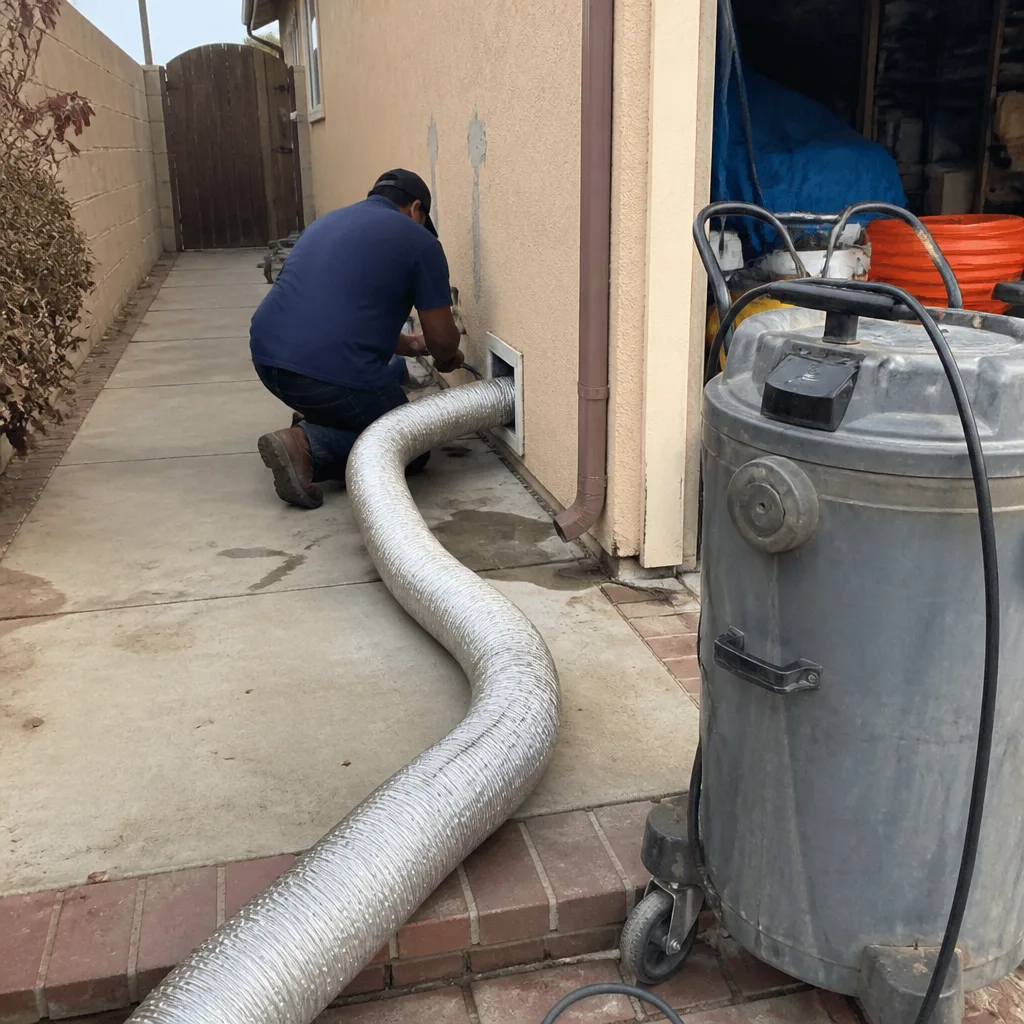
Duct warning signs usually point at the HVAC system. One important exception is the dryer vent, which shares several of the same symptoms (long dryer cycles, lint deposits, a smell of overheated fabric) but is a different problem entirely. A clogged dryer vent is a leading cause of residential fires, and the warning signs overlap enough with duct symptoms that a homeowner can easily chase the wrong system. Long dry cycles, a dryer that runs hot to the touch, lint visible around the vent hood exterior, or a musty smell in the laundry room are all dryer-vent signs, and they warrant attention separately from the HVAC ductwork.
If your symptoms point to the laundry area rather than the registers, an inspection should cover both the dryer vent and the HVAC system on the same visit. Buena Park Air Duct Cleaning Pros offers dryer vent cleaning alongside HVAC cleaning precisely because the two symptom sets overlap and the two fixes belong to the same visit. That’s part of why the company covers cleaning, dryer vent, HVAC, repair and sealing, and air quality and sanitizing as five related services rather than five separate businesses.
Common Mistakes to Avoid
- Replacing the HVAC equipment before the ducts are diagnosed. A new air handler and coil connected to a leaking, obstructed, or contaminated duct system will deliver the same symptoms at a higher cost. Diagnose the ducts first.
- Running a higher-MERV filter to fix symptoms. A filter that’s too restrictive for the system’s return path strangles airflow and causes the same pressure problems you’re trying to fix. Match the rating to the system, not to the symptom.
- Booking a per-vent price as if it’s a whole-system service. Per-vent pricing encourages a wipe-down at the grilles and nothing else. Ask what’s included at the plenum, the evaporator coil, and the return path. If the answer doesn’t cover those, keep looking.
- Ignoring the renovation trail. In Buena Park’s 1960s-to-1980s homes, a remodelled kitchen or bathroom sends drywall dust into the return plenum. If the symptoms started with a remodel, say so when you call.
- Treating a musty smell as a scent problem. Fogging the house doesn’t fix a biological growth problem inside the duct and coil. Sanitizing after cleaning is a different procedure than deodorizing a room.
- Assuming the dryer vent is fine because the dryer still works. Reduced airflow is the danger, not failure to turn on. Long dry times and hot exteriors are the warning signs to take seriously.
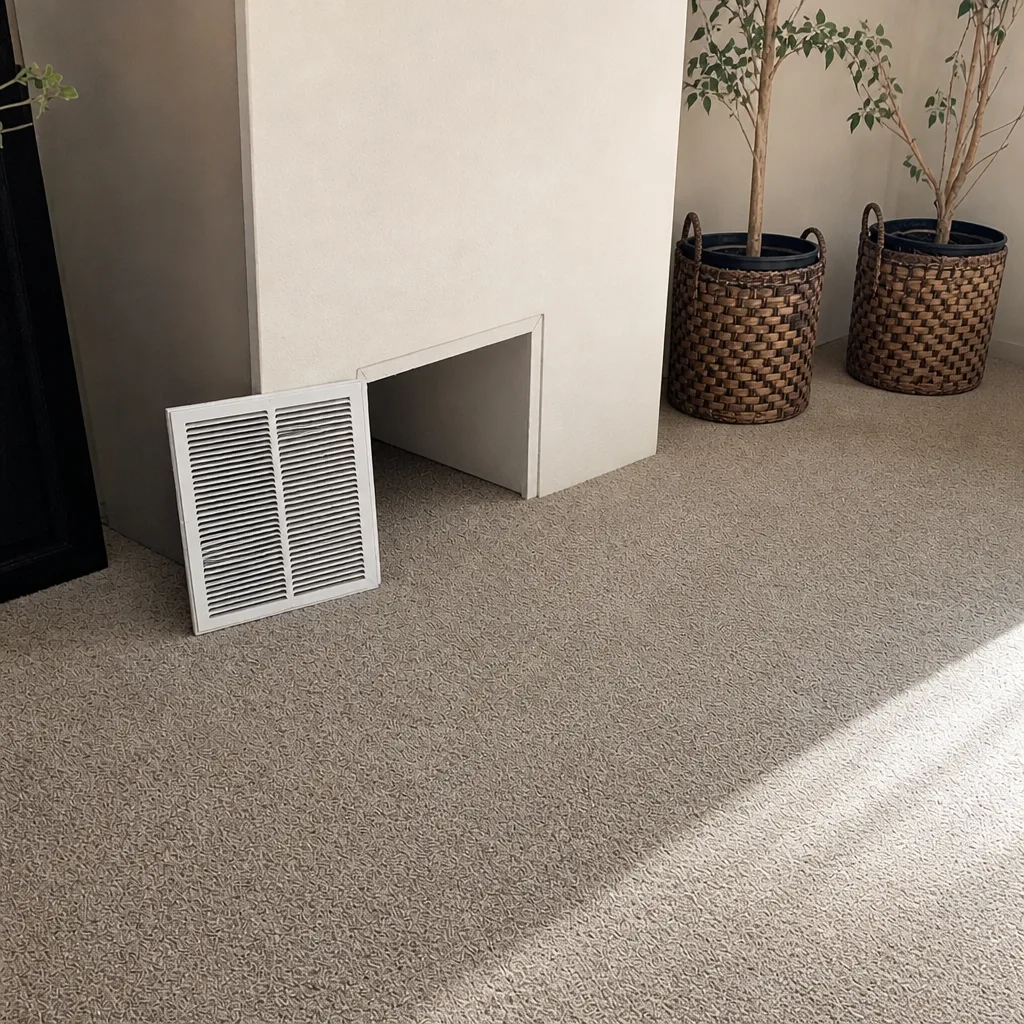
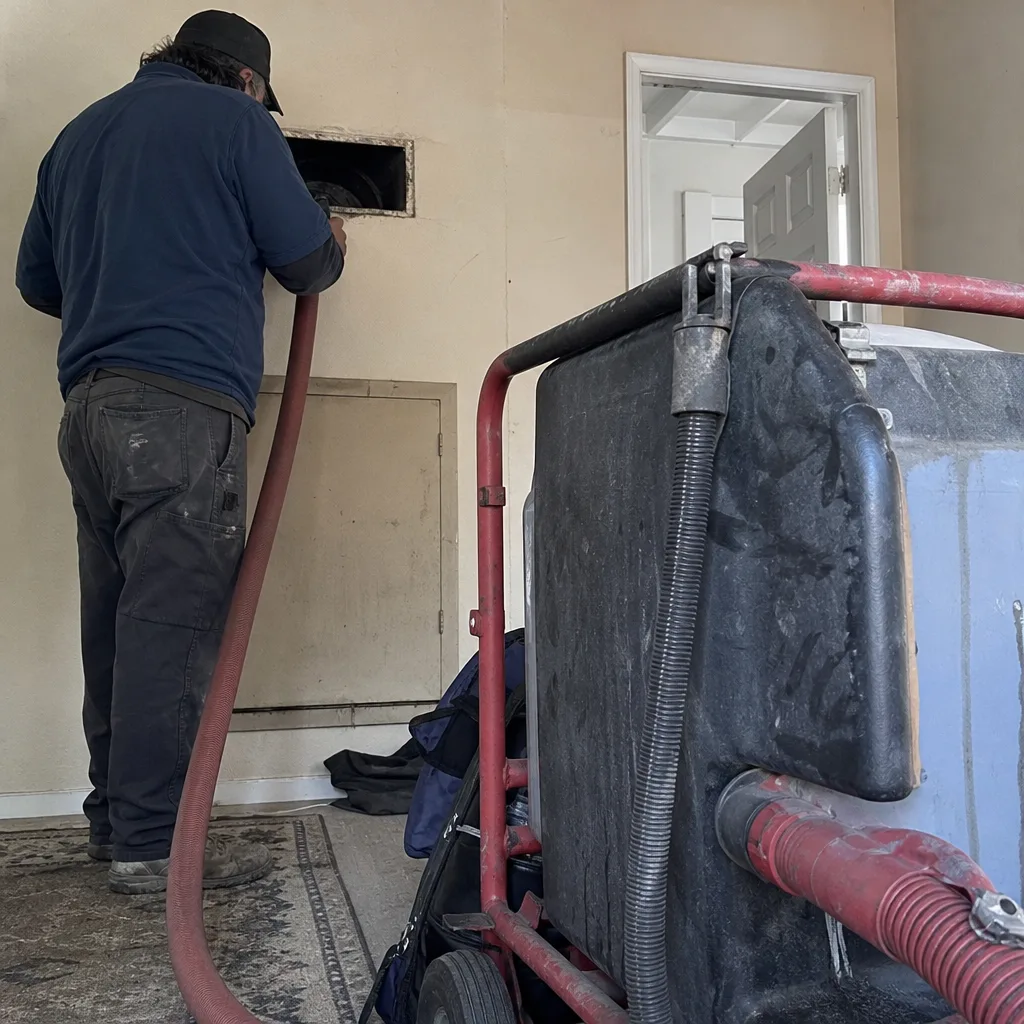
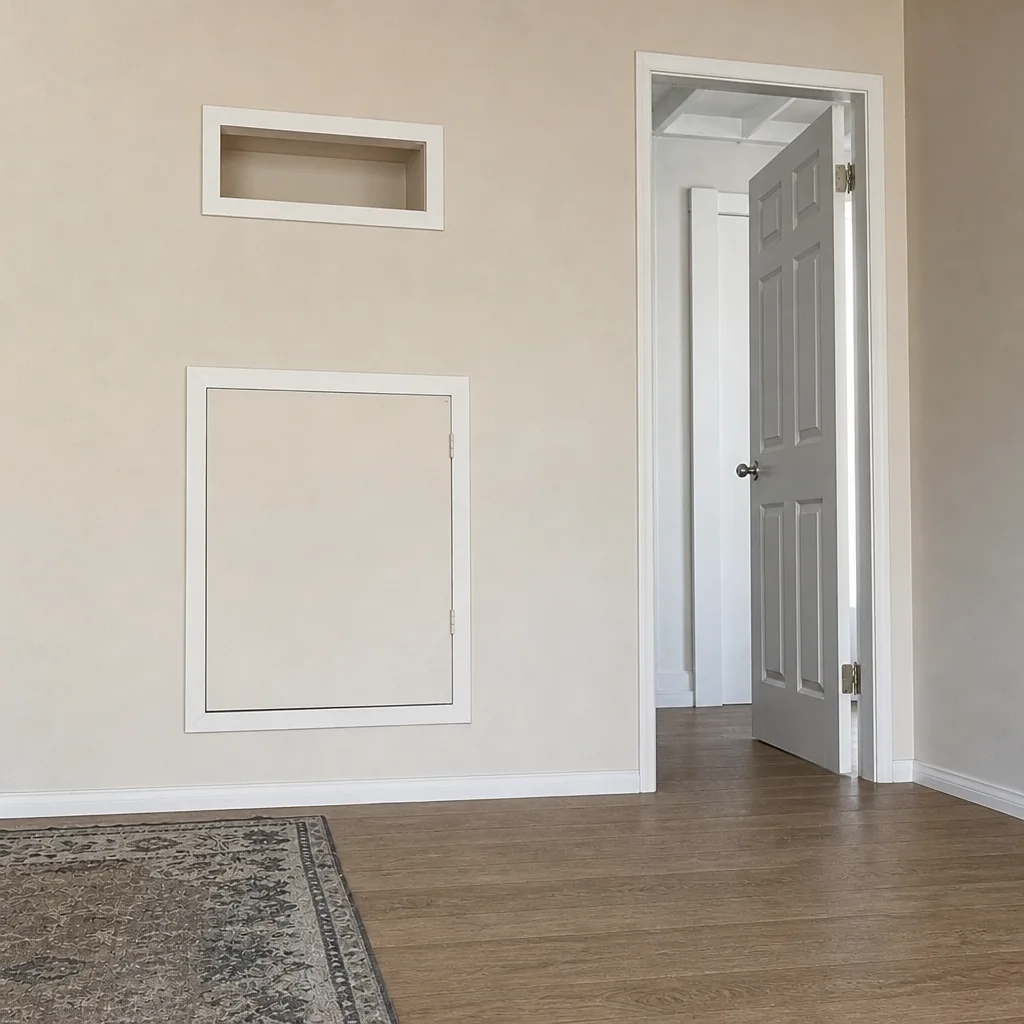
- Skipping the before-and-after documentation. Cleaning that isn’t photographed is cleaning you can’t verify. Ask for images of the system before and after, including the coil and plenum, not just the register faces.
See the difference
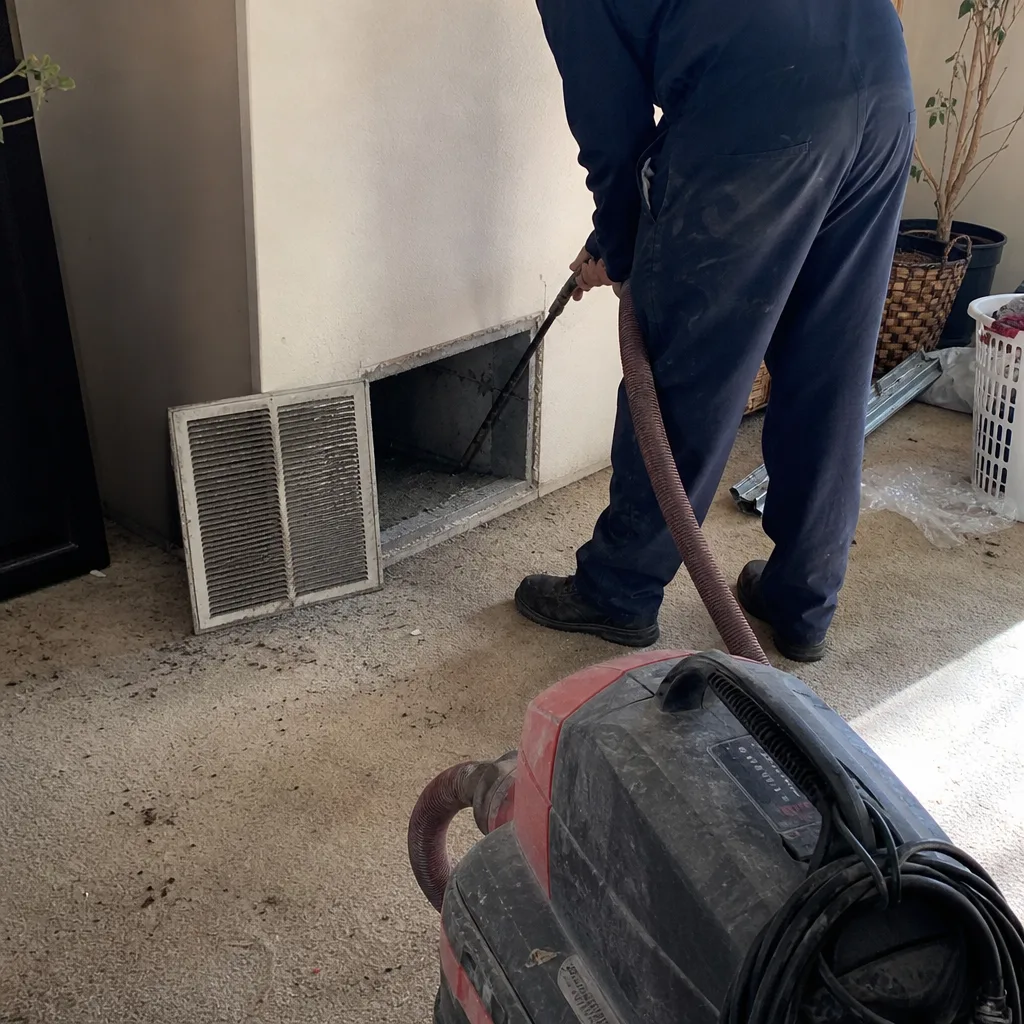 Before
 After
 Before
 After
 Before
 After
When to Call a Professional
Call for an inspection if you’re seeing two or more of the warning signs in this guide together, if a room’s temperature is off by more than a couple of degrees with a clean service history, if a musty or chemical smell follows the fan cycle, or if you’ve recently renovated an older Buena Park home and the dust never fully settled. Call sooner if the dryer is taking longer than usual to dry a load or the vent hood outside is clogged with lint. Buena Park Air Duct Cleaning Pros offers free estimates in Buena Park. Call (855) 658-5164. We answer 24/7. Fast dispatch from 7am to 7pm, Sunday through Friday.
Frequently Asked Questions
Air duct cleaning in Buena Park is priced per system, not per vent, and the range depends on the size of the home, the number of systems, and how much repair or sealing the ducts need. Whole-home cleaning for a typical single-system house is quoted at a fixed flat price, agreed before any work begins, and the written estimate you receive sets the final number. The exact figure requires an inspection because a system with major leaks or heavy contamination needs more work than a system that just has normal dust accumulation. Call (855) 658-5164 for an exact quote. Estimates are free.
Cheap quotes are usually per-vent prices that don’t cover the full system: the plenum, the evaporator coil, the return path, and the duct branches above the ceiling. That’s why the price looks low on the phone and jumps once the technician is inside. A per-vent quote tells you nothing about what’s actually included, and it’s a signal to ask specific questions: what’s cleaned, what’s inspected, is repair and sealing included, and are before-and-after photos provided. If the answer to any of those is vague, the price on the phone won’t be the price on the invoice.
Ask for before-and-after photographs of your own system, including the evaporator coil and the supply plenum, not just the register grilles. Sanitizing and treatment should be documented the same way. A crew that uses professional-grade equipment and containment will have no trouble providing the images, because the work is verifiable. If a company can’t or won’t photograph the before-and-after, that’s the answer to the question.
Most homes do well with a professional cleaning every few years, but the honest answer depends on the home. Buena Park homes with pets, recent renovations, allergy-sufferers, or a history of visible register dust load faster than homes without those factors. The better question is whether the system is clean and sealed, which an inspection answers directly. If the ducts are clean and tight, you don’t need the service this year. If they’re not, waiting doesn’t help.
Duct contamination can contribute to indoor air quality problems, especially when symptoms track HVAC runtime rather than outdoor conditions. That pattern, symptoms starting within 30 minutes of the system turning on and easing when it cycles off, is the strongest signal that the source of the problem is in the duct pathway rather than the outdoors. Not everyone with allergies will notice a difference after cleaning, but a documented pattern is worth investigating before assuming seasonal causes.
Often yes, but only when the uneven temperature traces to a duct problem rather than an equipment problem. A crushed supply run, a leaking return, or a disconnected flex duct will cause an uneven room, and fixing that specific issue resolves the symptom. Cleaning alone doesn’t fix imbalance. Repair and sealing do, and that’s why we treat cleaning and repair and sealing as one visit rather than two. Call (855) 658-5164 to schedule an inspection.
The Bottom Line
Duct warning signs in a Buena Park home are usually misread as HVAC performance issues or seasonal allergies, and the misreading costs money. Every symptom in this guide traces back to one of a few underlying causes: supply restriction, return restriction, biological growth, degraded duct liner, filtration bypass, post-renovation infiltration, or a clogged dryer vent. The step-by-step diagnosis in this guide narrows down which one is yours before you spend anything, and the inspection confirms it. The company covers the whole air pathway from duct to air handler: cleaning, dryer vent, HVAC, repair and sealing, and air quality and sanitizing. If the evidence points to the ducts, call for a free estimate and get the diagnosis on record. Our technicians have up to 15 years of experience, and they’ll show you what they find. Buena Park Air Duct Cleaning Pros is your single point of contact for the full air pathway. Call (855) 658-5164. We answer 24/7. Fast dispatch from 7am to 7pm, Sunday through Friday. Buena Park Air Duct Cleaning Pros
Written by the team at Buena Park Air Duct Cleaning Pros.