
Last updated November 25, 2026
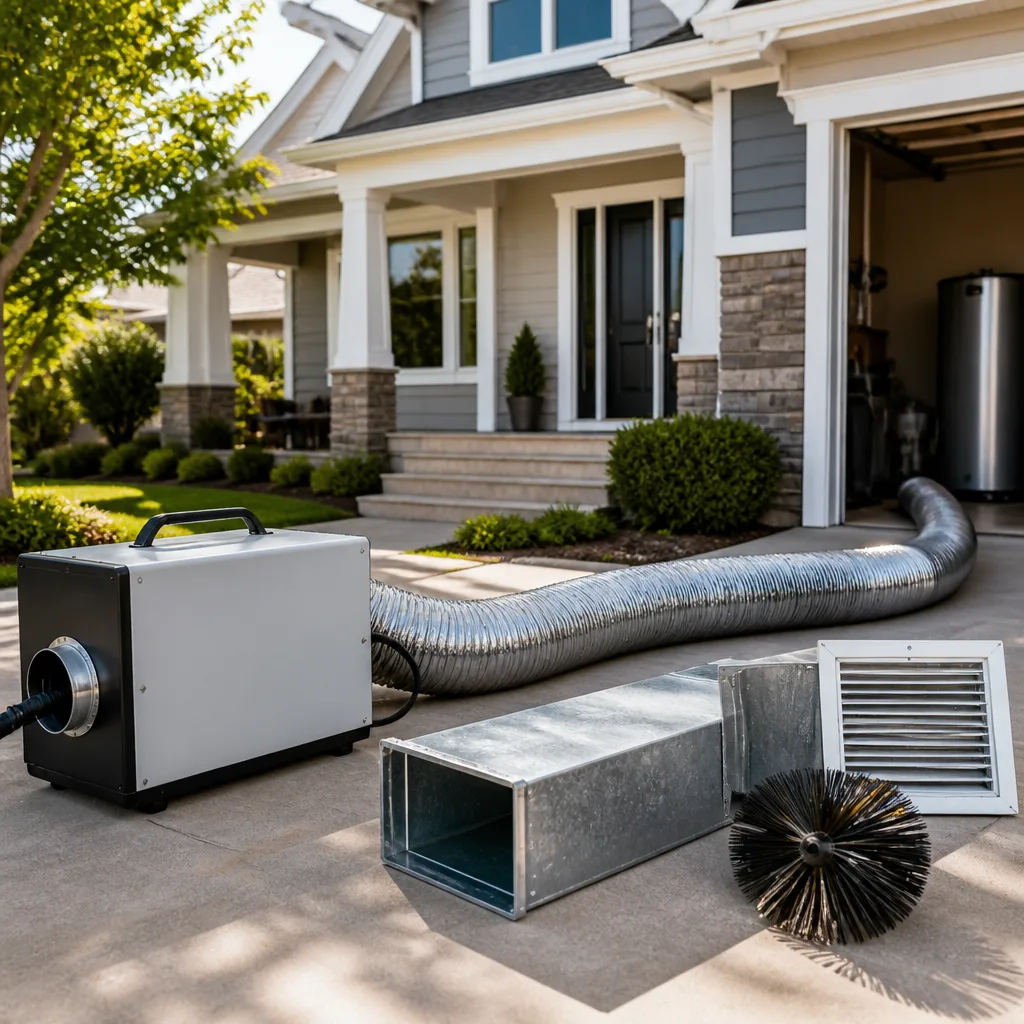 Whole-home duct cleaning
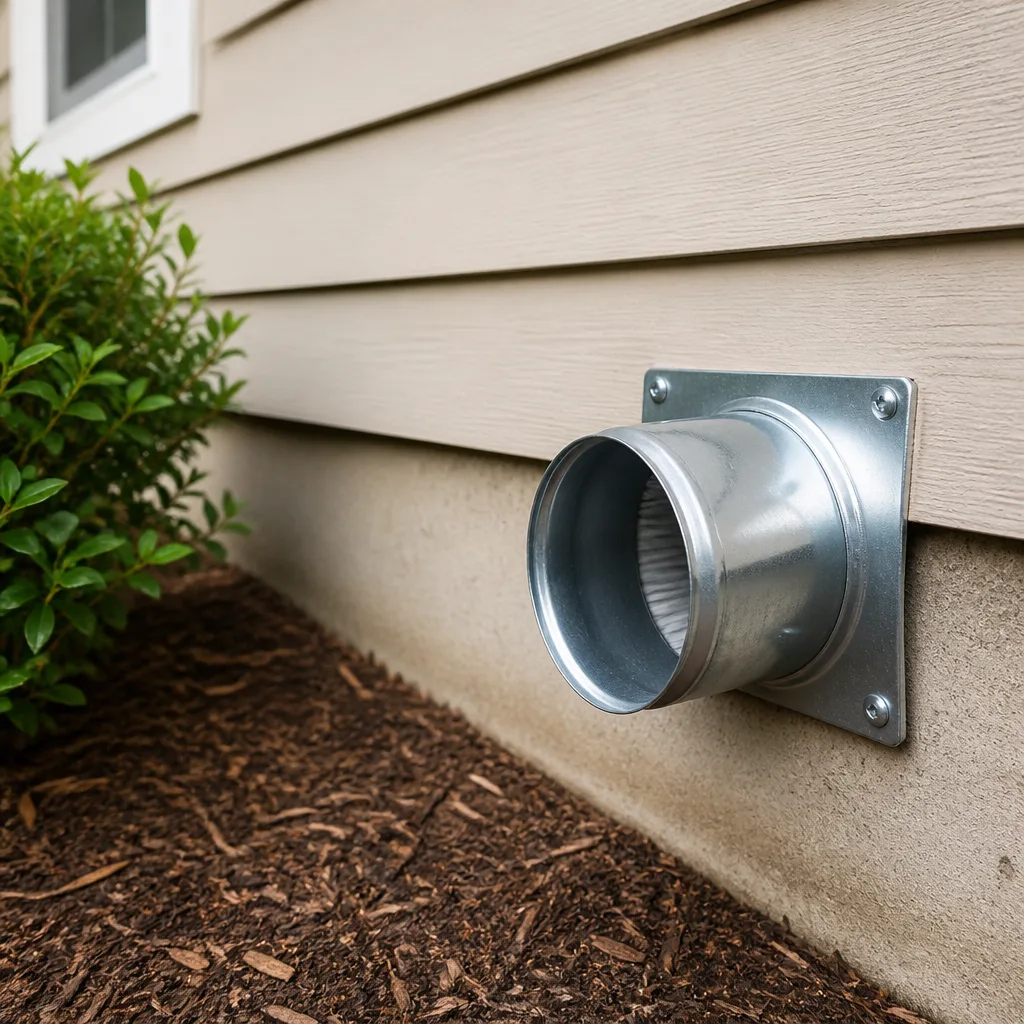 Dryer vent cleaning
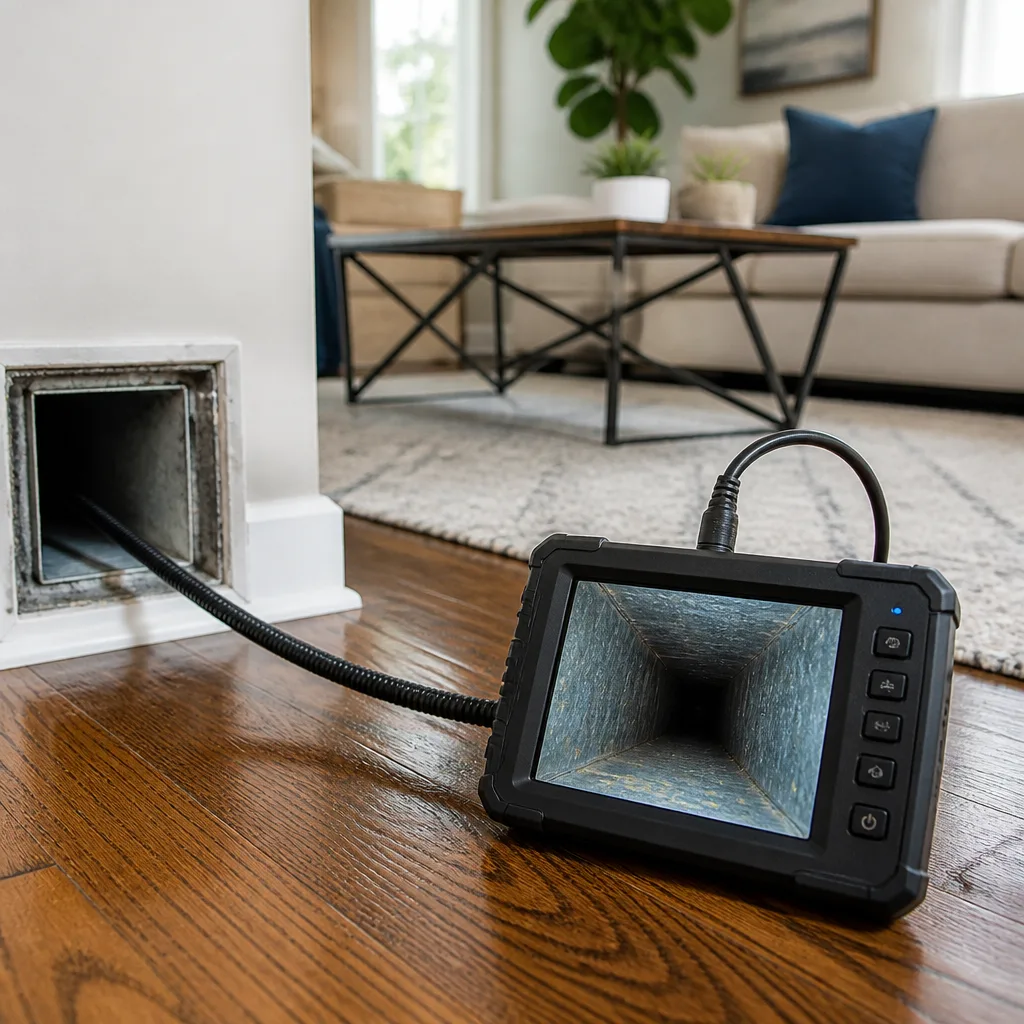 Camera inspection
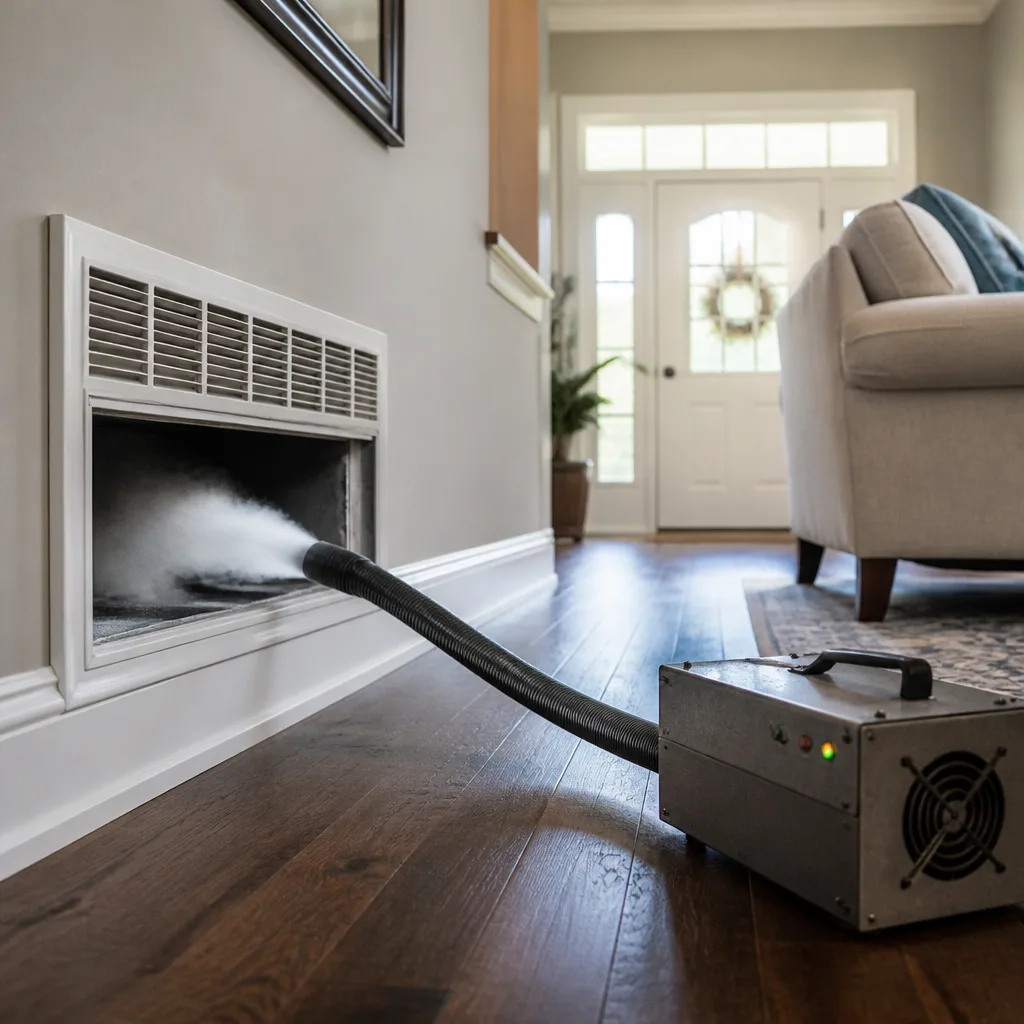 Sanitizing & deodorizing
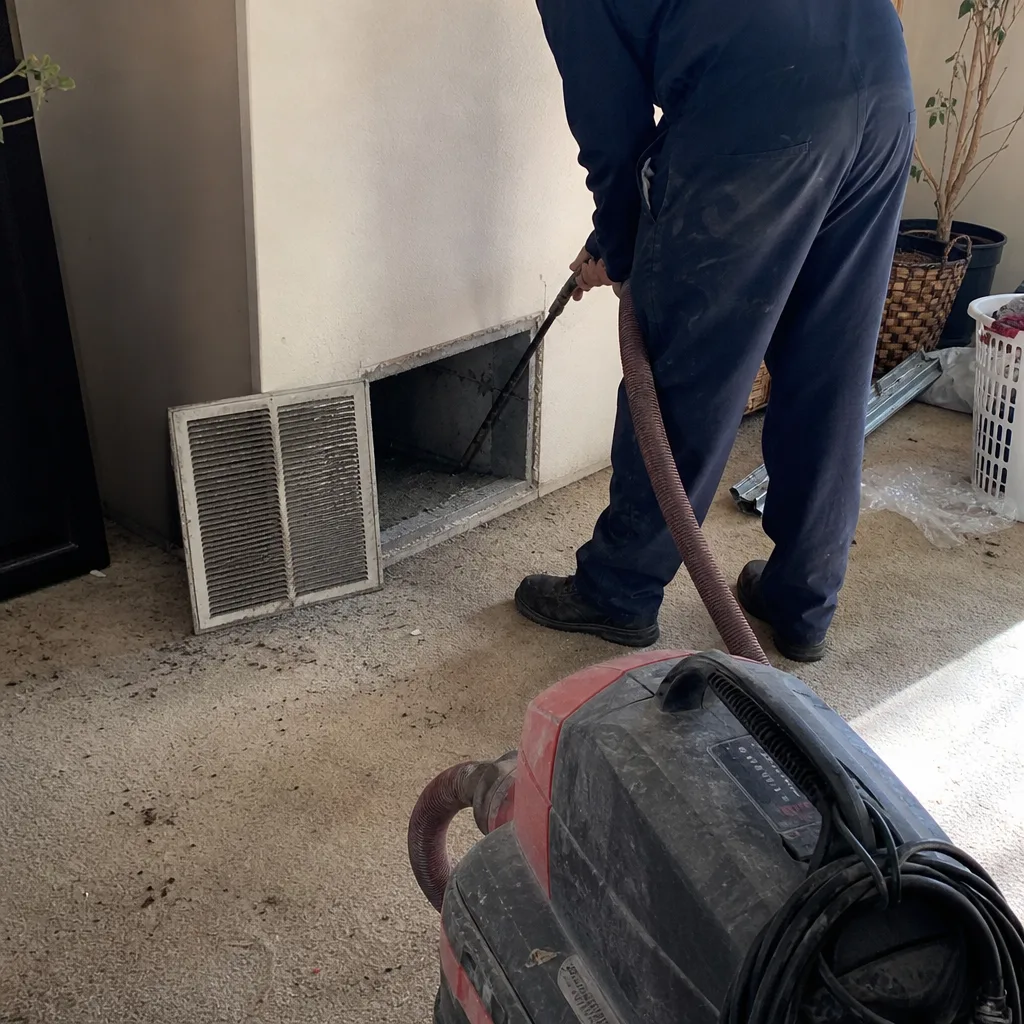
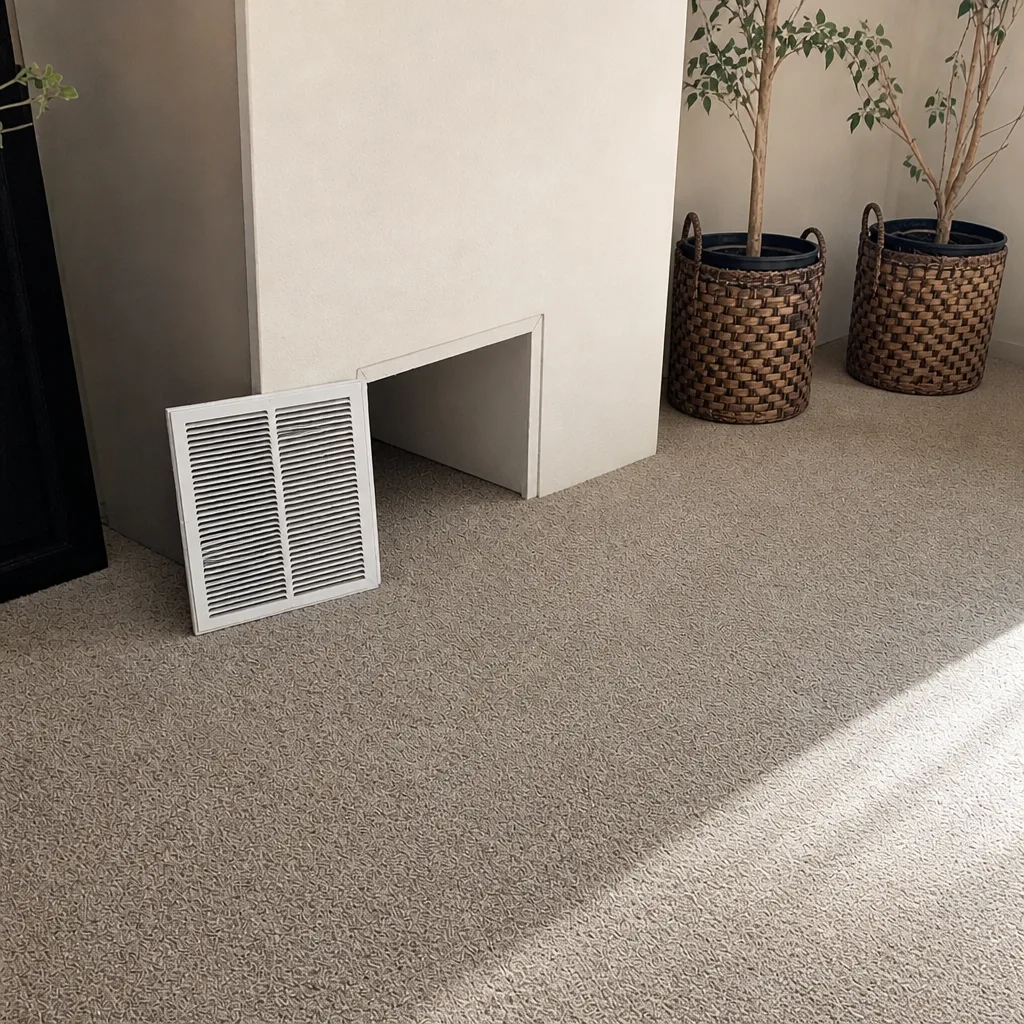
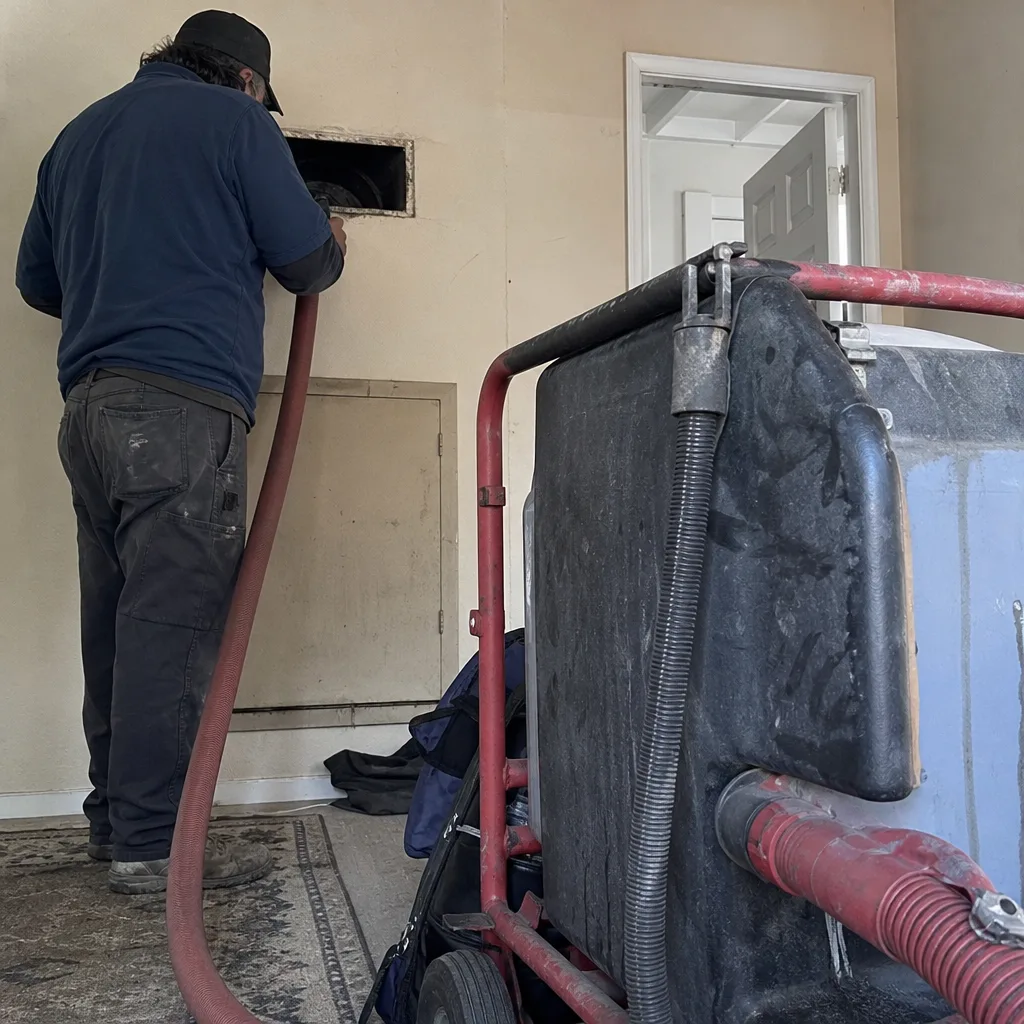
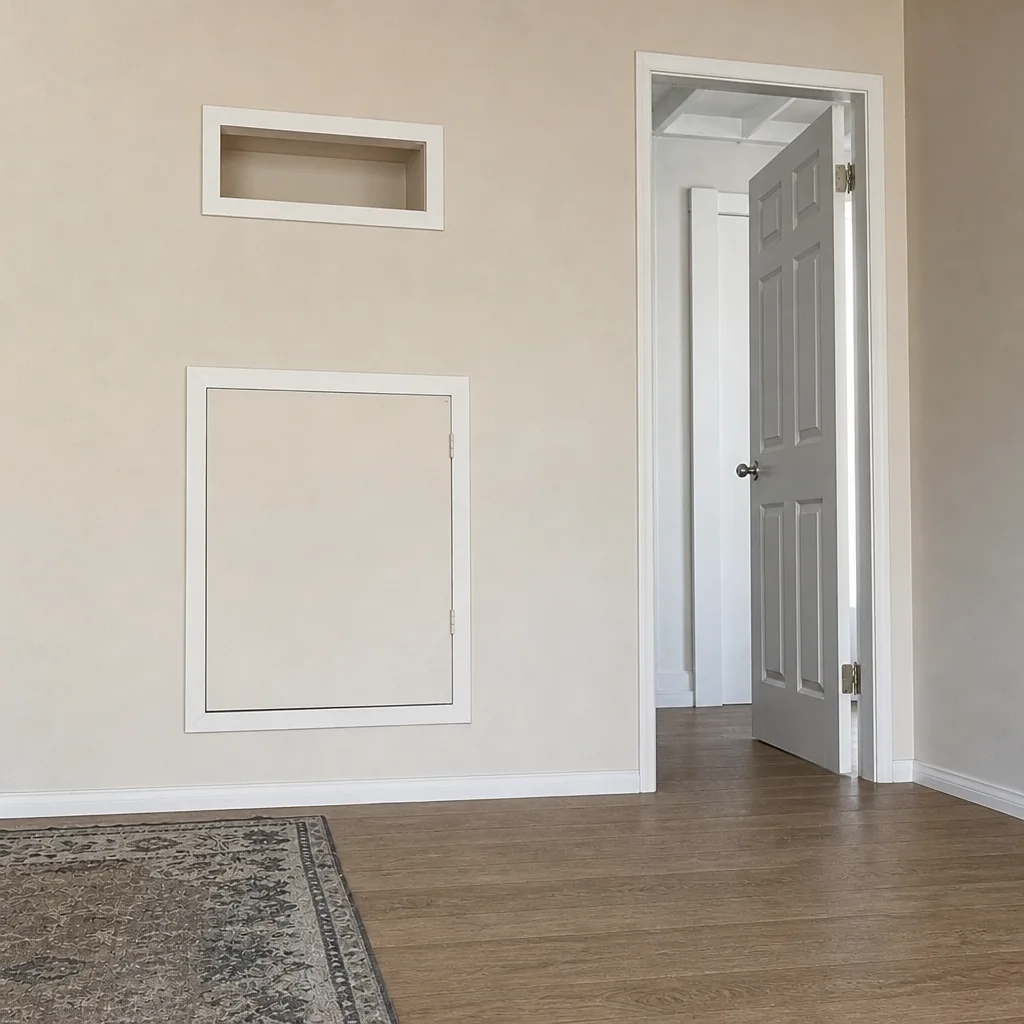
Whole-system duct and dryer vent check with before-and-after photos - you see exactly what came out of your vents
That "$99 whole-house special" is a bait ad - the real number appears once they are in your hallway, or the "clean" is a shop-vac at the register. We photograph the inside of your ducts before and after instead.
The Complete Guide to Air Duct Cleaning in Buena Park
Most duct cleanings you can buy in Orange County are never verified. A crew arrives, runs a hose for an hour, and leaves without measuring airflow or static pressure before and after the work. That’s not cleaning, it’s vacuuming, and there’s no way to know if it helped. A duct system is a closed loop: supply lines, return lines, the air handler, and the evaporator coil all share the same air. Clean one section and skip the others, and contamination migrates right back into the section you paid to clean. This guide explains what a proper system-level clean actually involves in Buena Park, what inland Orange County air does to ducts here, and how to tell a real intervention from a surface pass.
Styles & brands we work with
- Whole-home duct cleaning
- Dryer vent cleaning
- Camera inspection
- Sanitizing & deodorizing
Quick Answer
Air duct cleaning in Buena Park is a source-removal process that uses commercial-grade negative pressure and contact cleaning to clear supply ducts, return ducts, the air handler, and the coil as one connected system. A verified job measures airflow and static pressure before and after, documents the work with camera footage and photos, and includes duct repair and sealing where leaks are found. Surface vacuuming alone doesn’t qualify.
Table of Contents
- Why Negative Pressure and Contact Cleaning Is the Standard
- What Inland Orange County Air Does to Duct Systems
- How Supply, Return, Air Handler, and Coil Work as One System
- What Commercial-Grade Equipment Actually Changes
- Before-and-After Documentation: What Proof Looks Like
- Red Flags in Low-Bid Duct Cleaning Marketing
- Why Dryer Vent Cleaning Belongs in the Same Conversation
- Common Mistakes to Avoid
- When to Call a Professional
- Frequently Asked Questions
- The Bottom Line
Why Negative Pressure and Contact Cleaning Is the Standard
The duct cleaning industry’s benchmark method rests on two principles working together: negative pressure and contact cleaning. Negative pressure means the system is put under a controlled vacuum so that anything loosened inside the ducts is pulled toward a HEPA-filtered collection unit rather than blown into the living space. Contact cleaning means mechanical agitation actually touches the duct surfaces, dislodging the layer of dust, debris, and biological growth that clings to the metal and flex duct walls. Both have to happen. A vacuum alone can’t loosen adhered buildup. Agitation alone just throws dust into the air.
In practice, a proper source-removal job in Buena Park looks like this:
- The HVAC system is isolated and a negative pressure collection unit is connected at a strategic access point.
- Access openings are created at the trunk lines and, where needed, at branch runs.
- Rotary agitation tools and air whips are run through each run, contacting the full interior surface.
- Dislodged material is captured by the collection unit before it can enter the home.
- Containment and surface protection stay in place throughout, so surrounding rooms aren’t affected.
That last step is where Abatement Technologies containment and Guardsman surface protection matter. A cleaning that moves dust from the duct into the hallway hasn’t solved anything. Containment protocols keep the mess inside the work zone and outside your furniture and flooring.
What Inland Orange County Air Does to Duct Systems
Buena Park sits in that band of Orange County where the marine layer pushes inland some mornings and burns off by midday. That daily cycle leaves dew and suspended moisture in the air more often than inland desert markets see, and duct systems here deal with it in specific ways. Moisture carried on return air can settle on cool duct interiors and coil surfaces, which creates conditions where dust and organic debris clump rather than stay loose. Clumped debris doesn’t blow out through a register. It sticks, then builds.
Two more local factors sharpen the problem:
- Construction dust from ongoing development. Buena Park and the surrounding corridor have seen steady building and roadwork, and fine concrete and drywall dust travels easily through open windows and doors during renovations. That dust is a large contributor to what settles in return grilles and trunk lines.
- Wildfire particulate. When fire seasons push smoke across Southern California, the fine particulate doesn’t just sit in the room. It travels through the return air and coats the air handler and coil, and it lingers in duct linings long after the smoke clears outside.
Buena Park homes built in earlier decades often have duct systems that were never sealed well, and unlike inland desert climates, the moisture here gives that dust something to adhere to. Air duct cleaning in this microclimate is as much about breaking up adhered buildup as it is about removing loose debris from newer construction dust.
How Supply, Return, Air Handler, and Coil Work as One System
Here’s the core idea most homeowners never hear: the duct system and the HVAC equipment are physically connected, but they behave as one loop. Air leaves the air handler conditioned, travels out the supply ducts to registers, moves through the rooms, is pulled back through return grilles and return ducts, and passes over the evaporator coil before going back into the air handler. Every particle that comes in through a return ends up on the coil if it can stick. Every particle that settles in a supply run gets pushed back into the room the next time the system starts.
That’s why cleaning one component leaves the others re-contaminating the clean sections in short order:
- Clean supply ducts with a dirty return. The return keeps feeding dust back into the airstream, and it re-coats the supply ducts in weeks.
- Clean both duct sides with a dirty coil. The coil stays a dust and moisture trap, blocking airflow and acting as a source for the whole system.
- Clean the coil with unsealed duct runs. Ducts that leak in attics or unconditioned space pull in fresh dust and insulation fibers continuously.
This is the reason a full-system scope covers supply, return, air handler, coil, and duct sealing. When we connect you with a local professional through Buena Park Air Duct Cleaning Pros, the scope of work reflects the whole pathway, not a single section that looks dusty. From the duct to the air handler, it’s one job or it isn’t a complete one.
What Commercial-Grade Equipment Actually Changes
Rotobrush and Nikro are the equipment systems used in commercial contracting and restoration work, and they’re what a full-system clean in Buena Park should be built around. The difference between these systems and a shop-vac-style setup isn’t power ratings on paper. It’s whether the tool can reach the full interior surface of a run, whether it can pull dislodged material under controlled pressure, and whether the process can be repeated run by run without losing containment.
Rotobrush systems carry rotary agitation heads that travel the length of a duct and scrub the walls as they move, while connected to HEPA filtration. Nikro equipment adds high-capacity collection that holds negative pressure on the whole system during the work. Together they support a consistent process:
- Set negative pressure on the full system.
- Work each branch run with rotary contact cleaning.
- Capture dislodged debris in the collection unit.
- Clean the air handler and coil surface after the duct work.
- Seal and repair duct leaks found along the way.
That last step is a differentiator. Many cleaning services stop at cleaning, and the system keeps leaking. We repair what we find, because sealing a leak is what turns a cleaning into a lasting change in airflow and pressure balance. On the same visit, Honeywell and Aprilaire components allow the technician to upgrade filtration or add air quality equipment rather than handing you a referral. Clean, sealed, and sanitized is the intended outcome, and professional-grade equipment is what makes it measurable.
Before-and-After Documentation: What Proof Looks Like
If a duct cleaning service can’t show you what they found and what they changed, you have no way of knowing the work happened. Verification is the part most residential jobs skip, and it’s the honest answer to “how do I know the work was done?” Proper documentation covers three things.
- Visual camera inspection footage. A camera run inside the duct before work begins and again after cleaning shows the actual interior of your own system. You should see before and after of your ducts, not stock photos of somebody else’s.
- Static pressure readings. Static pressure is a measurement of the resistance the air handler works against. High readings suggest restrictions; a clean system with a clean coil and sealed ducts should show improved numbers.
- Airflow comparison. Register-by-register airflow readings before and after show whether the system is actually moving more air, and where uneven airflow was coming from in the first place.
On top of those, a written record of what was cleaned, what was found, and what was repaired is what professional documentation looks like. Particle counts can add another layer in some setups, but camera footage and pressure readings are the practical baseline every homeowner can ask for. In our experience, most complaints about duct cleaning come down to a customer who paid for a service and never got proof it happened. Ask for the documentation before the job, not after.
Red Flags in Low-Bid Duct Cleaning Marketing
Some of the cheapest duct cleaning ads in the area are built on a price that can’t cover a real clean, which means the work in the home isn’t the work being advertised. The pattern is worth recognizing because it’s consistent. A low teaser price pulls a call, and once the technician is on site, the “full” cleaning becomes an upsell, or the job turns out to cover only a few registers. Answer the hesitation directly: one flat price per system, agreed in writing before work starts, no per-vent pricing, and before-and-after photos of your own ducts.
The following market signals are worth treating as red flags:
- A price per vent or per register, since it tells you nothing about total scope.
- “Whole house” language with no mention of the air handler or coil.
- No mention of negative pressure or containment anywhere in the description.
- No camera inspection offered, and no airflow or static pressure measurement mentioned.
- Guarantees that sound impressive but never include documentation of the actual work.
- A quote that changes once the technician arrives.
- “Sanitizing” offered as an add-on that substitutes for cleaning the physical debris first.
Sanitizing has its place, but only after source removal. Fogging a dirty duct doesn’t clean it. It just gives the residue a scent. A competent provider will explain the sequence: clean first, seal second, sanitize last. If the sequence isn’t clear, keep asking questions. Compare that to properly scheduled air duct cleaning built around verification and repair, and the difference in how the quote is written usually tells you which one you’re looking at.
Why Dryer Vent Cleaning Belongs in the Same Conversation
A dryer vent is a duct system too. It carries hot, moist, lint-laden air from the dryer to the outside, and lint accumulates on the interior walls of that run the same way dust accumulates in HVAC ducts. When lint builds up enough to restrict airflow, the dryer runs hotter and longer, and that’s the condition that turns a small problem into a fire risk. The same commercial-grade collection and contact cleaning equipment that cleans HVAC ducts handles a dryer vent properly, and doing both in one appointment keeps the whole air pathway through the home in the same condition.
In Buena Park, where many homes have longer dryer vent runs to reach exterior walls or rooftops, lint piles up faster than people expect. If you notice clothes taking longer to dry, the dryer feeling hot to the touch, or a burning smell, those are signals to have the vent cleaned and inspected. Alongside the duct work, adding dryer vent cleaning to the same visit addresses the highest fire-risk line in most homes and is easy to overlook when you’re focused on indoor air quality. It’s part of the same pathway and deserves the same attention.
Common Mistakes to Avoid
- Hiring on price alone. A teaser price in this market usually means either per-vent billing or a limited scope that skips the air handler. Ask what’s included in writing, not just what the number is.
- Skipping the coil and air handler. Inland Orange County humidity and construction dust coat the coil, and a clean duct attached to a dirty coil re-contaminates within weeks. Insist the scope covers the entire system.
- Accepting sanitizing instead of cleaning. Fogging a duct that hasn’t been physically cleaned leaves the debris in place. Cleaning, sealing, and sanitizing belong in that order.
- Not asking for documentation. Without camera footage and before-and-after pressure readings, you have no evidence the work happened. Request the documentation policy before booking.
- Ignoring the dryer vent. Lint buildup in Buena Park’s longer vent runs is a fire risk that gets skipped by pure HVAC cleaners. Have it cleaned along with the ducts.
- Forgetting duct sealing. Leaky return ducts in attics and unconditioned spaces pull in dust continuously. Cleaning without sealing leaves the source in place.
- Assuming one cleaning fixes everything permanently. Filters still need changing, and Buena Park’s construction dust and wildfire season load the system more than average. Plan on maintenance, not a one-time reset.
When to Call a Professional
Call a professional when you notice musty odors that don’t clear after changing the filter, when allergy symptoms flare up indoors and stay worse than outside, when airflow at some registers is noticeably weaker than others, or when your energy bills climb without an obvious reason. Visible dust puffing out of a register when the system starts, recent remodeling or construction in the home, a wildfire season that filled the return airways with smoke, or a dryer that runs hot and takes longer than it used to are also signs worth acting on. Some of these can be handled with a filter change. Duct cleaning itself, duct sealing, and dryer vent work are jobs for trained technicians with the right equipment.
Buena Park Air Duct Cleaning Pros offers free estimates in Buena Park – call (855) 658-5164. We answer 24/7. Fast dispatch from 7am to 7pm, Sunday through Friday.
Frequently Asked Questions
The price is set per system, based on the layout and condition of your ducts, by a written estimate before any work starts. That structure protects you from the bait-and-switch of per-vent pricing. Call (855) 658-5164 for an exact quote. Estimates are free.
Cheap quotes usually reflect a smaller scope: fewer components, no coil or air handler, no camera inspection, and no documentation. The price looks better because the job is smaller. Ask what’s included and how the work will be verified, then compare. Call (855) 658-5164 for a written quote you can compare line by line.
Ask for before-and-after camera footage of your own ducts, airflow readings, and static pressure measurements. If a provider can’t produce those, the job has no verifiable outcome. Call (855) 658-5164 to ask about our documentation before you book.
For most homes here, every several years is a reasonable default, sooner if you’ve had construction, a smoky wildfire season, pets, or ongoing allergy symptoms. Newer homes still need a first look at the air handler and coil. Call (855) 658-5164 if you’re unsure whether it’s time.
Sometimes. Cleaning removes restrictions, and sealing duct leaks stops air from escaping before it reaches a register, which together can even out airflow. If static pressure is high or certain registers were underperforming, that’s exactly what the measurements will show. Call (855) 658-5164 to schedule an assessment.
Yes. Cleaning, dryer vent work, HVAC cleaning, duct repair and sealing, and air quality and sanitizing are all part of what we cover, so the full pathway gets addressed in the same visit. Call (855) 658-5164 to talk through what your system needs.
The Bottom Line
Duct cleaning works when it’s treated as a system-level intervention rather than a one-time surface pass. Negative pressure plus contact cleaning removes the source. Camera footage, airflow and static pressure readings verify it. Duct repair and sealing keep the system from re-contaminating the clean sections. In Buena Park’s inland Orange County climate, marine layer moisture, construction dust, and wildfire particulate all load the duct system faster than in inland desert markets. Cover the supply, return, air handler, coil, and dryer vent as one pathway, ask how the job will be documented, and skip any per-vent teaser price. Air you can measure, not just promise.
If you’re ready to know what’s actually in your ducts and have it done properly, call Buena Park Air Duct Cleaning Pros at (855) 658-5164 for a free estimate. We answer 24/7. Fast dispatch from 7am to 7pm, Sunday through Friday.
Written by the team at Buena Park Air Duct Cleaning Pros.
See the difference
 Before
 After
 Before
 After
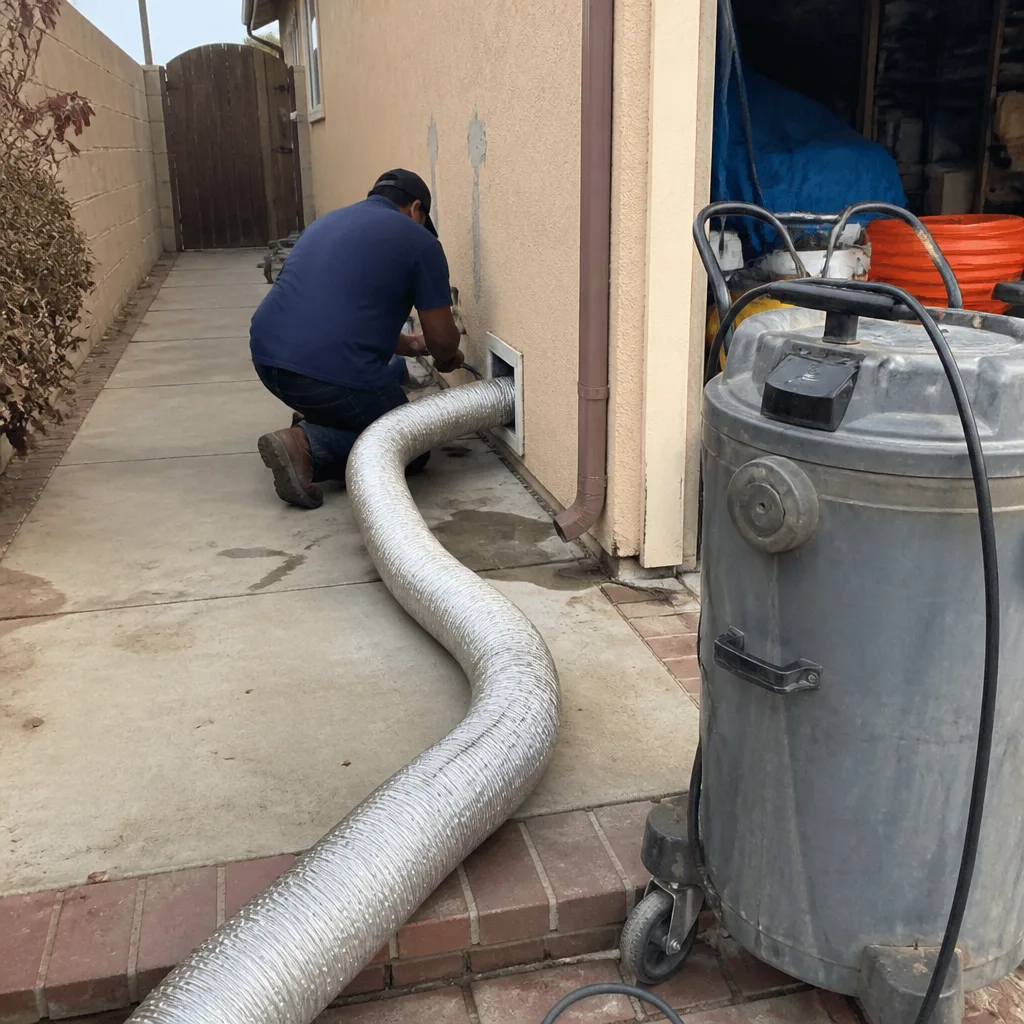 Before
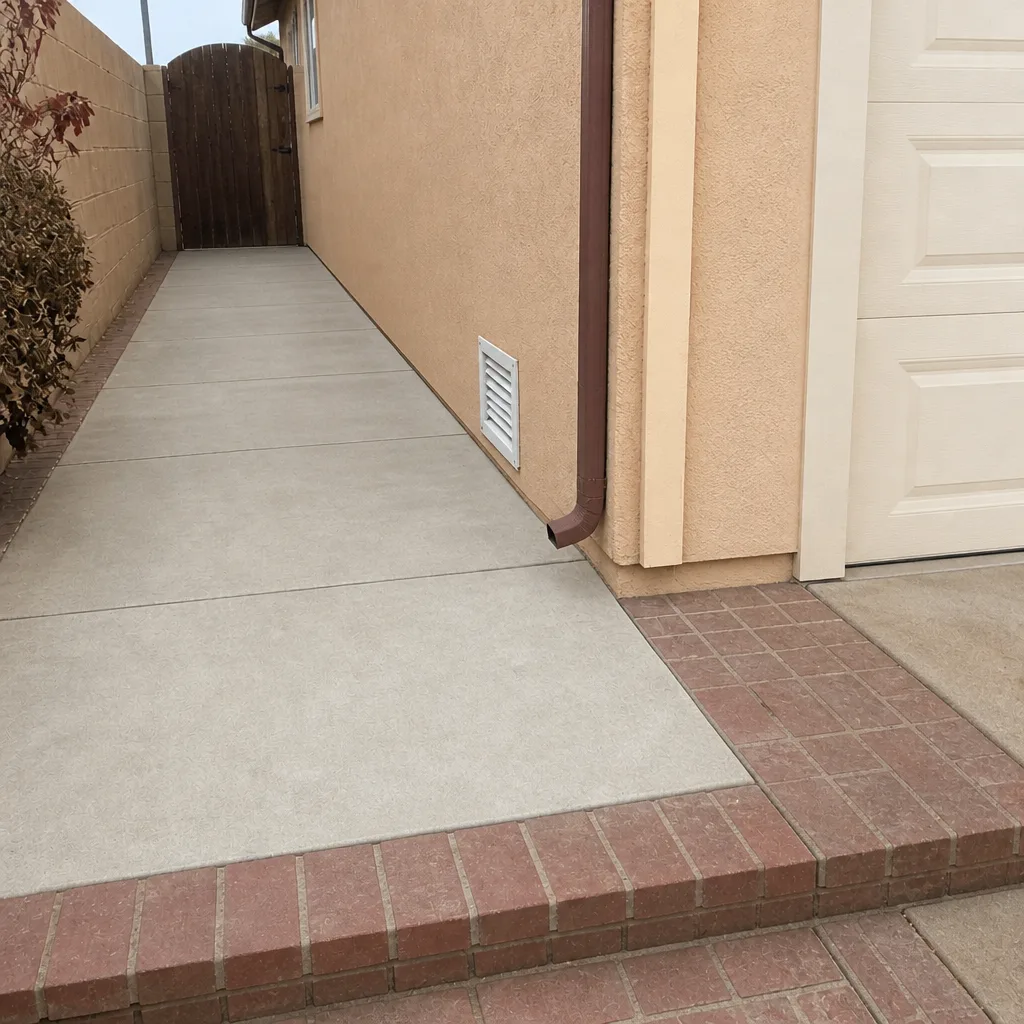 After