
Last updated November 25, 2026
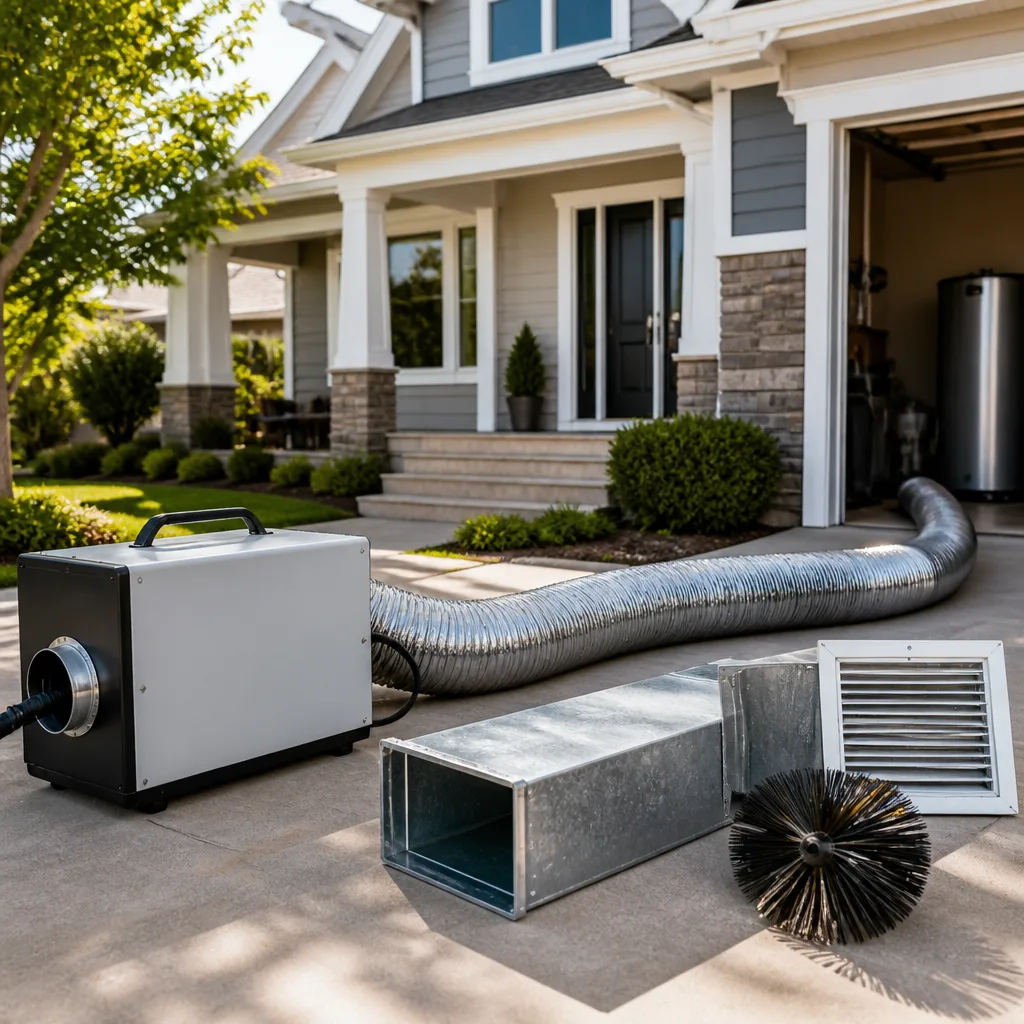 Whole-home duct cleaning
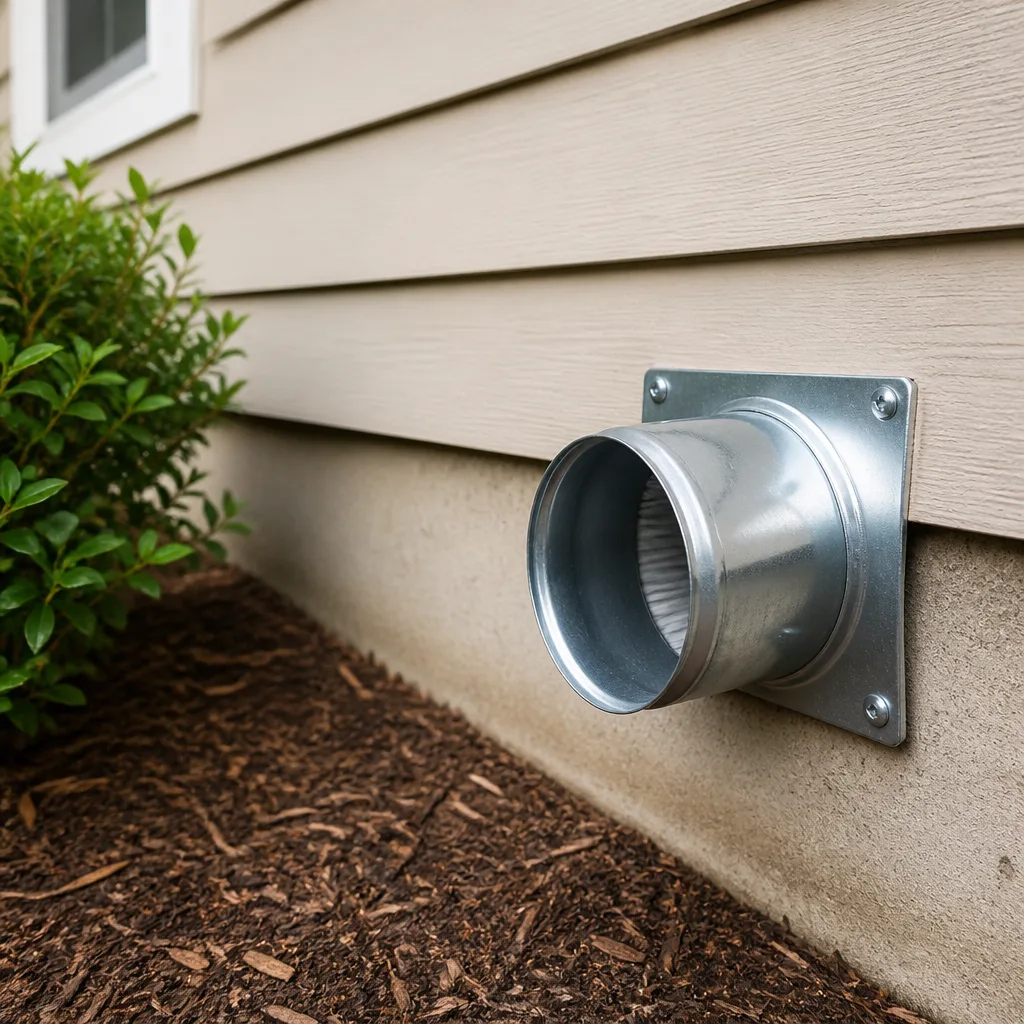 Dryer vent cleaning
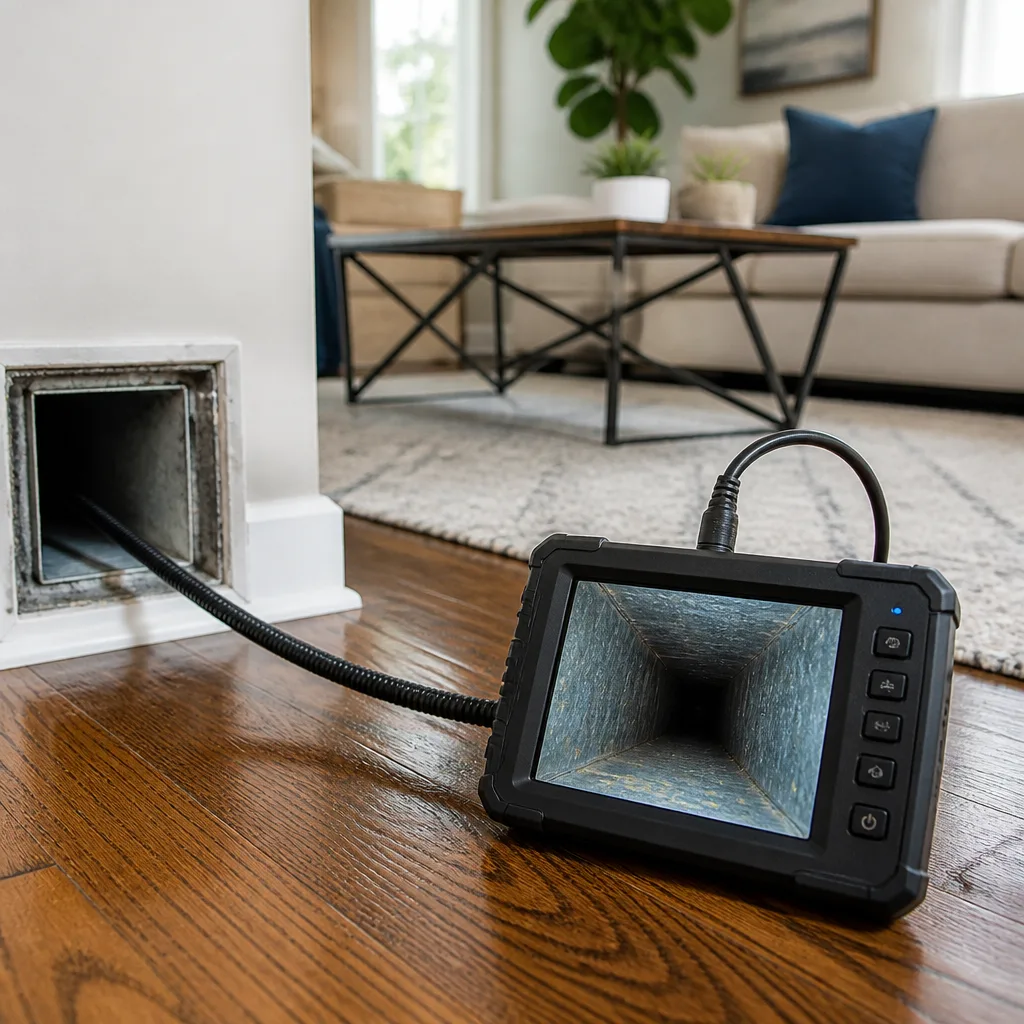 Camera inspection
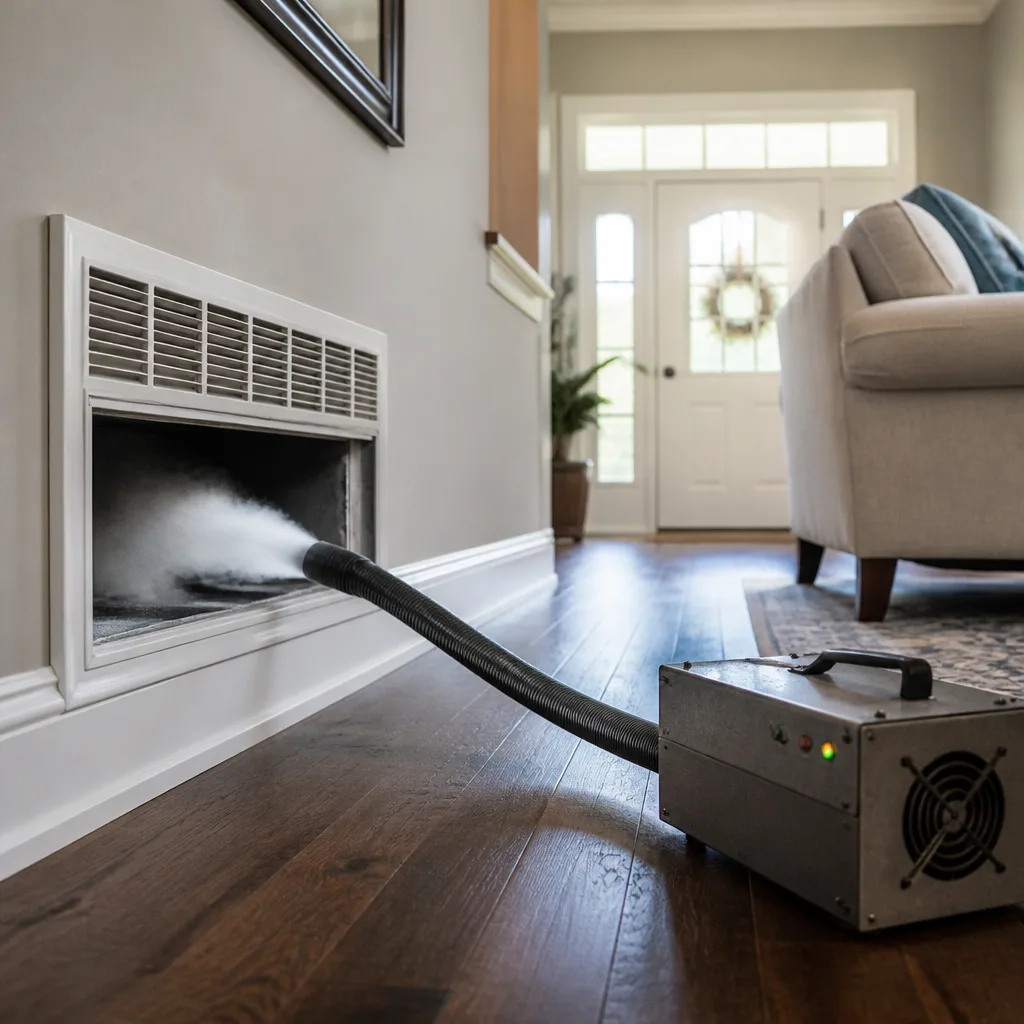 Sanitizing & deodorizing
Whole-system duct and dryer vent check with before-and-after photos - you see exactly what came out of your vents
That "$99 whole-house special" is a bait ad - the real number appears once they are in your hallway, or the "clean" is a shop-vac at the register. We photograph the inside of your ducts before and after instead.
Air Duct Cleaning Emergency Preparedness Guide for Buena Park Homes
Most people think of duct cleaning as routine upkeep, something you get around to after a remodel or when the vents start looking dusty. The truth for Buena Park is more specific. A decade of wildfire seasons has pushed fine smoke particulate through thousands of HVAC systems while they were running, and much of it settled into duct liner material where a standard cleaning pass doesn’t reach. That’s a different problem than ordinary household dust, and it calls for a different response. This guide walks through how each major local event – wildfire smoke, Santa Ana winds, and storm-driven water intrusion – contaminates ductwork in its own way, and what actual preparedness looks like before and after.
Quick Answer
Air duct emergency preparedness in Buena Park means preparing your duct system before a known event (wildfire smoke, a Santa Ana wind event, or a storm), controlling it during, and running a distinct response protocol afterward for each type of contamination. Smoke requires inspection of duct liner and sometimes replacement, wind events require shutdown and filter discipline, and water intrusion requires remediation within 24 to 48 hours before mold colonization sets in. Generic “clean after the disaster” advice doesn’t separate those cases, and that’s where most guidance fails.
Styles & brands we work with
- Whole-home duct cleaning
- Dryer vent cleaning
- Camera inspection
- Sanitizing & deodorizing
Table of Contents
- Wildfire Smoke Infiltration: Why PM2.5 Sticks to Duct Liner
- What a Post-Fire Duct Inspection Should Include
- Santa Ana Wind Events: Shutdown vs. HEPA Filtration
- Post-Flood and Water Intrusion: The Mold Timeline
- Pre-Event Preparation: Filters, Sealing, and Shutdown
- Documentation for Insurance Claims
- Common Mistakes to Avoid
- When to Call a Professional
Wildfire Smoke Infiltration: Why PM2.5 Sticks to Duct Liner
Fine particulate matter at 2.5 microns and below behaves very differently from ordinary household dust. Household dust is relatively heavy, settles quickly, and lifts off a metal duct wall with standard agitation. PM2.5 does not settle the same way. It stays airborne longer, travels the full length of the return system, and clings to the porous surface of internal duct liner – the fiberglass or foam insulation bonded to the inside walls of many residential systems. Once it’s embedded there, brushing the duct wall removes only what sits on the surface. The liner holds the rest.
That means smoke contamination isn’t a cleaning problem in the usual sense. It’s an inspection problem first. In Buena Park, where the system runs through most of the year and pulls outside air during smoke events, a lot of homes have accumulated particulate in the liner that a routine cleaning won’t touch. If the liner is saturated, cleaning alone won’t restore the system; replacement of the affected liner sections is the correct answer.
What sets the professional approach apart here is equipment capability. Consumer-grade vacuums and shop-vac setups cannot generate the negative pressure needed to dislodge embedded particulate from liner material without sending it back into the living space. Professional-grade systems from Rotobrush and Nikro are built for this – the same equipment specified in commercial and restoration work – and when paired with containment protocols like those from Abatement Technologies, they extract rather than redistribute the fine particulate.
- Metal duct interiors: cleanable with high-pressure agitation and HEPA extraction.
- Lined duct interiors with light contamination: cleanable, then sanitized.
- Lined duct interiors with saturated liner: inspect for replacement, not just cleaning.
- Flex duct with visible discoloration: often replaced rather than cleaned.
The difference between a wipe-down and an actual restoration is measurable: a proper post-event service for a Buena Park home includes visual inspection of every accessible run, extraction with commercial equipment, and a documented assessment of what was cleaned versus what was flagged for repair or replacement.
What a Post-Fire Duct Inspection Should Include
An inspection after a smoke event isn’t the same as a cleaning estimate. It’s a diagnostic step, and it should follow a documented sequence so that the findings can be attributed to the event rather than to pre-existing conditions. In our experience, that documentation matters just as much as the technical work itself, especially when a homeowner needs to support an insurance claim.
Here’s the sequence we work through on a post-fire inspection:
- Photograph all accessible duct interiors before any work begins. Photo documentation of duct condition before cleaning protects the homeowner if the claim is disputed.
- Assess liner condition directly, not just duct walls. Liner samples are visually evaluated for discoloration and particulate saturation, since surface brushing won’t reveal what’s absorbed.
- Check the air handler and evaporator coil for smoke residue. A system that ran through a smoke event will have residue on the coil fins and blower wheel, and cleaning the ducts without cleaning the handler leaves a contamination source in place.
- Measure airflow at each register before and after. Uneven readings point to partial blockages or liner collapse that a visual inspection may miss.
- Confirm containment was in place throughout the work. The homeowner should see that the return was sealed during cleaning and that negative pressure was maintained – the Guardsman and Abatement Technologies surface protection and containment products we use are part of that protocol.
- Document the post-cleaning condition with the same photographic angles as the pre-clean. Before-and-after comparison under identical framing is the only defensible evidence that the work was performed.
A proper report includes the photographs, the airflow readings, the liner assessment, and a written summary of any components that require repair or replacement rather than cleaning. That report is what separates a documented inspection from a verbal “looks clean.” For a Buena Park homeowner reviewing three quotes after a fire season, that’s the document worth asking for.
Santa Ana Wind Events: Shutdown vs. HEPA Filtration
Santa Ana wind events are a different problem entirely. Wind-driven dust, ash, and dry particulate load the outdoor air for days at a time, and the built environment around Buena Park – from the Los Coyotes area to the neighborhoods near Beach Boulevard – sees significant airborne debris during a strong event. The question every homeowner faces is whether to run the HVAC system or shut it down. The answer depends on the system, and getting it wrong can either protect the ducts or flood them with contamination.
When to shut the system down:
- The system uses a standard 1-inch fiberglass or low-MERV filter. These doorstop-grade filters do almost nothing for fine particulate, so running the system during a wind event pulls dust straight into the return plenum and ductwork.
- Smoke is visible in the air and you have no way to seal the return during the event. Running the system with an open return pulls contamination through the entire supply side.
- The system is older with visibly compromised duct connections. Pressure changes during a wind event can push debris through open seams in a leaking duct system, spreading it further than a sealed system would.
When running with high-MERV filtration makes sense:
- You have a filter cabinet sized for a MERV 13 or higher filter, correctly seated. Honeywell and Aprilaire filter cabinets are built for this, and a properly sized media filter captures most PM2.5 before it reaches the duct system.
- The system is sealed and recently inspected. Leaky ducts will pull unfiltered outdoor air into the supply side no matter how good the filter is.
- You can verify the filter isn’t loaded. A clogged high-MERV filter chokes airflow and stresses the blower.
The 48-hour protocol after a Santa Ana event subsides is the most underestimated part. Once the wind drops, run the system on fan-only for a few hours with a fresh filter to cycle residual particulate through the filter one more time, then change the filter again after 48 hours. Inspect the return grille for dust accumulation – if it’s visibly loaded, the ductwork downstream likely picked some up too, and that’s the point where a professional assessment makes sense.
Post-Flood and Water Intrusion: The Mold Timeline
Water intrusion into a duct system is the most time-sensitive scenario on this list. In Orange County’s humidity conditions, visible mold growth inside wet ductwork can begin within 24 to 48 hours of the moisture event. That window is short, and the response is not the same as standard cleaning – because cleaning alone cannot fix a duct system that has already colonized.
What happens inside a wet system:
- The porous liner material absorbs moisture and holds it, unlike sheet metal duct walls that dry quickly.
- Spores already present in the dust load find a favorable environment and colonize.
- Airflow carries the spores through the supply side to every room.
- Recurring musty odor at registers is often the first sign – and by the time it’s noticeable, colonization is usually well established.
What professional remediation involves when done correctly:
- Contain the affected sections before any removal. Negative pressure containment keeps spores from spreading into the living space during the work.
- Remove and dispose of liner that has been water-damaged. There is no accepted method for cleaning mold-colonized duct liner back to a serviceable state; replacement is the standard.
- Clean and treat the metal components. Sheet metal, plenum, and air handler surfaces are cleaned, treated, and allowed to dry under controlled airflow.
- Sanitize the full system after remediation. Treatment of the entire duct pathway – not just the affected run – prevents recontamination from anything missed.
- Verify dryness and airflow before reassembly. Moisture readings confirm the system is ready for closure.
- Inspect for the water source. Roof leaks, condensate pan overflow, and plumbing intrusion all show up in duct systems, and remediation without addressing the source repeats the problem.
Cleaning alone cannot fix water damage because the contamination is inside the material, not on the surface. A homeowner who has had any water intrusion near a duct run – even water that drained away quickly – should have the affected sections assessed before running the system for the season. In Buena Park, where summer humidity combined with a compromised condensate drain is a common combination, that assessment is worth scheduling as soon as the moisture event is identified. If the affected duct runs are also leaking air at the seams, the fix belongs with the same service – duct repair and sealing addresses the source of the air loss alongside the water damage.
Pre-Event Preparation: Filters, Sealing, and Shutdown
The most effective duct emergency preparation happens before the event, not after. When wildfire smoke or a Santa Ana wind event is forecast, a Buena Park homeowner has a window of a day or two to reduce the contamination load the system will pick up. That preparation falls into three categories: filtration, return grille sealing, and shutdown procedure.
Filter upgrades. The single highest-leverage step is moving to a properly sized high-MERV filter in a sealed filter cabinet. Honeywell and Aprilaire media filter cabinets are built for high-MERV media and provide a full seal at the filter slot, so unfiltered air can’t bypass the filter through gaps. A standard 1-inch slot with a cheap pleated filter leaves bypass gaps that pull particulate straight into the return. If the system has a filter cabinet that supports a 4-inch or 5-inch media filter, moving up in MERV before a forecast event is worth the cost of the filter.
Return grille sealing. During a smoke or wind event, the return grille is the biggest opening to the outside in most homes. Sealing return grilles with painter’s tape and plastic film during an active event cuts the system’s contamination intake significantly. This is a temporary measure – the system should not run with sealed returns – but it’s effective during the event itself when the system is shut down.
Shutdown procedure. When the forecast shows a smoke or wind event incoming:
- Set the thermostat to fan-off (not fan-on, which runs the blower continuously).
- Close windows and exterior doors and seal any obvious leak points around window frames.
- If you have a fresh-air intake or an economizer, close the damper manually if possible.
- Seal the return grille if the event is a heavy smoke event.
- Change the air filter immediately after the event clears, regardless of how recently the last filter was installed.
- Schedule an inspection if the event was extended or particularly intense, especially if the system ran through part of the event.
Closing the loop after the event: a system that has run through a smoke or wind event should be inspected before the next cooling or heating season. If the return plenum has visible ash or dust accumulation, that’s the indicator that the duct system needs professional service. Buena Park homeowners can get ahead of the next event by scheduling air duct cleaning before the season starts, so that contamination from the prior year isn’t layered under a fresh load.
Documentation for Insurance Claims
Post-event duct damage from wildfire smoke or water intrusion is more often covered under homeowner’s insurance than most people realize, but only when the claim is documented with the right evidence. The gap between a paid claim and a denied one usually comes down to what the homeowner recorded before, during, and after the event.
What to collect:
- Date-stamped photographs of visible smoke or water entry. Photos of smoke at the return grille, or water visible near duct runs or the air handler, establish the event window.
- Air quality records for the event period. Public air quality readings for the Buena Park area during the smoke event are useful for establishing that the event met the threshold the policy requires.
- Pre-event photos of the system. Photos of filter condition and duct internals from before the event support the argument that damage was event-caused, not pre-existing.
- A professional inspection report with photographic documentation. This is the document adjusters rely on. It should include pre- and post-cleaning photographs from identical angles, a written summary of findings, and a list of any components recommended for replacement.
- Airflow measurements and any air quality readings taken after cleaning. For smoke claims especially, measurable post-cleaning air quality is stronger evidence than a verbal description.
- Invoices for the cleaning and any remediation work. Keep the invoice attached to the inspection report – adjusters close claims faster when the cost is already documented.
A properly structured inspection report does most of the work for the homeowner. When it captures the state of the duct system before cleaning, the specific contamination type, the equipment and containment used during cleaning, and the state afterward, it answers the adjuster’s questions before they’re asked. For water intrusion claims, the timeline matters too: a report showing the inspection happened within 24 to 48 hours of the moisture event supports the argument that the work was a reasonable emergency response, not a discretionary upgrade.
If your Buena Park home has been through a wildfire smoke event or a water intrusion and you’re uncertain whether it rises to a claim, get the inspection done first. The report either supports a claim or tells you it’s not necessary, and either way it documents the condition of the system going into the next season.
See the difference
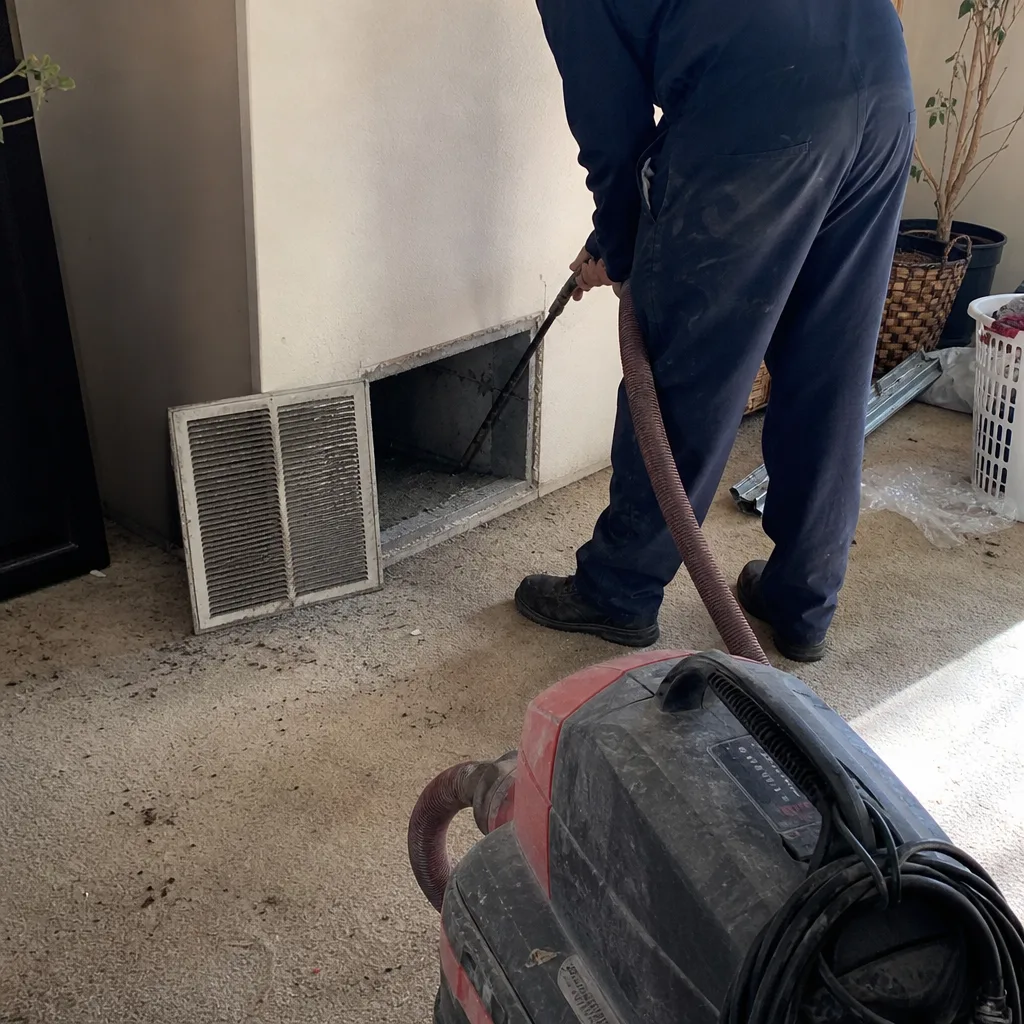 Before
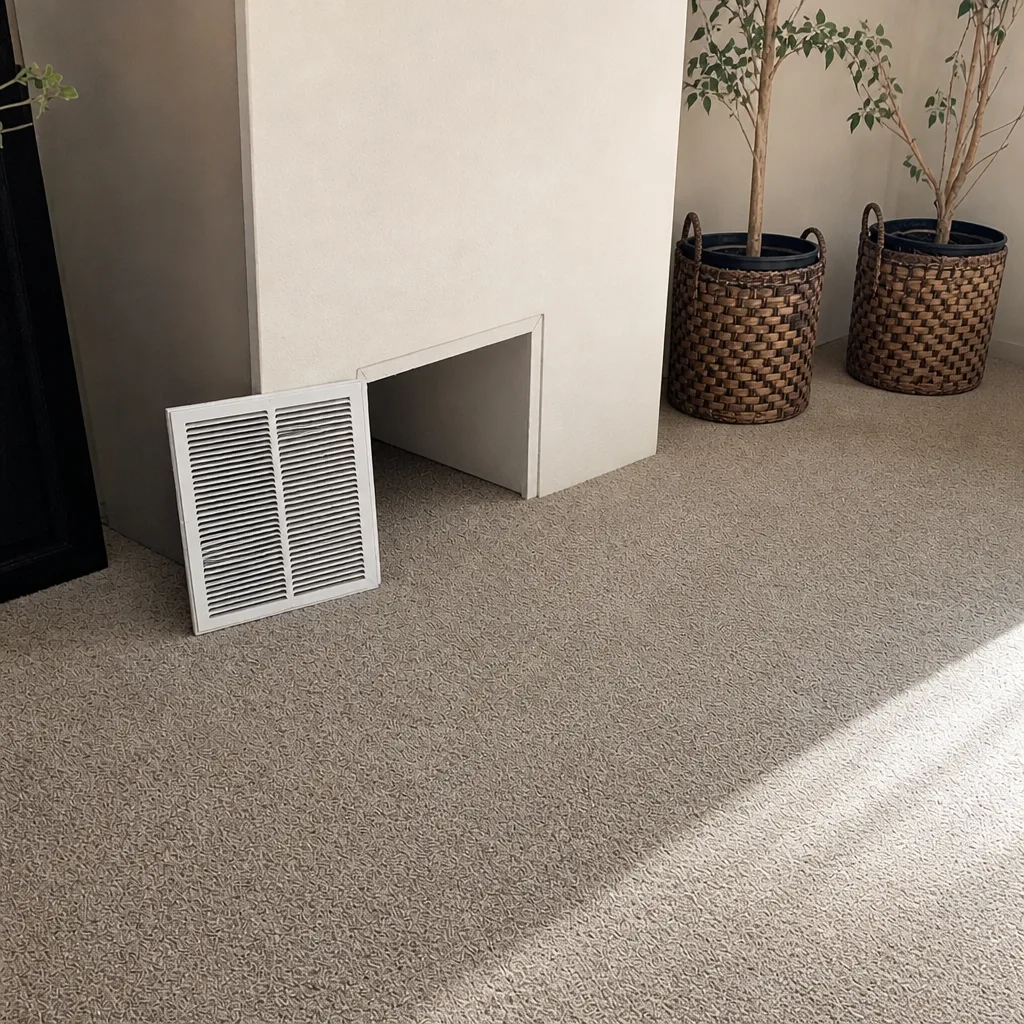 After
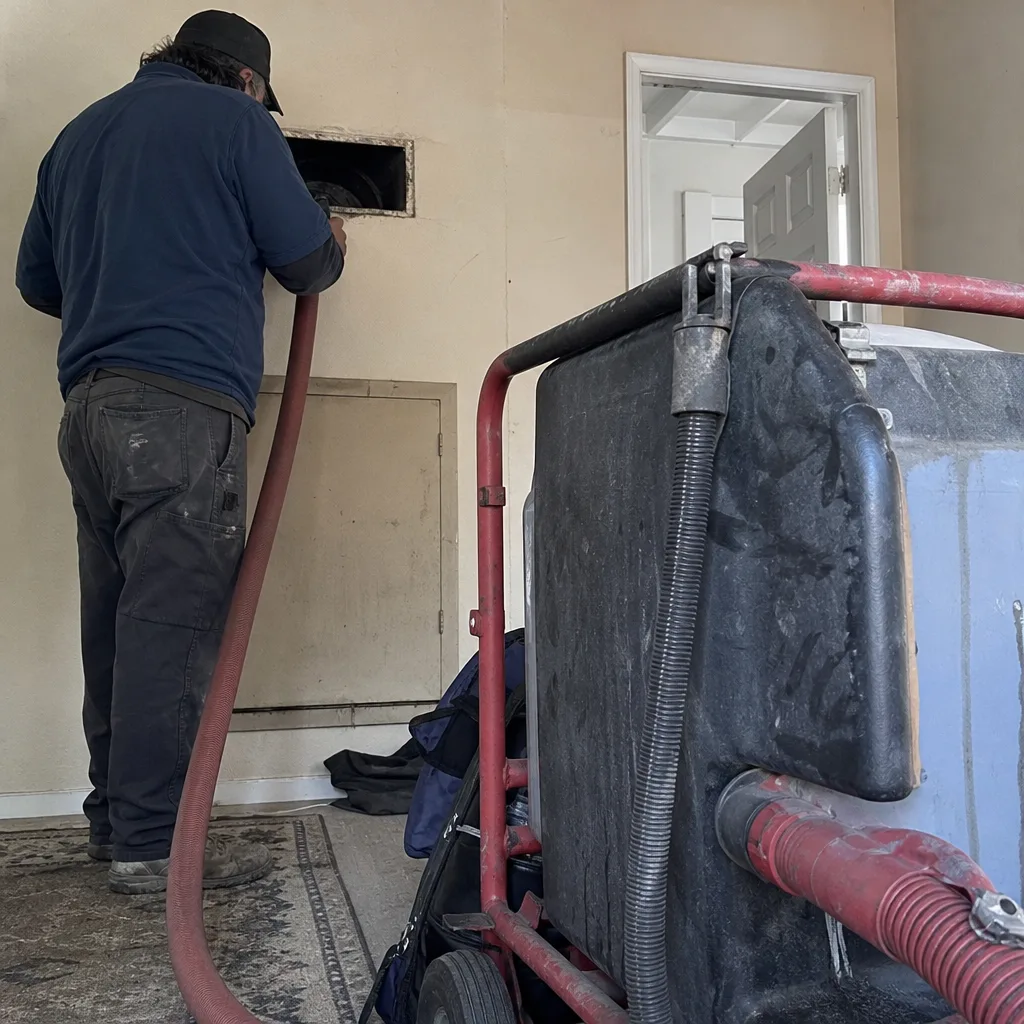 Before
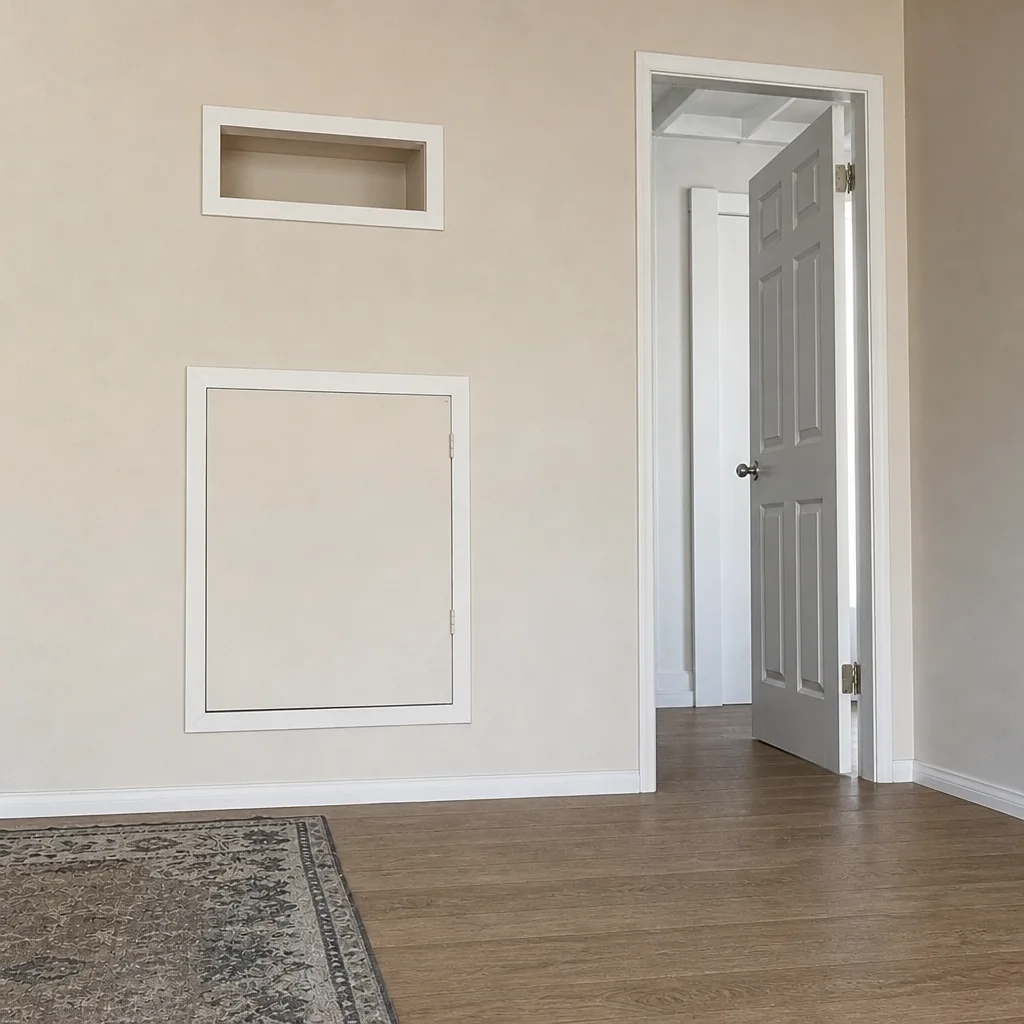 After
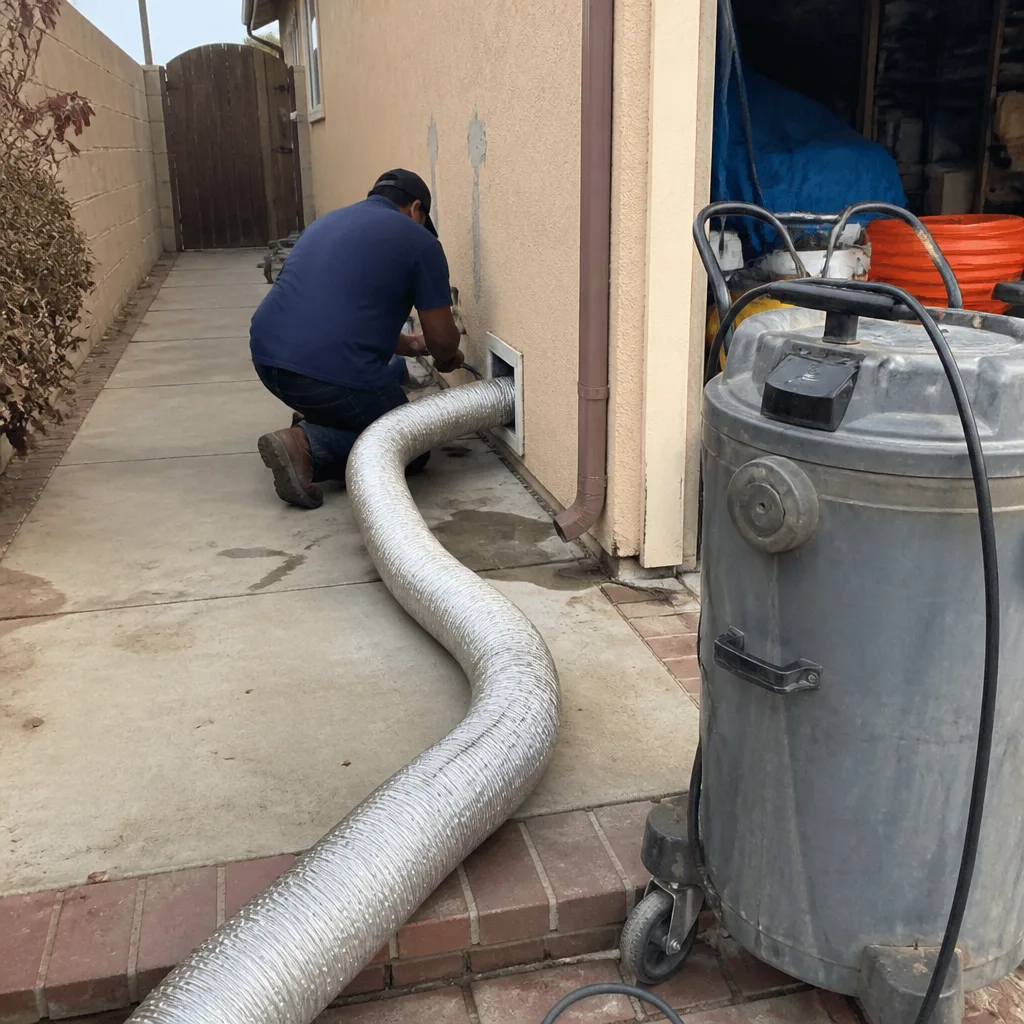 Before
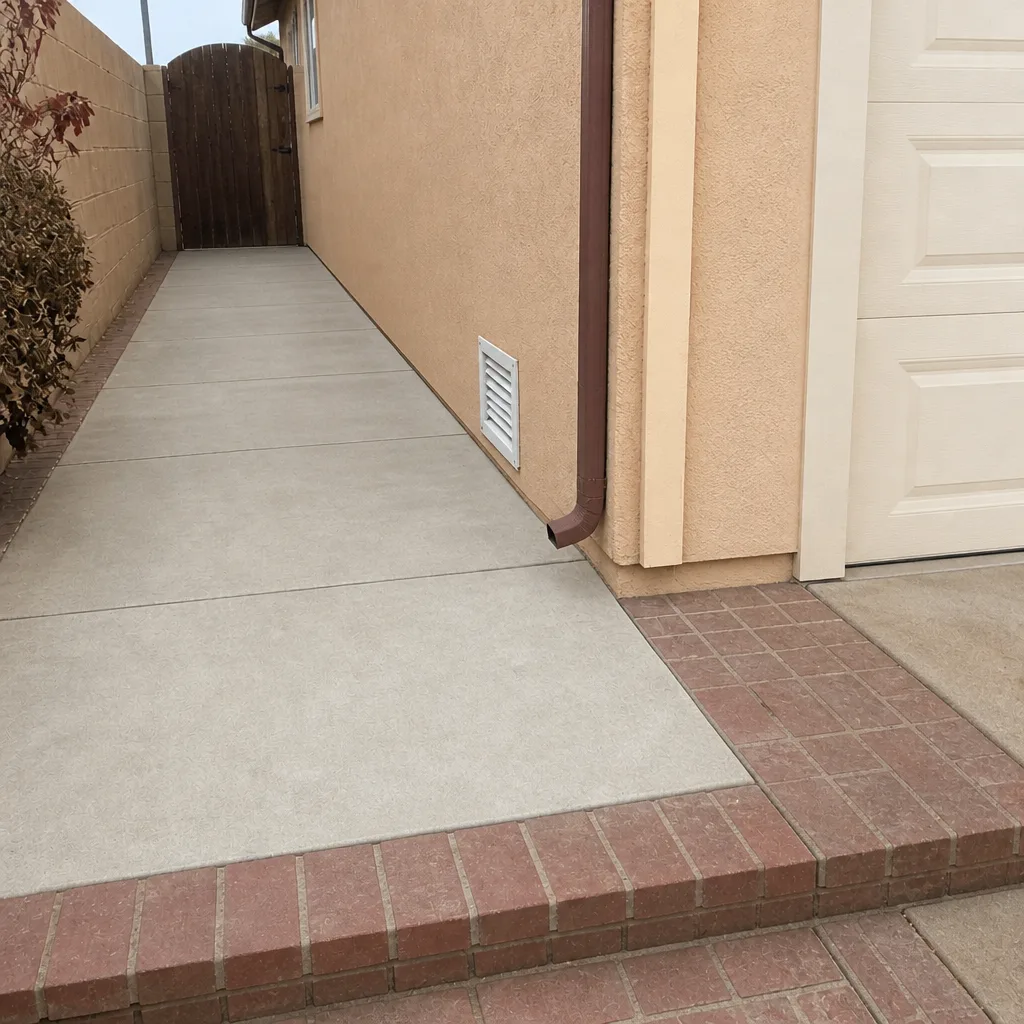 After
How the Full Service Scope Fits Together
Emergency preparation is one thread in a larger picture, and it works best when the duct system gets the same attention as the rest of the system it’s attached to. That’s why the work we do covers the entire air pathway: air duct cleaning for the supply and return runs, HVAC cleaning for the air handler, coil, and blower components that generate and push airflow, and dryer vent cleaning for the separate fire-risk pathway most duct-only providers simply don’t cover. When a system is being assessed after a smoke event or a water intrusion, having one team inspect and service all of it avoids the referral cycle and the risk of cleaning the ducts while leaving a contaminated air handler behind.
The equipment that makes that possible is the reason we can recommend rather than always clean. Rotobrush and Nikro systems handle extraction that consumer-grade tools cannot. Abatement Technologies containment and Guardsman surface protection protect the home during the work. Honeywell and Aprilaire components allow filter and air quality upgrades to be installed in the same visit rather than as a separate project. And when the inspection finds failing duct connections, duct repair and sealing addresses the root cause instead of leaving it for the next event. That full scope is what allows the inspection to carry genuine information rather than just a sales recommendation.
Our technicians have up to 15 years of experience, and that experience is put to work documenting what a system has been through and what it needs, not just cleaning what’s visible from a register. Air you can measure, not just promise – the same principle that makes emergency response different from routine cleaning applies to the whole service.
Common Mistakes to Avoid
- Running the HVAC system during a smoke event with a cheap filter and expecting the ducts to stay clean. A 1-inch fiberglass filter catches almost nothing at the PM2.5 scale, so the system pulls fine particulate directly into the return plenum and duct liner. Shut the system down or upgrade the filter before the event.
- Cleaning the ducts after a smoke event without inspecting the air handler and coil. A contaminated coil and blower wheel keep pushing residue through a cleaned duct system the moment it goes back into service. The handler gets inspected and cleaned as part of the same job.
- Treating post-flood duct contamination as a cleaning problem. Once mold has colonized wet duct liner, cleaning alone cannot fix it. Replacement of the affected liner sections is the only correction, and waiting past the 24 to 48 hour window makes the remediation more extensive.
- Running a high-MERV filter in a filter slot that isn’t sealed. A high-MERV filter in a leaky 1-inch slot pulls unfiltered air around its edges, which defeats the purpose in Buena Park homes where the ducts run under attic or crawlspace conditions.
- Skipping the post-event inspection because the system “seems fine.” A Buena Park homeowner whose system ran through a smoke event often notices nothing until the next allergy season. The inspection is the only way to know whether the liner picked up particulate.
- Hiring a company that quotes per-vent prices over the phone. That pricing structure rewards a surface-level pass and leaves the liner, plenum, and air handler unaddressed. A per-system estimate based on what’s actually found is the only number worth acting on.
- Skipping documentation after the event because the claim form hasn’t been filed yet. Photographing the system before cleaning and requesting a written inspection report is much harder once the work is done. Get the documentation as part of the service.
When to Call a Professional
Some duct work is routine. Emergency response is not. The scenarios where a professional inspection is the right call in Buena Park are specific. If the system ran through a wildfire smoke event of any duration, even with a high-MERV filter, the liner should be assessed. If any water intrusion reached duct runs or the air handler – roof leak, condensate overflow, plumbing failure – get the affected sections inspected within 24 to 48 hours. If a Santa Ana wind event left visible ash accumulation at the return grille, the downstream ductwork almost certainly picked up particulate that a household filter cannot remove. If a system has had recurring musty odor at the registers, especially during the cooling season, that’s a sign of liner contamination or moisture that has already colonized. And if you’re preparing a home for sale or a claim, an inspection with documentation starts the process on the right foot.
Buena Park Air Duct Cleaning Pros offers free estimates in Buena Park – call (855) 658-5164. We answer 24/7. Fast dispatch from 7am to 7pm, Sunday through Friday. Written estimates set the final price, and we don’t quote per-vent pricing over the phone.
Frequently Asked Questions
Most whole-home duct cleanings in Buena Park fall into a typical range based on system size, number of runs, and whether the air handler is included. Post-event smoke or water remediation adds work for liner inspection and containment. We quote one flat price per system after inspection, not per vent, and the written estimate sets the final price. Call (855) 658-5164 for an exact quote – estimates are free.
Cheap quotes usually mean one of three things: no containment equipment, no air handler cleaning, and no documentation. A truck-mounted system with proper HEPA extraction, negative pressure containment, and photographic before-and-after records costs more to run than a shop-vac and a brush. When you’re comparing prices, ask what equipment is being used and whether the quote includes the air handler and coil. Call (855) 658-5164 for an estimate you can compare line-by-line.
You should receive before-and-after photographs of your own ducts, taken from identical angles, plus airflow readings taken before and after cleaning. A professional service documents the pre-clean condition of every accessible run and the post-clean condition so you can compare them directly. If a company can’t produce that, ask why before you book. Call (855) 658-5164 – every estimate we give is documented and every job ends with photos.
For a typical Buena Park home without smoke events or water intrusion, most systems benefit from a full cleaning every few years, with filter changes on a much shorter schedule. The real variable is event exposure. Homes that ran through a smoke event or had any moisture intrusion need an inspection regardless of how recently they were cleaned. Call (855) 658-5164 to schedule an inspection.
Only if the filter is high-MERV, correctly seated in a sealed filter cabinet, and the duct system is tight. A standard 1-inch filter slot lets fine particulate bypass the filter, so running the system during smoke accelerates contamination. If you aren’t sure what filter cabinet you have, shut the system down during the event and schedule an inspection afterward. Call (855) 658-5164 with any questions about your system.
Change the air filter immediately, run the system on fan-only for a few hours with a fresh filter, change the filter again at the 48-hour mark, and inspect the return grille for visible dust or ash accumulation. If the grille is visibly loaded, the ductwork downstream picked up particulate and should be inspected professionally. Call (855) 658-5164 to schedule the inspection – estimates are free.
The Bottom Line
Duct emergency preparation in Buena Park is not a generic clean-after-the-event task. Each event type contaminates differently. Smoke embeds PM2.5 into duct liner in a way surface cleaning can’t reach, wind events require shutdown and filter discipline, and water intrusion creates a mold colonization timeline that starts within 24 to 48 hours and demands remediation, not cleaning. The common thread is preparation and documentation. Get the filter right, seal returns during an event, shut the system down when the event warrants it, photograph everything, and get a professional inspection with before-and-after records after the event clears. That’s the difference between maintenance and emergency response. When you’re ready, call (855) 658-5164. We answer 24/7. Fast dispatch from 7am to 7pm, Sunday through Friday.
To bring the whole system up to standard – cleaning, HVAC service, duct repair and sealing, and air quality upgrades – start at Buena Park Air Duct Cleaning Pros.
Written by the team at Buena Park Air Duct Cleaning Pros.