
Last updated November 25, 2026
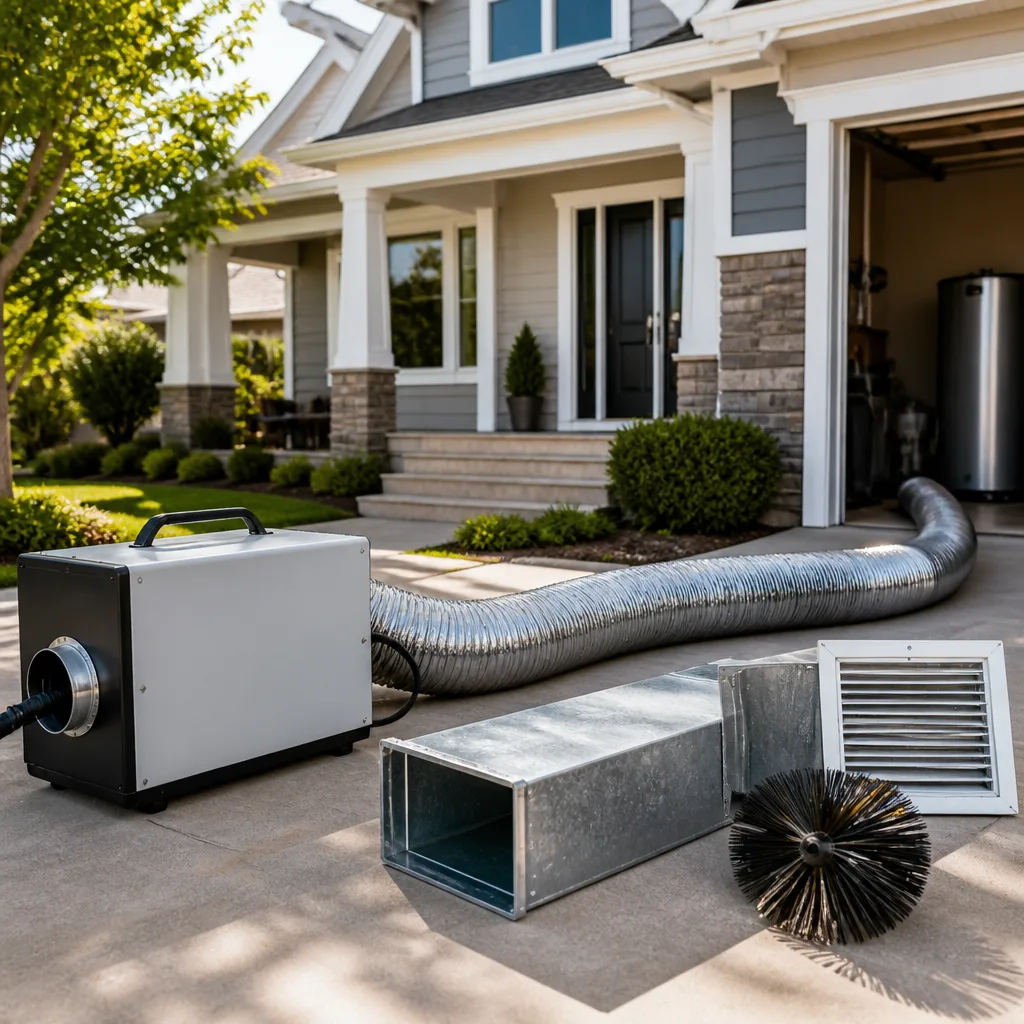 Whole-home duct cleaning
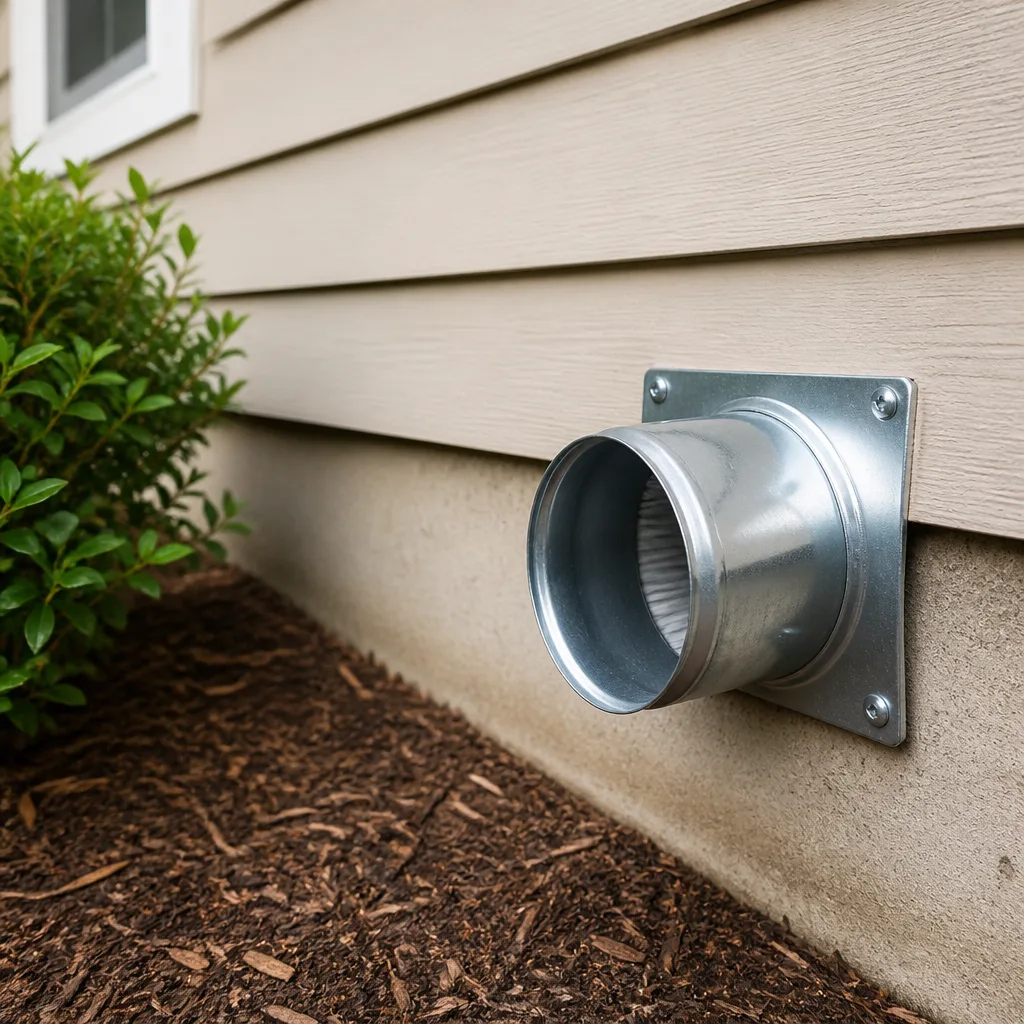 Dryer vent cleaning
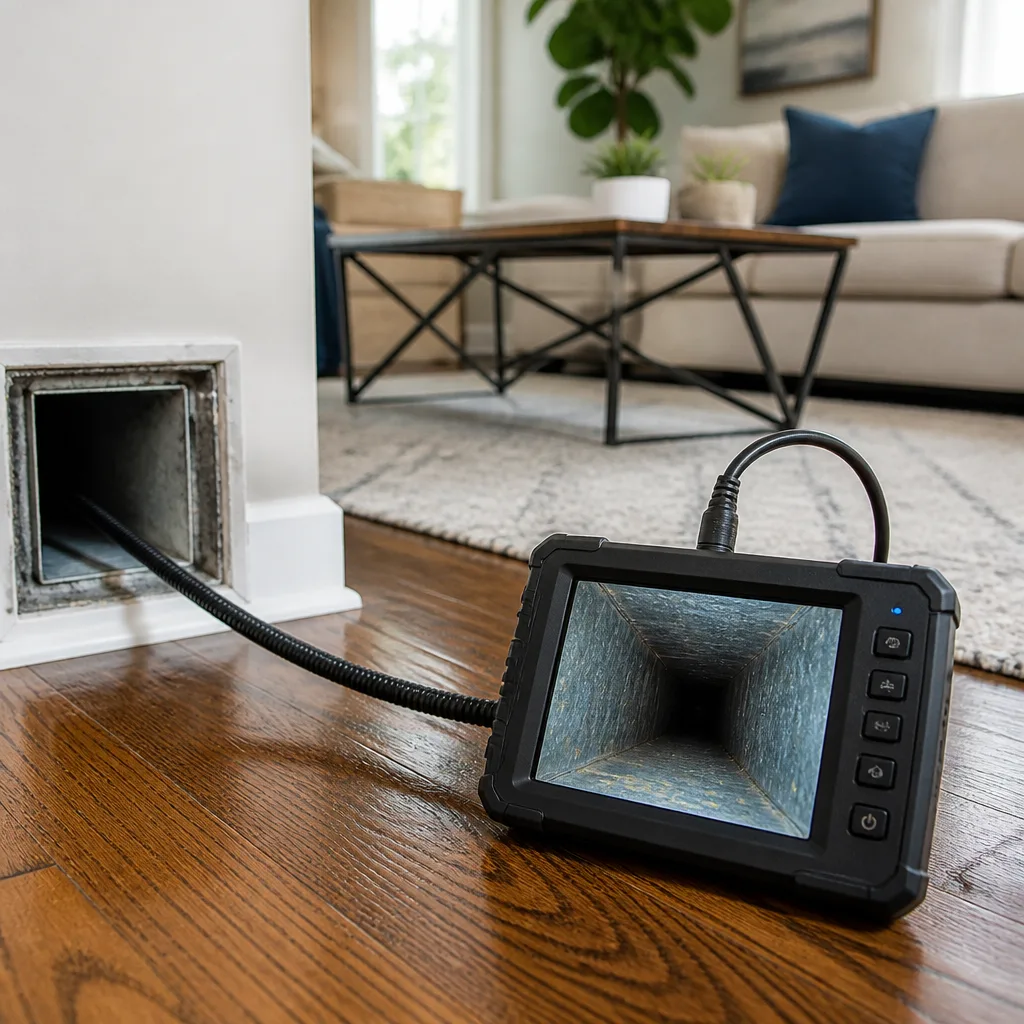 Camera inspection
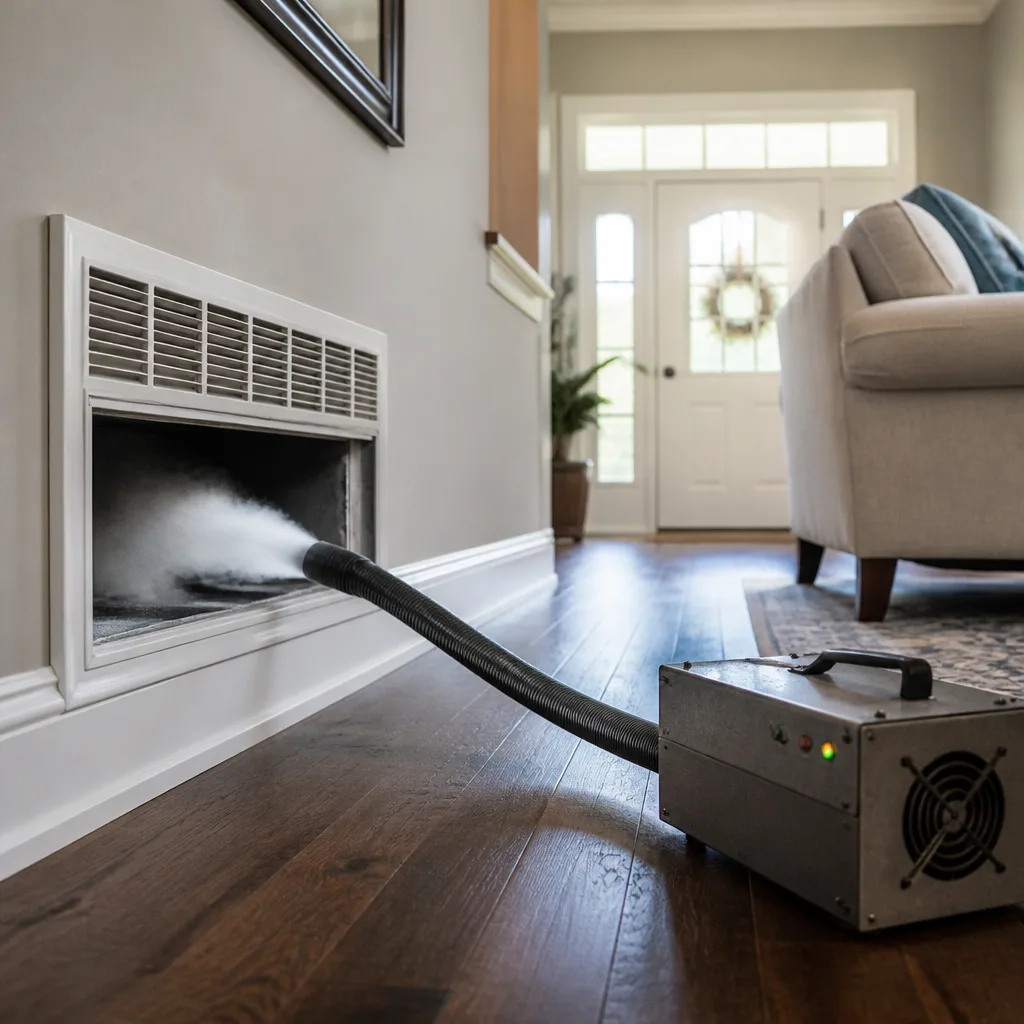 Sanitizing & deodorizing
Whole-system duct and dryer vent check with before-and-after photos - you see exactly what came out of your vents
That "$99 whole-house special" is a bait ad - the real number appears once they are in your hallway, or the "clean" is a shop-vac at the register. We photograph the inside of your ducts before and after instead.
Air Duct Cleaning Cost Breakdown: The Buena Park Homeowner’s Reference for 2026
A $99 “whole-house” duct cleaning quote and a $450 quote are rarely competing for the same job. One is selling access to your vents. The other is selling a full-system clean. The difference only becomes visible once you know what to ask for in writing, because the two quotes use the same words to describe very different amounts of work. In Buena Park, where most of the housing stock runs on forced-air systems that have gone years between cleanings, that gap matters. This reference breaks down what drives legitimate cost, what the 2026 market ranges look like line by line, and how to request a quote that forces scope clarity before you accept any bid.
Quick Answer
Air duct cleaning in Buena Park typically runs $350 to $700 for a standard whole-system clean, with larger homes and more complex duct layouts landing between $600 and $1,200. A dryer vent add-on usually adds $120 to $250, coil cleaning runs $150 to $350, and sanitization treatment adds $150 to $400 depending on square footage and how many vents are treated. The written estimate sets the final price, and we give one flat price per system agreed before any work starts.
Styles & brands we work with
- Whole-home duct cleaning
- Dryer vent cleaning
- Camera inspection
- Sanitizing & deodorizing
Table of Contents
- What actually drives air duct cleaning cost in Buena Park
- 2026 line-item cost benchmarks for the Buena Park market
- Why per-vent pricing hides the real number
- Add-on upsells: which are legitimate and which you can skip
- How to structure a written quote request that forces scope clarity
- Equipment and method: the questions that separate a real clean from a vent wipe-down
- How Buena Park’s climate and housing shape the work
- How to verify the work was actually done
What actually drives air duct cleaning cost in Buena Park
Five variables move the price of a legitimate duct cleaning more than anything else. Understanding them lets you look at two quotes side by side and see whether they’re describing the same job.
Home square footage and vent count. A 1,200-square-foot Buena Park ranch home and a 2,600-square-foot two-story in the Rancho Lucero area do not represent the same amount of work, even if both are described as “whole-house.” Square footage sets the base, but vent count is what actually determines time on task. A typical Buena Park single-family home runs 10 to 16 supply vents and 1 to 3 returns. The larger end of that range takes meaningfully longer to clean properly.
Duct material type. Sheet metal ductwork is the most straightforward to clean and the most rewarding for the equipment. Flexible duct (often called flex duct) is more common in additions and retrofits and requires a softer touch and a different cleaning head. Older homes in Buena Park may have sections of both, which means the technician has to switch methods mid-job. That’s not a markup trick; it’s real time and real equipment changeover.
System accessibility. A system with clear access panels, an attic or crawlspace with room to work, and registers that aren’t buried under furniture or caulked shut will always cost less to clean than one where the technician has to remove panels, detach sections, or run equipment through tight spaces. In Buena Park, the flat-roof ranches common in the older tracts often have tighter attic access than the two-story homes built later, and that shows up in labor time.
Bundled versus separately priced add-ons. A dryer vent cleaning included alongside a duct clean is often cheaper than the same service booked alone, because the technician is already on site with the equipment set up. The same applies to coil cleaning and sanitization. This is the single biggest reason two quotes for what sounds like the same service can differ by $200 or more: one bundles and one doesn’t.
Equipment and containment. A vacuum-only cart-and-hose setup is not the same as a negative-pressure system that seals the work zone and pulls debris out without spreading it through the house. We operate with Abatement Technologies containment protocols because moving dust from one room to another isn’t a clean. That equipment carries a cost, and a legitimate quote reflects it.
If you’ve noticed musty odors or uneven airflow that started before cleaning was ever on your radar, the full-system approach behind our air duct cleaning service exists because price comparison only means something when both quotes cover the same scope.
2026 line-item cost benchmarks for the Buena Park market
These are typical estimated ranges for the Buena Park market in 2026. They’re not coupons and they’re not teaser figures. The written estimate is what sets the final number, and it should be given to you before any work starts.
- Base whole-system clean (supply ducts, return ducts, registers, boot cleanup): $350 to $700 for a typical home; $600 to $1,200 for homes over 2,000 square feet or with unusually complex duct runs.
- Dryer vent cleaning add-on (booked alongside a duct clean): $120 to $250. Booked as a standalone service, expect the upper end of that range.
- Coil cleaning (evaporator coil, the part where airflow meets cooling): $150 to $350 depending on how accessible the coil is and how much buildup it has.
- Sanitization treatment (applied after cleaning, vents and duct runs): $150 to $400 depending on square footage and vent count.
- Duct repair and sealing (patching leaks, sealing joints, reconnecting fallen sections): quoted separately per job once the technician sees what’s leaking. This isn’t a cleaning line item, but it’s the line item that stops the cleaning from being undone in six months.
What justifies the high end of each range
At the top of the base clean range, you’re paying for more vents, more ductwork, a home with mixed duct material, or an attic that takes time to access safely. At the top of the sanitization range, it’s a larger home, more vents, or a system that had significant biological growth needing pre-treatment. At the top of the coil cleaning range, it’s a coil that’s been running 10 or more years without a clean and has significant matted dust.
The point isn’t to chase the bottom of the range. A quote at the very bottom usually means the scope is lighter than what you thought you were buying. A quote at the top should come with a written description of what makes it the top.
You can read more about how we approach the full path from the vent through the air handler on our HVAC cleaning page, which covers the coil and blower components that sit downstream from the ductwork.
Why per-vent pricing hides the real number
Per-vent pricing is common, and the reason it’s problematic is simple: the person quoting and the person cleaning are sometimes different, and the person quoting has an incentive to count low. If you’re quoted at $25 per vent and the quote assumes 10 vents, but your home has 15, that difference becomes a surprise charge once the technician is on site and the equipment is out.
Here’s how to convert a per-vent quote into a whole-system number you can actually compare:
- Count your own supply and return vents before calling anyone. Walk every room, including closets and hallways, and write down the number.
- Ask the quoter to confirm your count against their scope, and to put their vent count in writing.
- Ask whether the per-vent price includes both supply and return vents, or only supply. Many quotes exclude returns, which is often where the worst buildup lives.
- Ask what happens if the technician finds more vents than the quote assumed. A legitimate answer is a written revision before work starts, not a surprise line item after.
- Compare the final whole-system number across quotes, not the per-vent rate.
We don’t quote per vent. We quote one flat price per system, agreed before work starts. That removes the counting problem entirely and it’s a much more honest way to price because it matches how the technician actually works: the whole system gets cleaned, regardless of whether it’s 12 vents or 16.
Add-on upsells: which are legitimate and which you can skip
Some add-ons are worth the money and some exist mainly to pad the invoice. Here’s the honest breakdown.
Legitimate: Coil cleaning, when the technician can describe the buildup in specific terms and it’s actually affecting airflow or efficiency. Sanitization, when there’s biological growth, musty odor, or a reason like recent water intrusion. Dryer vent cleaning, always, because a clogged dryer vent is a genuine fire risk and most pure air-duct competitors skip it. Duct repair and sealing, because a cleaned system with leaking ducts just leaks clean air instead of dirty air.
Legitimate but often optional: Filter upgrades. We carry Honeywell and Aprilaire products and can install them on the same visit as a cleaning, but a filter upgrade is only worth it if you’re undersized or using a filter type your system wasn’t designed for. Not every home needs an upgrade.
Questionable: UV light installation sold as a general “air purification” add-on. UV lights are useful in specific circumstances, but they’re not a substitute for cleaning and they don’t fix a dirty system. If a technician leads with UV before discussing the actual cleaning scope, that’s a signal.
Skip: “Duct coating” sold as a way to seal ducts internally. Legitimate duct sealing is a real service, but a coating sprayed into a dirty ductwork system is generally not the fix a homeowner needs, and it’s often priced high for what it actually delivers. Biocide fogging pushed unprompted is in the same category. If you have a specific biological concern, that’s a conversation to have; a fogging service added to every clean isn’t.
The honest test for any add-on: a credible technician will explain what it fixes, tell you what happens without it, and let you say no without a follow-up sales pitch.
How to structure a written quote request that forces scope clarity
The single most effective thing you can do before accepting any bid in Buena Park is to ask for the right things in writing. Here’s the exact language that forces scope clarity, and it works because the answers will vary widely across quotes, which tells you a lot before money changes hands.
- “Can you send the quote in writing, with the scope of work described line by line?” If they can’t or won’t, that’s your answer.
- “What equipment will be used, and what’s the cleaning method?” Vague answers like “our professional truck” aren’t useful. Look for a specific system name. We use Rotobrush and Nikro systems, which are the same equipment specified in commercial and restoration projects, and we’re happy to describe how they work.
- “Is the price per system or per vent?” Per-vent quotes should be converted to a whole-system number before you compare.
- “Are supply and return vents both included?” Confirm this in writing.
- “What’s included and what’s quoted separately?” Ask specifically about dryer vent, coil cleaning, sanitization, and duct repair. If they say “everything is included,” ask them to describe what “everything” covers.
- “Will I get before-and-after photos of my own ductwork?” Any credible operator can show you photos of your own system. Stock photos aren’t evidence.
- “Is the price final, or are there conditions that could change it?” A legitimate answer names specific conditions (e.g., inaccessible duct sections), in writing, before work starts.
If a quote comes back thinner than you expected, ask one more question: “What exactly are you doing for that price?” The answer will usually show you why it was cheap.
The full-system scope we’re describing here is why our Buena Park Air Duct Cleaning Pros service covers supply ducts, returns, coils, blower, dryer vent, and sanitization in one visit rather than sending you elsewhere for each piece.
Equipment and method: the questions that separate a real clean from a vent wipe-down
The most common way a duct cleaning disappoints is that it cleans the wrong thing. Wiping registers and vacuuming the visible interior of the vents does almost nothing to the sediment that’s settled along the duct runs and collected at the air handler. Real cleaning reaches the whole path.
A few things to look for in the equipment and method description:
- Contact cleaning versus vacuum-only. A proper clean uses a rotating brush or air whip that agitates debris along the full length of the duct, paired with negative-pressure vacuum that pulls it out. Vacuum-only removes what’s loose near the register and leaves the rest.
- Negative pressure and containment. A sealed work zone with containment (we use Abatement Technologies protocols) keeps the debris out of the house while it’s being pulled out of the ducts. Without containment, you may be breathing what comes out of the system.
- Brand-specific equipment. Rotobrush and Nikro systems are the equipment names to look for, or comparable professional-grade setups. If the quote doesn’t name the equipment, ask.
- Surface protection. Floor and furniture protection isn’t a luxury. It’s part of doing the job properly, and it’s the kind of protocol Guardsman products are designed around.
If a technician can’t describe what they’re using and why, that’s a sign they’re not sure how the equipment works, which is a bigger sign than the price tag.
Dryer vents get the same treatment. A dryer vent cleaning that doesn’t actually reach the full run of the vent, including any bends near the exterior termination, isn’t really a cleaning. Ours is described in detail on our dryer vent cleaning page.
How Buena Park’s climate and housing shape the work
Buena Park’s mild climate doesn’t create the extreme seasonal swings that force ductwork into expansion and contraction cycles, but the combination of warm summers, forced-air cooling running hard for months, and the local housing mix creates its own pattern of buildup.
Because the cooling season is long relative to the heating season, the evaporator coil runs much more than the heat exchanger. That makes the coil a critical part of a duct cleaning, because it’s where air passing through the system drops moisture and dust collects. A duct clean that skips the coil leaves the dirtiest component in the system untouched.
The local housing stock matters too. The older single-story tracts in Buena Park often have ductwork run through attics that were built when attic ventilation was less generous than current standards, which means those duct runs accumulate more sediment simply because the attic space sees more dust and less airflow. Newer two-story homes can have more duct volume overall and more complex runs, which takes longer to clean properly. Neither situation is surprising, and both should be reflected in the quote.
If your home has had recent remodeling, debris from the work often finds its way into ductwork. That’s another reason buildup in Buena Park homes can be heavier than the home’s age would suggest, and it’s why the written estimate should include a scope that accounts for what the technician will actually find. This is also why our air duct cleaning work always includes an inspection of the full duct system before prices are set.
How to verify the work was actually done
This is the question that hangs over every duct cleaning, because the work happens out of sight. The answer is straightforward: ask for before-and-after photos of your own system. Not stock photos. Photos taken of your ductwork, showing the register boot before and after, the duct run before and after, the coil before and after. Any credible operator can provide these and does so as standard practice.
Other verification points:
- Written scope of work. Matches the quote you agreed to, line by line.
- Vent count documented. The technician confirms count before work starts and after.
- Debris disposal described. What comes out of your ducts should be removed from the property, not into your attic.
- Post-clean observation. If there’s a duct repair needed, it should be described in plain terms, with photos, so you can see the reason before you agree to anything.
We set one flat price per system, provide before-and-after photos as standard, and back the work with a satisfaction guarantee. If the photos don’t show a clear difference, the conversation is straightforward. You’ve seen the proof.
Common Mistakes to Avoid
- Comparing per-vent quotes to whole-system quotes. Convert both to a whole-system number before you compare, or you’re comparing two different jobs.
- Accepting a quote without a written scope. A verbal quote is not a quote; it’s an opening offer. Ask for it in writing with the scope described line by line.
- Assuming a low price is a discount. A quote that comes in far below every other quote usually means a lighter scope, not a bargain. Line-item the difference before you decide.
- Skipping the coil. In Buena Park’s cooling-heavy climate, the evaporator coil runs more than the heat exchanger and accumulates more dust. A duct clean that skips the coil misses the dirtiest component.
- Buying a filter upgrade before checking the system first. A Honeywell or Aprilaire filter upgrade is worth it when the system is undersized for its current filter, but adding a premium filter to a system not designed for it can reduce airflow instead of improving it. Check the system first.
- Not asking for before-and-after photos. If the work can’t be shown, it can’t be verified. Ask before you accept the quote.
- Treating duct sealing as optional. A cleaned system with leaking ducts leaks clean air instead of dirty air. If the inspection finds leaks, sealing is not a sales add-on; it’s the difference between the cleaning working and not working.
See the difference
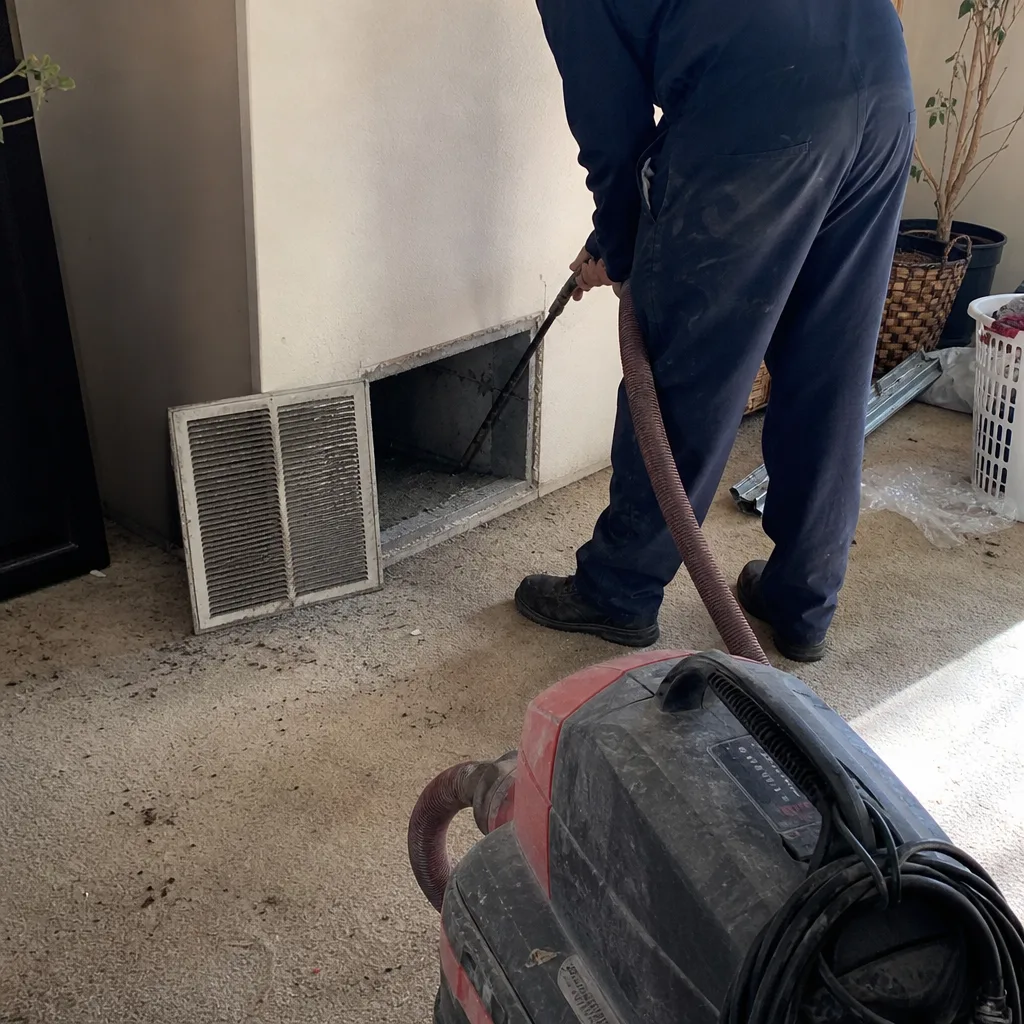 Before
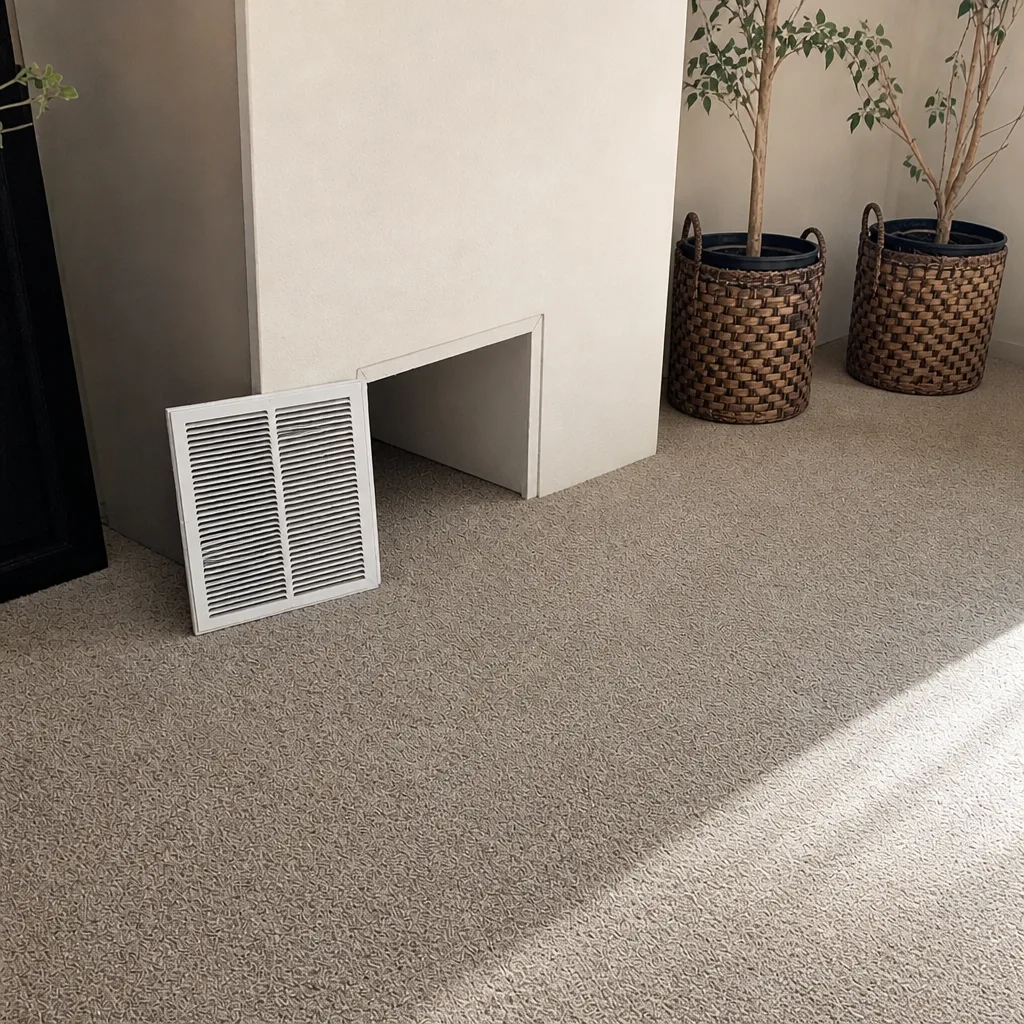 After
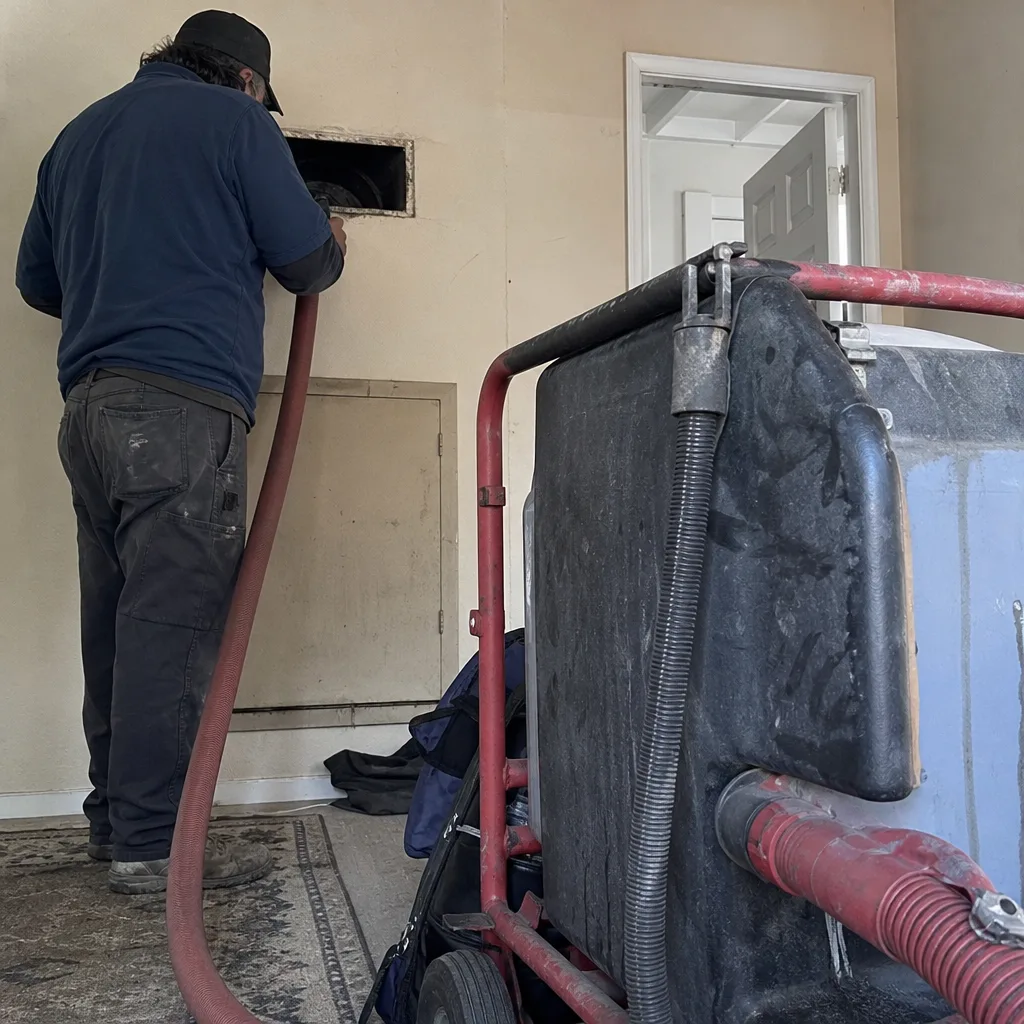 Before
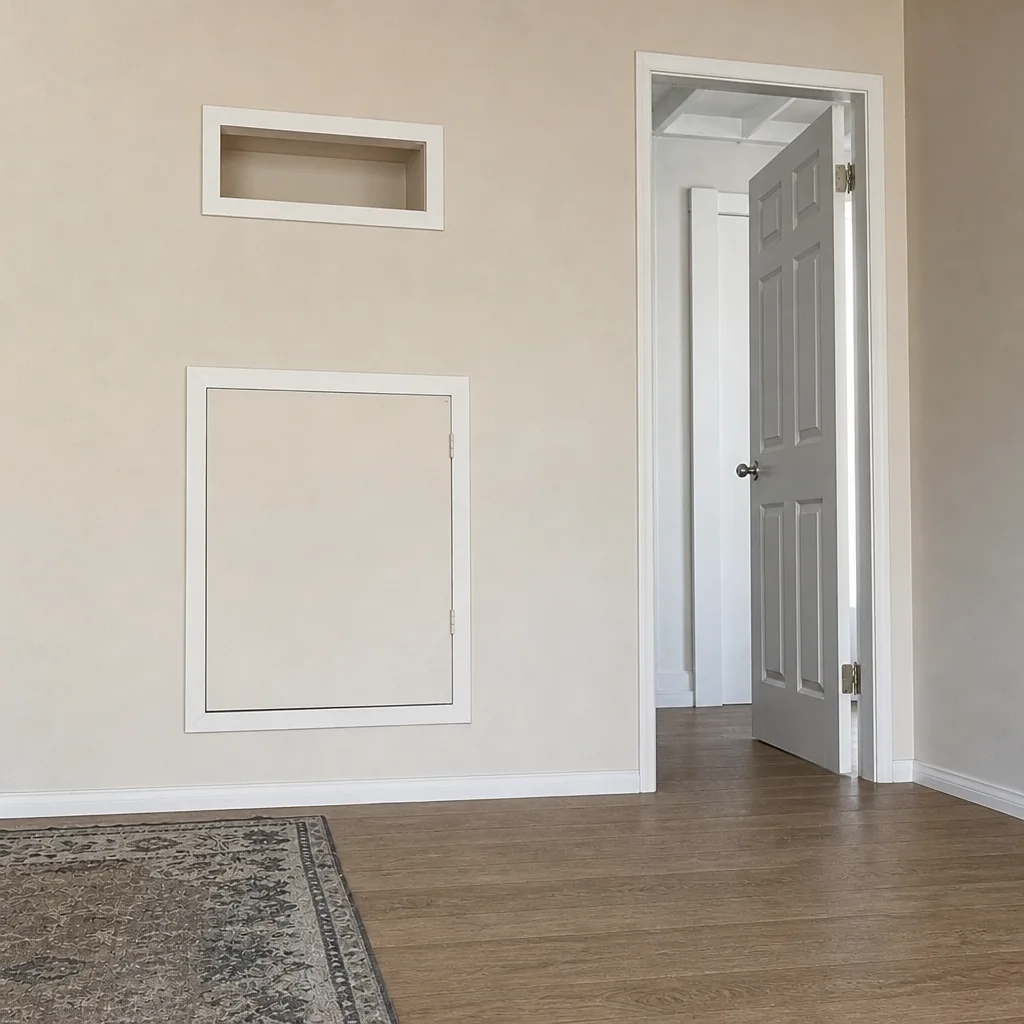 After
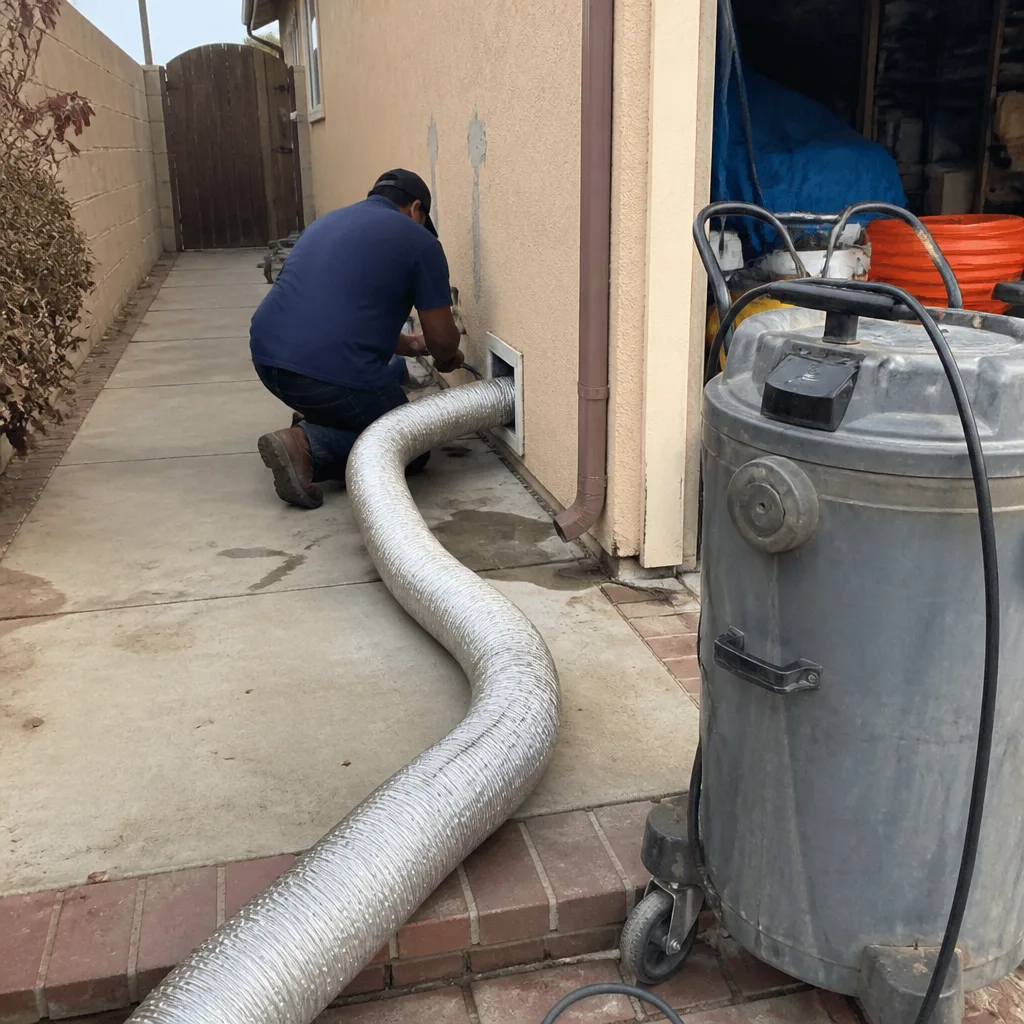 Before
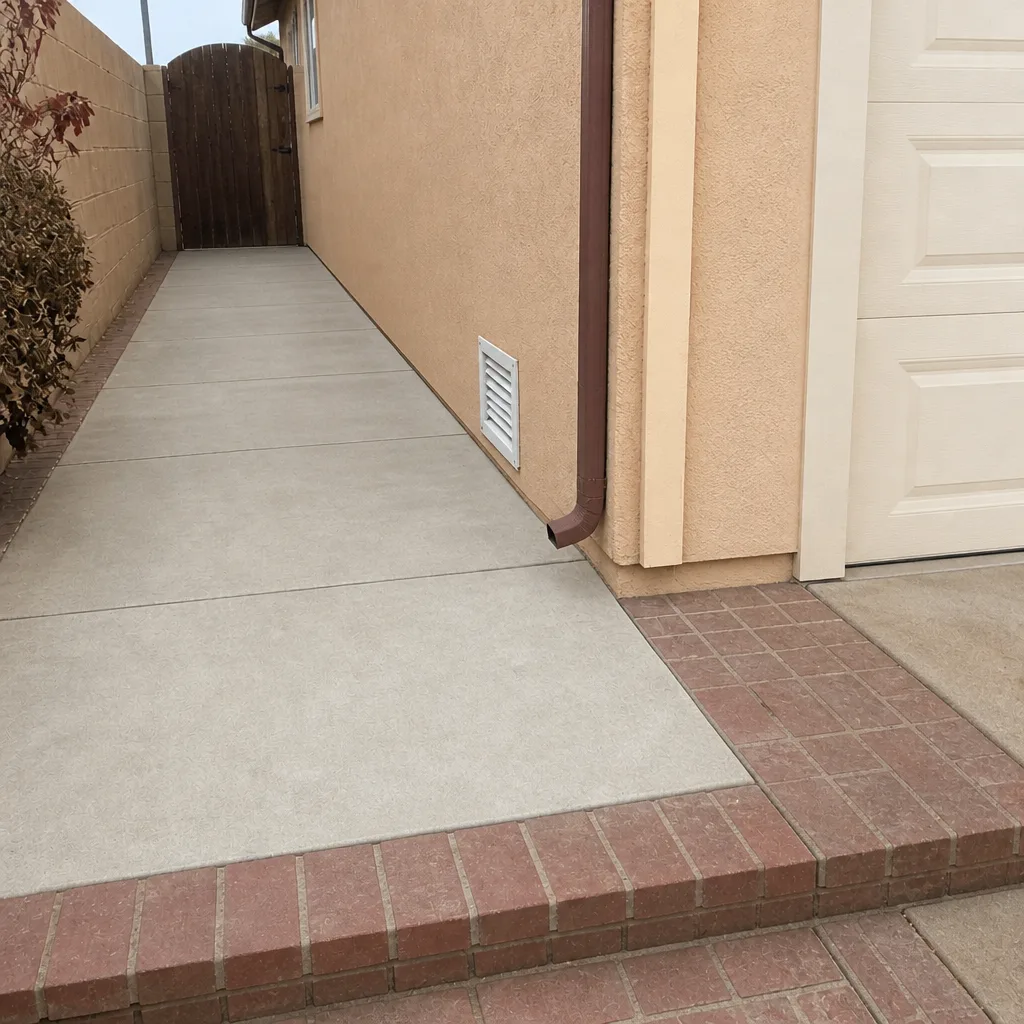 After
When to Call a Professional
Some situations need a technician, not a homeowner running a shop vac. Call when you notice visible dust blowing from a register right after the system cycles on. Call when there’s a consistent musty or “dirty sock” odor every time the cooling starts, which usually points to coil or duct buildup that needs actual cleaning, not air fresheners. Call when allergy or asthma symptoms flare up indoors and the pattern lines up with the system running. Call when you see uneven airflow, warm and cool rooms on the same zone, or gaps at duct joints that weren’t there before. Call when you’ve noticed higher energy bills that don’t match your usage. Call when your dryer is taking longer to dry a load, which points to a vent restriction. And call if it’s been years since the system was last cleaned anywhere in the Buena Park area and the house has a forced-air system. Buena Park Air Duct Cleaning Pros offers free estimates in Buena Park. Call (855) 658-5164. We answer 24/7. Fast dispatch from 7am to 7pm, Sunday through Friday.
Frequently Asked Questions
Air duct cleaning in Buena Park typically costs $350 to $700 for a standard whole-system clean, and $600 to $1,200 for larger homes or complex duct layouts. Add dryer vent cleaning ($120 to $250), coil cleaning ($150 to $350), or sanitization ($150 to $400) depending on what your system needs. The written estimate sets the final price. Call (855) 658-5164 for a free estimate.
Cheap quotes usually describe a lighter scope of work: fewer vents, supply only, no coil, no containment equipment, or no dryer vent. Converting a per-vent quote to a whole-system number and asking what the quote actually covers is the fastest way to see the difference. If two quotes look $250 apart, ask both to describe their scope line by line. Call (855) 658-5164 for a free estimate on a full-system clean.
Ask for before-and-after photos of your own ductwork, not stock photos. A credible operator will provide them as standard, along with a written scope of work that documents the vent count and the services performed. If you can’t see the difference, you can’t verify the work. Call (855) 658-5164 and we’ll walk you through what a full-system clean includes.
Most Buena Park homes do well with a whole-system clean every three to five years, with more frequent cleaning if the home has pets, recent remodeling, allergy-sensitive occupants, or a system that’s shown visible dust buildup. Between cleanings, replacing the filter on schedule and addressing duct leaks when they’re found is what keeps the system from getting dirty again. Call (855) 658-5164 to schedule an estimate and find out what your specific system needs.
Routine duct cleaning is usually not covered by homeowner’s insurance, because it’s maintenance rather than damage remediation. Coverage depends on your specific policy and the reason for the cleaning, so ask your insurer before assuming it’s covered. We can work with your insurer if the cleaning is connected to a covered event. Call (855) 658-5164 for a free estimate.
A shop vac reaches the register and a short distance into the duct, but it can’t agitate and extract sediment along the full length of the duct run, and it can’t handle the coil or air handler components. It also stirs up more dust than it captures in the process, which is why containment equipment matters. A full-system clean from a trained technician with professional equipment is a different scope of work, not a more expensive version of the same job. Call (855) 658-5164 to see what your system actually needs.
The Bottom Line
A Buena Park duct cleaning quote is only as useful as the scope behind the number. Whole-system cleans run $350 to $700 for typical homes, and $600 to $1,200 for larger or complex systems, with dryer vent, coil, and sanitization as priced add-ons. The cheapest quotes are usually cheapest because they clean less. The way to close that gap is to ask for a written scope, name the equipment, ask whether return vents are included, convert per-vent to whole-system, and ask for before-and-after photos of your own system. That’s what makes two quotes comparable enough to actually choose between them. One flat price per system, agreed before work starts, with photos of what came out, is the outcome you’re looking for.
Buena Park Air Duct Cleaning Pros covers air duct cleaning, dryer vent cleaning, HVAC cleaning, duct repair and sealing, and air quality and sanitizing services for residential and light-commercial customers in Buena Park. The local pro is licensed and insured as their state requires, we use Rotobrush and Nikro equipment, and we carry Honeywell and Aprilaire products for filter upgrades on the same visit. Our technicians have up to 15 years of experience. Call (855) 658-5164 for a free estimate. We answer 24/7. Fast dispatch from 7am to 7pm, Sunday through Friday.
Written by the team at Buena Park Air Duct Cleaning Pros.