
Last updated November 25, 2026
 Whole-home duct cleaning
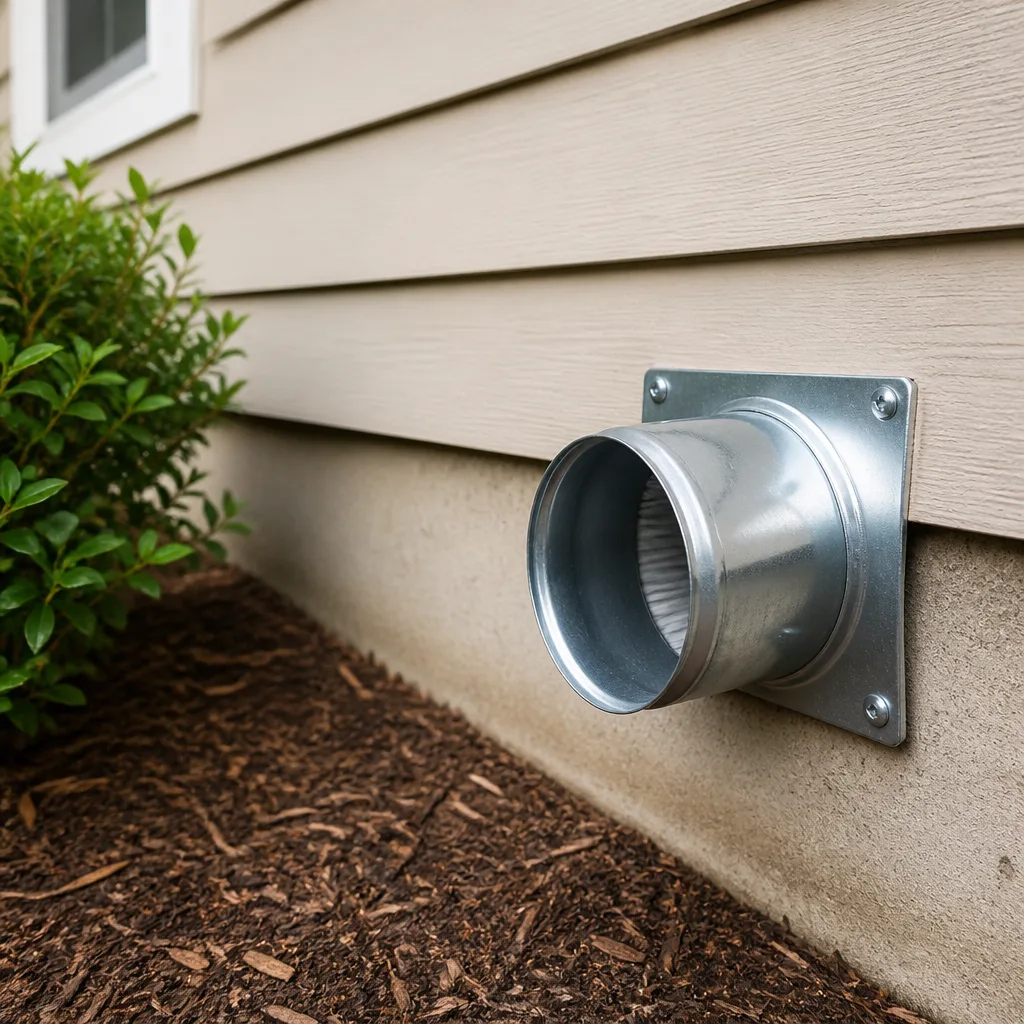 Dryer vent cleaning
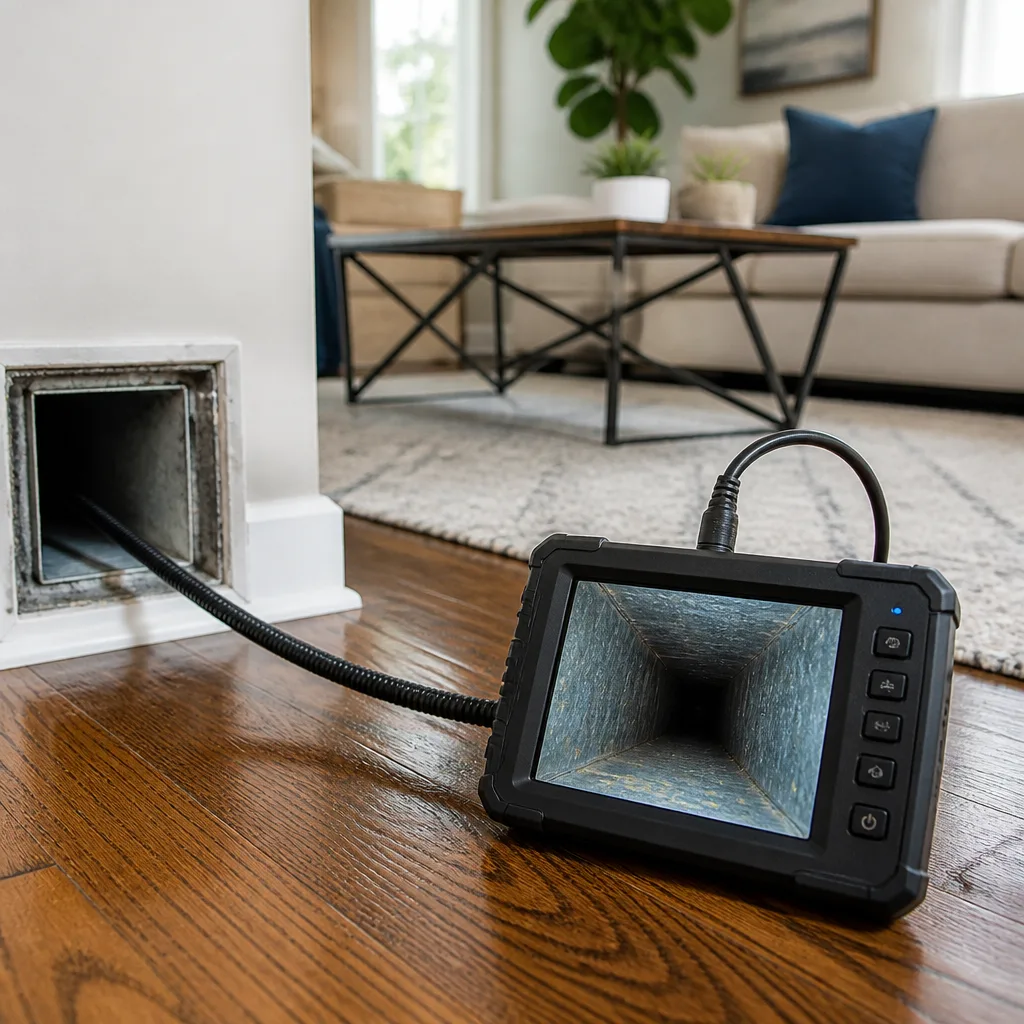 Camera inspection
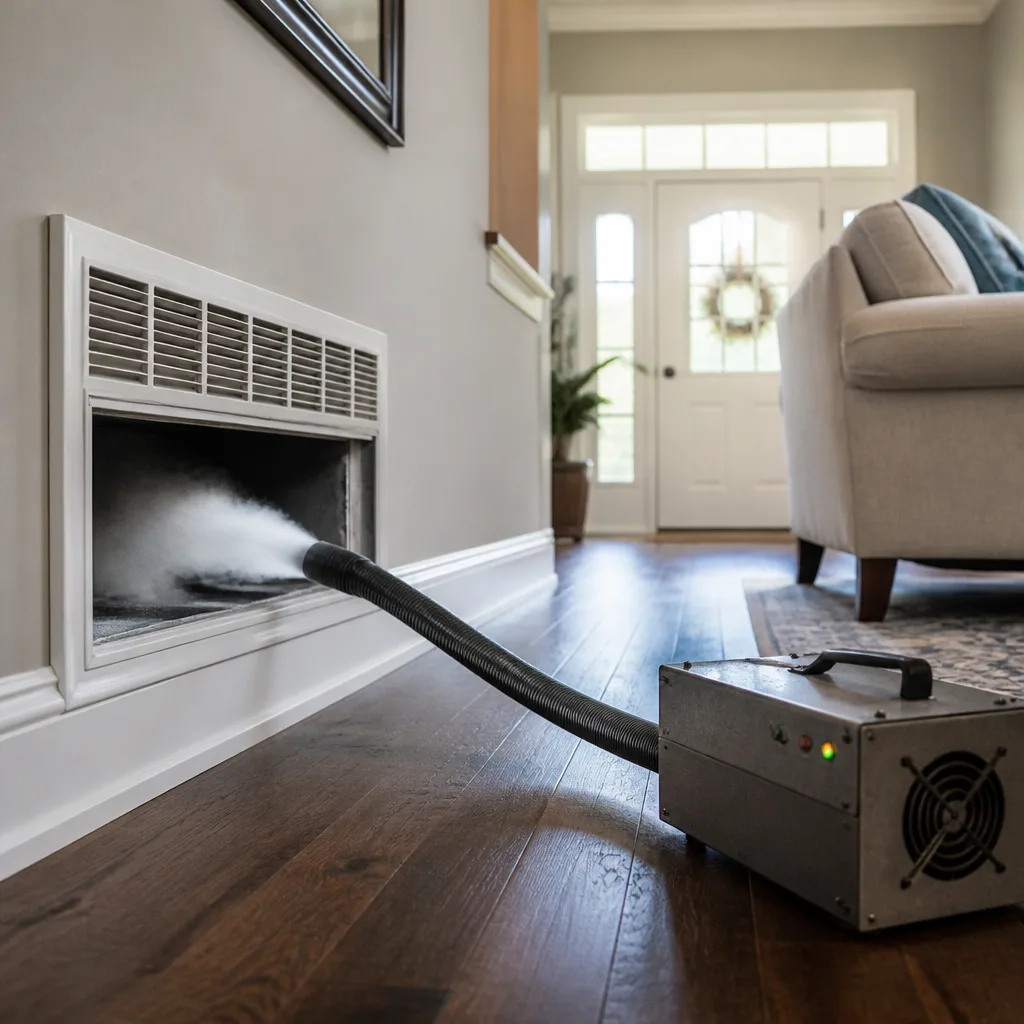 Sanitizing & deodorizing
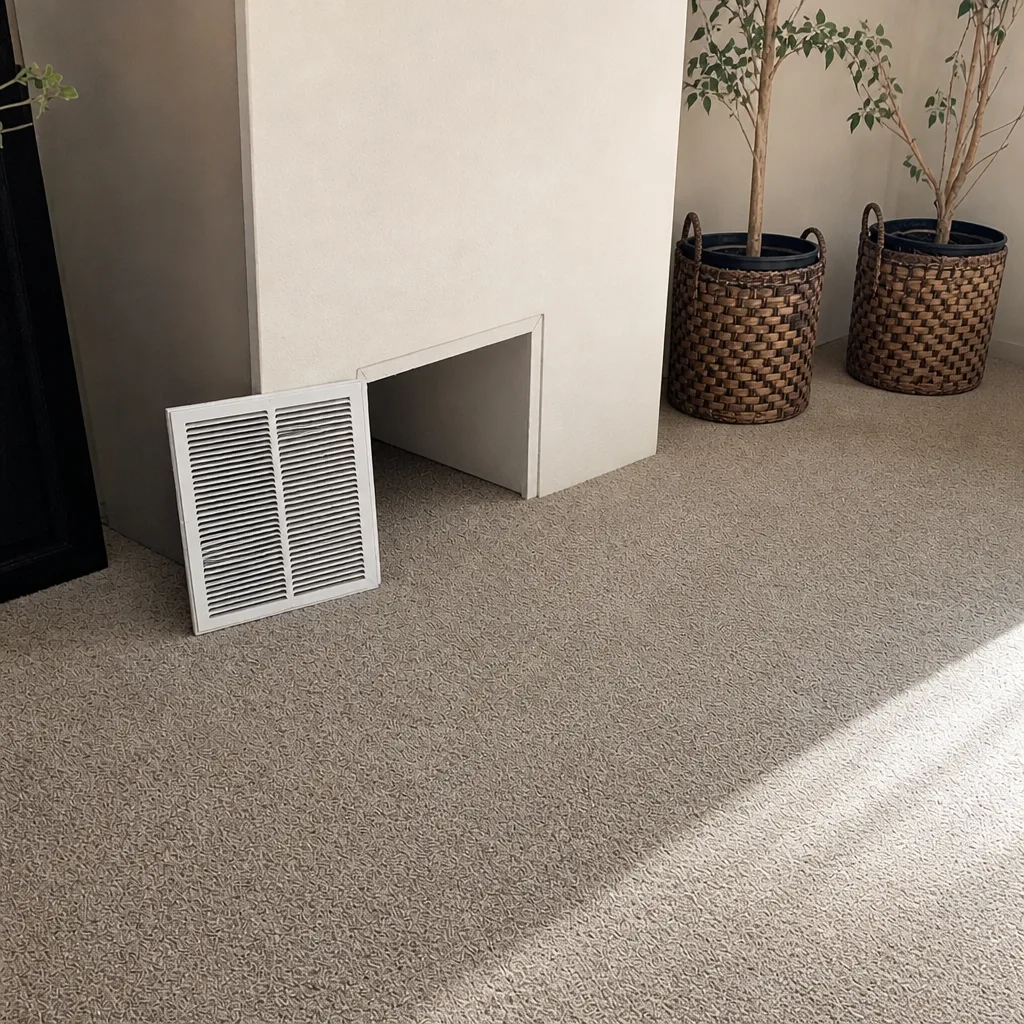
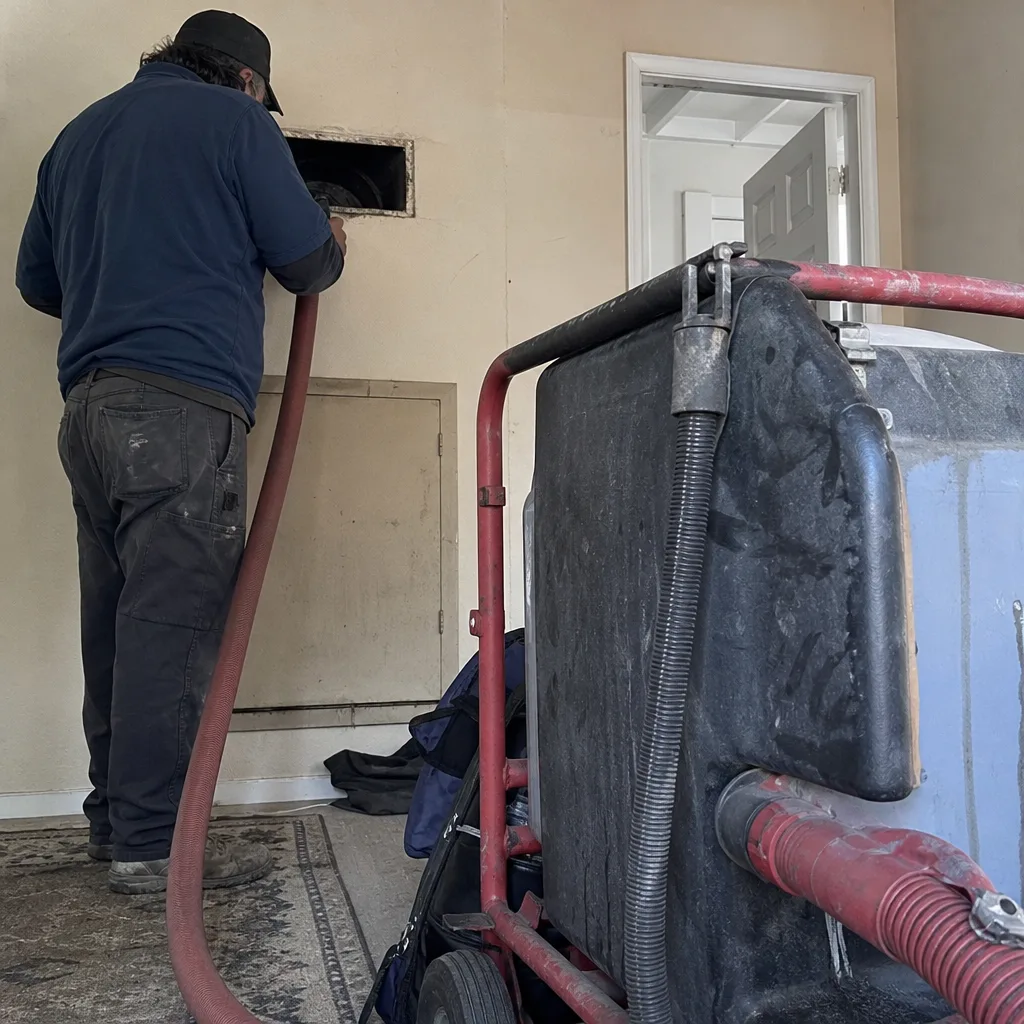
Whole-system duct and dryer vent check with before-and-after photos - you see exactly what came out of your vents
That "$99 whole-house special" is a bait ad - the real number appears once they are in your hallway, or the "clean" is a shop-vac at the register. We photograph the inside of your ducts before and after instead.
Seasonal Air Duct Cleaning Care for Buena Park: Year-Round Homeowner’s Guide
Orange County doesn’t have traditional seasons, but your duct system does. Most Buena Park homeowners think about duct cleaning once, maybe after a remodel or a move, then file it away as a one-time chore. The reality is messier. Your ducts live through four genuinely different stress windows each year, shaped by Santa Ana winds, marine layer humidity, and the long cooling runs of a Southern California summer. The window that matters most, the October-through-December Santa Ana period, is the one almost nobody plans for. This guide walks through what each season actually does to your system, how to read the signs, and how to build a cleaning schedule that fits your specific home instead of a generic calendar.
Styles & brands we work with
- Whole-home duct cleaning
- Dryer vent cleaning
- Camera inspection
- Sanitizing & deodorizing
Quick Answer
Air ducts in Buena Park need attention on a seasonal rhythm, not a fixed annual date. The highest-priority window is fall, when Santa Ana winds push windborne particulate into return systems and load filters faster than any other time of year. From there, winter heating activation, spring marine layer humidity, and peak summer cooling each expose a different failure mode. A cleaning and inspection schedule built around those four windows, plus your duct material and your home’s proximity to Beach Blvd and La Palma Ave, will do more for your indoor air than any single cleaning.
Table of Contents
- Why Buena Park’s Climate Creates Four IAQ Stress Seasons
- Fall and the Santa Ana Window: Your Highest-Priority Cleaning Season
- Winter: What Heating Activation Reveals About Summer Dust
- Spring and June Gloom: Humidity, Flex Duct, and Mold Conditions
- Summer: Coils, Drain Pans, and Peak Cooling Load
- How to Build a Property-Specific Seasonal Log
- Signs Your Duct System Is Overdue, Season by Season
- Common Mistakes to Avoid
- When to Call a Professional
- Frequently Asked Questions
Why Buena Park’s Climate Creates Four IAQ Stress Seasons
Buena Park sits in a part of Orange County where the weather is mild enough that homeowners reasonably assume nothing much happens to their ductwork. That assumption breaks down once you look at what actually moves through a duct system over twelve months. Temperature is only one variable, and here it’s the least interesting one. The three that matter more are wind events, humidity patterns, and regional fire activity, and each one hits on its own schedule.
Wind is the big one. Santa Ana conditions draw dry, particle-heavy air from the interior toward the coast, and that air doesn’t stay outside. Every return grille in your home pulls it in, through the filter, and into the duct lining. Regional fire activity during the same window adds fine ash to that load. Humidity arrives on a different calendar, peaking as the marine layer settles in from late spring into early summer. And cooling load peaks in mid-to-late summer, when your air handler runs long enough that coil and drain pan condition start to matter in a way they don’t in milder months.
What makes Buena Park distinctive is how those windows stack against the local built environment. Homes near Beach Blvd and La Palma Ave sit in a corridor with steady vehicle traffic, which means ambient particulate levels at the return grille are higher to begin with. Add a Santa Ana event on top and filter loading accelerates well past what a homeowner expects. We’ve seen return filters in this corridor load visibly within weeks of a strong wind event, while similar homes a few blocks off the arterials show far less buildup over the same period.
The practical takeaway is that a uniform “clean it once a year” approach misses the timing. A system cleaned in July has a full fall wind season ahead of it. A system cleaned in late fall starts the humid spring with a cleaner lining, which matters more than most people realize once you get to the flex duct discussion below. Treating the year as four distinct windows, each with its own inspection focus, is what separates a planned maintenance rhythm from a reactive one.
The four windows, in order of priority for most Buena Park homes:
- Fall (October through December): Santa Ana wind and fire-ash loading. Highest particulate exposure of the year.
- Winter (post-Santa Ana, heating activation): First-heat inspections reveal accumulated summer dust before it circulates.
- Spring (late spring, June Gloom lead-in): Rising internal duct humidity and mold conditions in flex duct.
- Summer (peak cooling): Coil and drain pan inspection timed to maximum runtime.
If you only do one thing this year, do the fall inspection. Everything else builds on it. For a full explanation of what a proper cleaning involves, see our page on air duct cleaning.
Fall and the Santa Ana Window: Your Highest-Priority Cleaning Season
If there is one window in the Buena Park year where duct cleaning pays off most clearly, it’s the Santa Ana season, typically October through December. This is when dry, particulate-heavy air moves through the region and your HVAC system becomes the primary pathway for it to enter your living space. The filters catch some of it; the rest settles into return duct lining, supply runs, and the air handler cabinet. A system that was borderline acceptable in September can be meaningfully loaded by December.
Two things happen to a duct system during a Santa Ana event. First, filter loading spikes. A filter that would normally last a full cycle can clog in a fraction of the time when the outside air is thick with dust and ash. Second, the duct lining itself accumulates particulate, especially in return runs where airflow is slowest and settling is most likely. Filter loading is visible and easy to catch. Lining accumulation is not, which is why post-event inspections matter more than most homeowners assume.
What a proper fall assessment covers:
- Return filter condition and loading rate compared to the previous cycle
- Visible particulate accumulation in return and supply runs
- Air handler cabinet and blower wheel condition
- Any evidence of ash or fine particulate intrusion at grilles near exterior walls
- Whether duct sealing has degraded, allowing unfiltered air into the system
Timing is the variable most homeowners get wrong. Cleaning before a wind event leaves the system exposed during the highest-load weeks. Cleaning immediately after an event catches the bulk of the accumulation while it’s still in the early settling phase. The practical recommendation is a post-event inspection each fall, with cleaning performed if the load warrants it. In a strong wind year, that might mean one cleaning in November and a follow-up check in January. In a milder year, a single post-event assessment may be all you need.
The work itself, when it’s done properly, uses commercial-grade equipment rather than a shop-vac. We run Rotobrush and Nikro systems, the same class of equipment specified on commercial and restoration projects, and we apply Abatement Technologies containment protocols during the job so the dust we’re removing doesn’t end up in the rest of the house. That containment step is the difference between a cleaning and a redistribution, and it matters most in exactly the high-particulate conditions a Santa Ana season creates.
For homeowners in the Beach Blvd and La Palma Ave corridor, fall is the season to be most attentive. Vehicle particulate exposure stacks on top of windborne loading, and the combined effect on return filters is noticeably faster than in quieter blocks. If your filter is loading visibly every few weeks from October through December, that’s your system telling you the annual cleaning schedule doesn’t match your specific exposure.
Winter: What Heating Activation Reveals About Summer Dust
The first cold snap of the year is a diagnostic moment, and most homeowners walk right past it. When you turn the heat on for the first time after months of cooling-only operation, the system pushes air through ductwork that has been sitting relatively quiet. Whatever accumulated over the summer, from dust to fine particulate from the fall wind season, gets circulated through the house within the first hour of heating. That first-heat smell, the faintly dusty odor that fades after a while, is real material moving through the system.
Winter in Buena Park is mild, which is actually a useful thing for duct maintenance. You don’t have to contend with the extremes that drive duct failures in colder climates. What you do have is a heating season short enough that homeowners often skip the inspection entirely, assuming that because heating runs only a few weeks, the ductwork isn’t doing much. The opposite is true. The first heat activation is when accumulated particulate gets its clearest chance to enter the living space.
A first-heat inspection, done right, looks at:
- Filter condition after sitting through the cooling season and fall wind events
- Visible dust load in supply runs, especially those feeding bedrooms that stayed closed during summer
- Blower wheel condition and any accumulation on the air handler
- Any odor or mustiness at the grilles when the heat first comes on
- Duct connection integrity, since a winter inspection is a good time to catch separation that started earlier
The reason this window matters is sequencing. A fall cleaning gets the bulk of the Santa Ana load out. A winter inspection confirms whether anything accumulated after that cleaning, whether the heating system distributed what remained, and whether there’s a duct repair issue that needs attention before the humid spring. If the heating season produces a persistent odor that doesn’t clear within a few days, that’s a sign to look at the system rather than tolerate it.
This is also a good window for a broader HVAC check. Our HVAC cleaning service covers the air handler components that duct cleaning alone doesn’t reach, and pairing the two during a winter inspection keeps the whole pathway, from return grille to air handler, in the same maintenance rhythm. When we find a separation or a failed joint during a cleaning, we repair and seal it on the same visit rather than flagging it for a later appointment. That’s the “we repair what we find” part of the job, and winter is when it tends to surface.
Spring and June Gloom: Humidity, Flex Duct, and Mold Conditions
Late spring brings the marine layer, and with it a shift in the internal environment of your duct system. As outside humidity rises, so does internal duct humidity, particularly in homes where the system circulates air pulled from unconditioned or semi-conditioned spaces. This is the season when mold growth conditions become plausible inside flex duct, and it’s also the season when those conditions are easiest to catch before they become a real problem.
Flex duct deserves specific attention here. Its interior surface is corrugated, which means condensate and moisture have more places to sit than in smooth sheet metal. In a humid stretch, those low points hold moisture longer. Add a cooling system that cycles on and off and you get repeated condensation events on the same interior surfaces. That’s the setup mold needs: moisture, organic dust as a food source, and enough time. Spring is when that clock starts if the duct lining is already loaded with fall and winter particulate.
What to look for during a spring inspection:
- Musty or earthy odor at supply grilles, especially in rooms with limited airflow
- Visible moisture or staining around flex duct connections
- Condensation on duct runs in unconditioned attic or crawl spaces
- Damp, cool air at supply registers that doesn’t match expectation
- Any visible dark spotting on flex duct interior surfaces at accessible points
The response to a spring humidity concern isn’t just cleaning. It’s cleaning plus sealing plus an honest look at whether moisture is getting into the system in the first place. Duct repair and sealing addresses the gaps and failed joints that let humid outside air into the system. Cleaning removes the accumulated dust that serves as a food source. And where air quality concerns warrant it, we can install or service Honeywell and Aprilaire components on the same visit, including filtration upgrades that catch finer particulate before it reaches the duct lining. That’s the full-pathway approach: clean, seal, and support the system’s ability to keep itself clean.
Sanitizing fits naturally into the spring window. If an inspection turns up evidence of microbial growth conditions, sanitizing the affected runs after cleaning gives you a cleaner starting point going into summer. The point isn’t to spray something and hope; it’s to remove the underlying material, address the moisture pathway, and then treat what remains. For a full explanation of our approach, see our main Buena Park Air Duct Cleaning Pros page.
Summer: Coils, Drain Pans, and Peak Cooling Load
Summer is when your air handler works hardest, and that changes what a duct inspection should focus on. In milder months, coil and drain pan condition can sit out of sight and out of mind. In peak cooling, with the system running long cycles, a partially clogged coil or a drain pan with a slow drainage issue becomes a real problem fast. This is the season for a coil and condensate check timed to maximum runtime, when the system’s behavior is most diagnostic.
The coil itself is where heat exchange happens, and a dirty coil reduces efficiency and can cause the system to run longer than it should. That longer runtime is what shortens the time between a small issue and a costly one. The drain pan is the other half of the picture. Condensate has to leave the system reliably, and a pan that’s draining slowly, standing water in the pan, or a pan that’s developed a crack will eventually cause water damage in places homeowners don’t check until it’s visible on a ceiling or floor.
What peak-load inspection covers:
- Evaporator coil condition: Visible dirt loading, airflow restriction, and whether the coil needs cleaning.
- Drain pan and drain line: Standing water, slow drainage, algae or biological growth, and visible cracks or failure points.
- Condensate management: Whether the drain is routed and pitched correctly, and whether the primary and secondary pathways are functioning.
- Air handler cabinet: Condensation, insulation condition, and any signs of moisture where it shouldn’t be.
- Duct connections: Whether the high-run conditions of peak cooling have exposed a separation or failed joint.
The reason to time this to peak runtime is that problems are more evident when the system is working hard. A drain pan that handles a mild spring load fine can overflow once the system runs continuously through an August heat wave. A coil that was marginally dirty in April can be a measurable efficiency drag in July. Summer inspection catches both before they turn into a water damage event or a service call on the hottest day of the year.
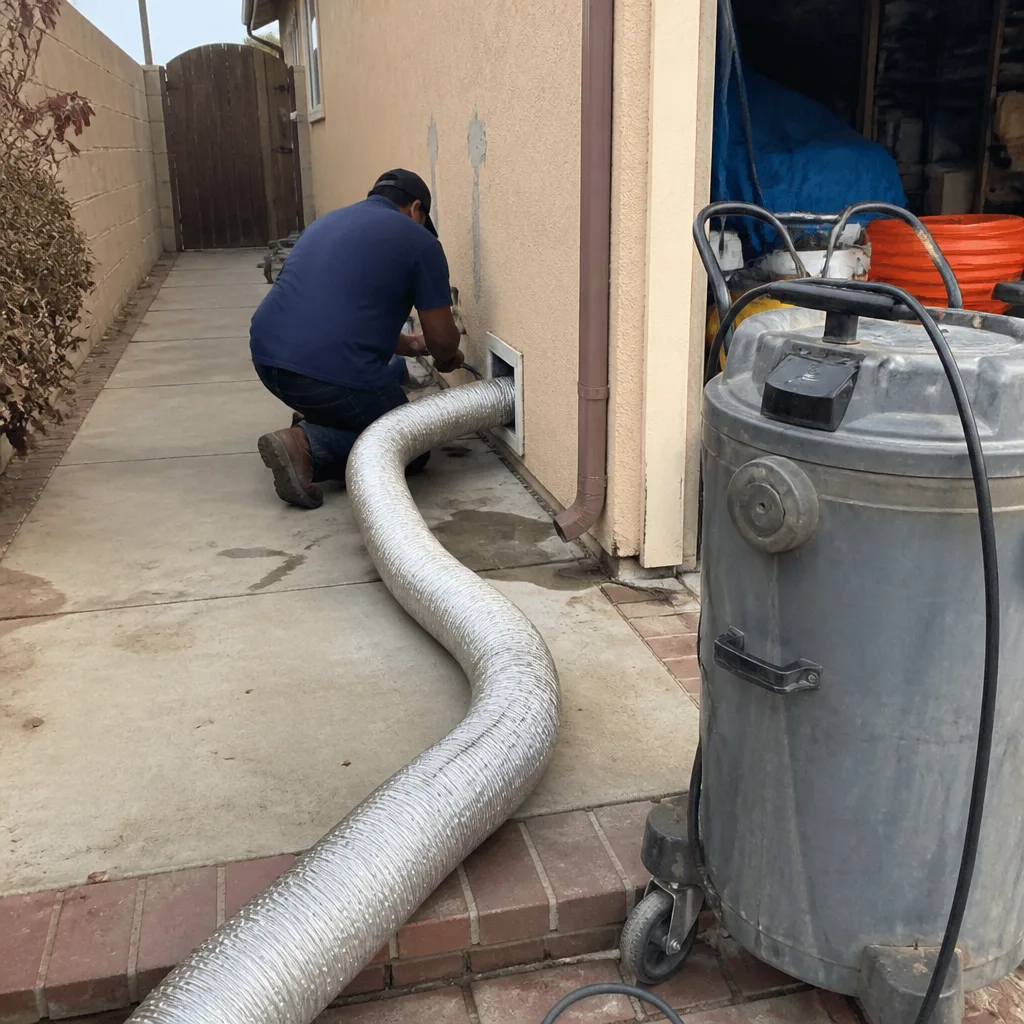
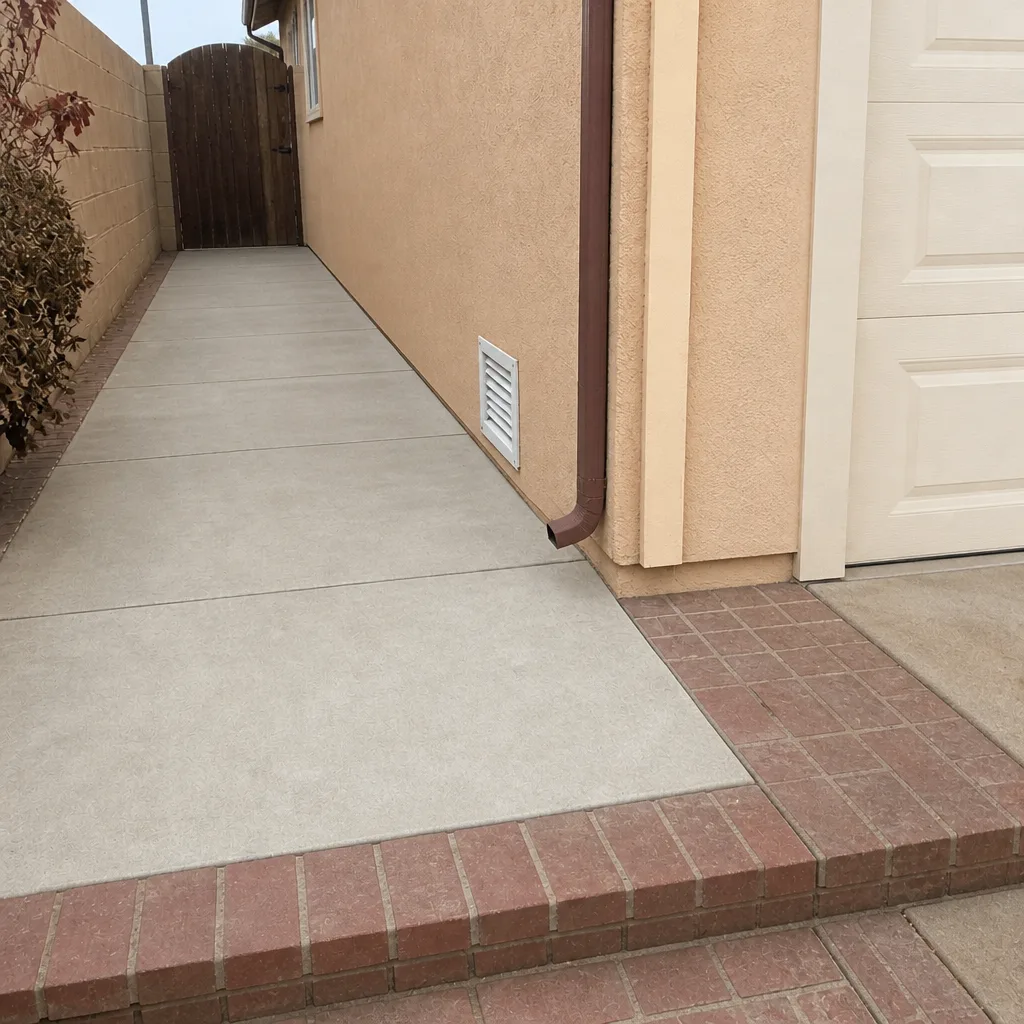
Your dryer vent belongs in the summer round too. Dryer vents clog faster in high-use months, and a clogged vent is a fire risk, not just an efficiency issue. We include dryer vent cleaning in the same full-pathway approach as duct cleaning, and it’s the one service most pure air-duct competitors skip entirely. If you’re already scheduling a summer coil and drain pan check, adding the dryer vent is the logical companion.
How to Build a Property-Specific Seasonal Log
A generic annual cleaning calendar won’t match most Buena Park homes, because the variables that drive duct loading are specific to the property. Duct material, HVAC age, and proximity to major arterials each shift the timing and frequency of what your system actually needs. Building a simple seasonal log for your own home is the most reliable way to stop guessing and start responding to your system’s actual behavior.
Start with three property characteristics:
- Duct material type: Sheet metal, flex duct, or a mix. Flex duct needs more attention to moisture and corrugation accumulation; sheet metal is more resistant to internal moisture but can reveal particulate loading more clearly at inspection points.
- HVAC system age and condition: Older air handlers with worn blower wheels and coils near the end of their service life load faster and benefit from more frequent inspection.
- Proximity to Beach Blvd and La Palma Ave: Homes in the traffic corridor have higher baseline ambient particulate at the return grille, so their filters and duct linings load faster across every season.
Then build the log itself around four entries per year, one per season, recording:
- Date of inspection or cleaning
- Filter condition and replacement date
- Visible accumulation at inspection points (return grille, supply runs, air handler)
- Any repair, sealing, or component work performed
The value of a log is that it turns a subjective impression (“does it feel dusty in here?”) into a trend you can actually read. If your filter replacement dates start compressing in October and November, you’re seeing the Santa Ana effect on your specific home. If spring entries start showing moisture notes in flex duct runs, you know the marine layer is getting in and the sealing need is real. Five minutes of record-keeping per season gives you a basis for the next decision, whether that’s scheduling a cleaning or holding off.
If you want a professional baseline to start from, an initial full inspection and cleaning gives you a known condition to log against. From there, the log tells you what your home needs. For readers in nearby communities, the same approach works city by city; our seasonal guide for Buena Park Air Duct Cleaning Pros describes the local approach we bring to each inspection. Our technicians have up to 15 years of experience reading these seasonal patterns in Southern California homes.
Signs Your Duct System Is Overdue, Season by Season
The most reliable way to know your duct system needs attention is to watch for the season-specific signals. Generic checklists that cover all twelve months produce a vague sense that something might be wrong. Season-anchored signals tell you what to look for right now, in the window you’re in.
Fall signals (Santa Ana season)
- Filter visibly darkening faster than in earlier months
- Fine dust settling on surfaces near return grilles
- Grilles near exterior walls showing ash or fine particulate intrusion
Winter signals (heating activation)
- Faintly dusty or musty odor when heat first turns on
- Persistent odor at grilles that doesn’t clear after several days
- Visible dust in supply runs feeding rooms that stayed closed through summer
Spring signals (marine layer humidity)
- Earthy or musty odor at supply grilles
- Condensation on duct runs in unconditioned spaces
- Damp air at supply registers that doesn’t match the room’s feel
Summer signals (peak cooling)
- Longer cooling runtimes than previous summers
- Water in or near the drain pan, or standing condensate
- Uneven cooling between rooms, especially in the Beach Blvd and La Palma Ave corridor
If two or more signals line up in the same season, the system is telling you it’s overdue. A single signal is worth noting in your seasonal log and watching. Two or more warrants an inspection.
Common Mistakes to Avoid
- Cleaning on a fixed annual date instead of the fall window. A July cleaning leaves the system fully exposed to Santa Ana loading in October through December. Time the work to the highest-risk period, not to a convenient month.
- Assuming mild winters mean duct systems don’t need winter attention. The first-heat smell in a Buena Park home is accumulated summer and fall particulate circulating through the house. It’s a signal, not a minor annoyance.
- Ignoring flex duct during the humid spring. Corrugated flex duct holds moisture in low points far longer than smooth metal. A spring inspection that skips flex duct runs misses the most likely place for moisture problems to develop.
- Skipping the drain pan during summer. The drain pan doesn’t get checked until water shows up on a ceiling or floor, and by then the damage is done. Add it to the summer inspection.
- Treating a duct cleaning as a fix for a duct problem. Cleaning removes material; it doesn’t repair gaps or failed joints that let unfiltered air into the system. If a cleaning turns up a separation, it needs to be sealed, not just cleaned around.
- Skipping the dryer vent. Homeowners often think of it as separate from indoor air quality, but a clogged dryer vent is a fire risk, and the summer high-use months are when it clogs fastest. Add it to the same visit as the summer inspection.
- Choosing a cleaner based on price alone. Consumer-grade vacuums and shop-vacs can redistribute particulate rather than remove it. Ask what equipment the technician uses; Rotobrush and Nikro systems, with containment protocols, are the standard for a reason.
When to Call a Professional
Some seasonal maintenance is a homeowner’s job: checking and replacing filters, recording a first-heat smell in a log, watching for moisture notes. The work that needs a professional is the work that requires inspection equipment, containment, or repair capability. Call a professional if you’ve seen the same seasonal signal repeat across two consecutive cycles, if an inspection turns up moisture or odor at flex duct runs in any season, if a first-heat smell persists for more than a few days in winter, or if a summer drain pan check turns up standing water. Also call if you’ve moved into a Buena Park home recently and don’t know the duct history; a baseline inspection and cleaning lets you start the log from a known condition. Buena Park Air Duct Cleaning Pros offers free estimates in Buena Park – call (855) 658-5164. We answer 24/7. Fast dispatch from 7am to 7pm, Sunday through Friday.
Frequently Asked Questions
For most Buena Park homes, once a year tied to the fall Santa Ana window is a reasonable baseline, with a spring moisture check and a summer drain pan inspection on top. Homes in the Beach Blvd and La Palma Ave traffic corridor load faster and may need closer to two cleaning cycles per year in high-wind seasons. The right frequency depends on your duct material, system age, and seasonal log trends rather than a fixed number.
Fall is when Santa Ana winds push dry, particulate-heavy air into the region, and your duct system is the main pathway for it to enter your home. Filter loading spikes and duct lining accumulation is heaviest during this window. Cleaning immediately after a wind event, rather than before, catches the bulk of the accumulation while it’s still in the early settling phase.
It’s accumulated summer dust and fall particulate circulating through the system on the first heating run. The smell usually fades within a few days as the material works through. If it persists, or comes back each time the heat activates, that’s a sign to schedule a cleaning and inspection rather than continue running the system.
Yes, it’s plausible under the right conditions. Flex duct is corrugated, which means condensate collects in low points. Combined with accumulated dust as a food source and rising marine layer humidity, those conditions support mold growth. A spring inspection and, if needed, cleaning plus duct sealing addresses the underlying moisture pathway.
Coil condition, drain pan standing water, drain line flow, condensate routing, and any signs of moisture in the air handler cabinet. Peak summer runtime exposes slow-draining pans and partially clogged coils that look fine in milder months. Catching a drain issue at inspection prevents the water damage that follows a failed pan.
It reduces the accumulated particulate in the system, which matters for homes with elevated baseline ambient dust. It doesn’t eliminate exterior particulate, and it won’t replace filtration. Combining cleaning with a filter upgrade, such as a Honeywell or Aprilaire component installed on the same visit, gives you a more durable solution for a higher-exposure home. Call (855) 658-5164 for an exact quote – estimates are free.
The Bottom Line
Buena Park’s mild climate hides four distinct IAQ stress windows that most homeowners never plan for. Fall’s Santa Ana wind season is the highest-priority cleaning window of the year. Winter’s first-heat activation reveals what accumulated through summer and fall. Spring’s marine layer humidity puts flex duct at risk of moisture and mold conditions. Summer’s peak cooling load is when coils and drain pans deserve inspection. A seasonal log keyed to duct material, HVAC age, and proximity to Beach Blvd and La Palma Ave will tell you what your specific home needs better than any fixed calendar. Time your maintenance to the windows that matter, and your duct system stays clean, sealed, and supported year-round.
If you want a professional baseline to start your seasonal log from, call Buena Park Air Duct Cleaning Pros at (855) 658-5164 for a free estimate. We answer 24/7. Fast dispatch from 7am to 7pm, Sunday through Friday. Our technicians have up to 15 years of experience reading Southern California duct systems and applying professional-grade Rotobrush and Nikro cleaning alongside Abatement Technologies containment and Guardsman treatment protocols. One flat price per system, agreed before work starts. Before-and-after photos of your own ducts, so you can see what we removed.
Written by the team at Buena Park Air Duct Cleaning Pros.
See the difference
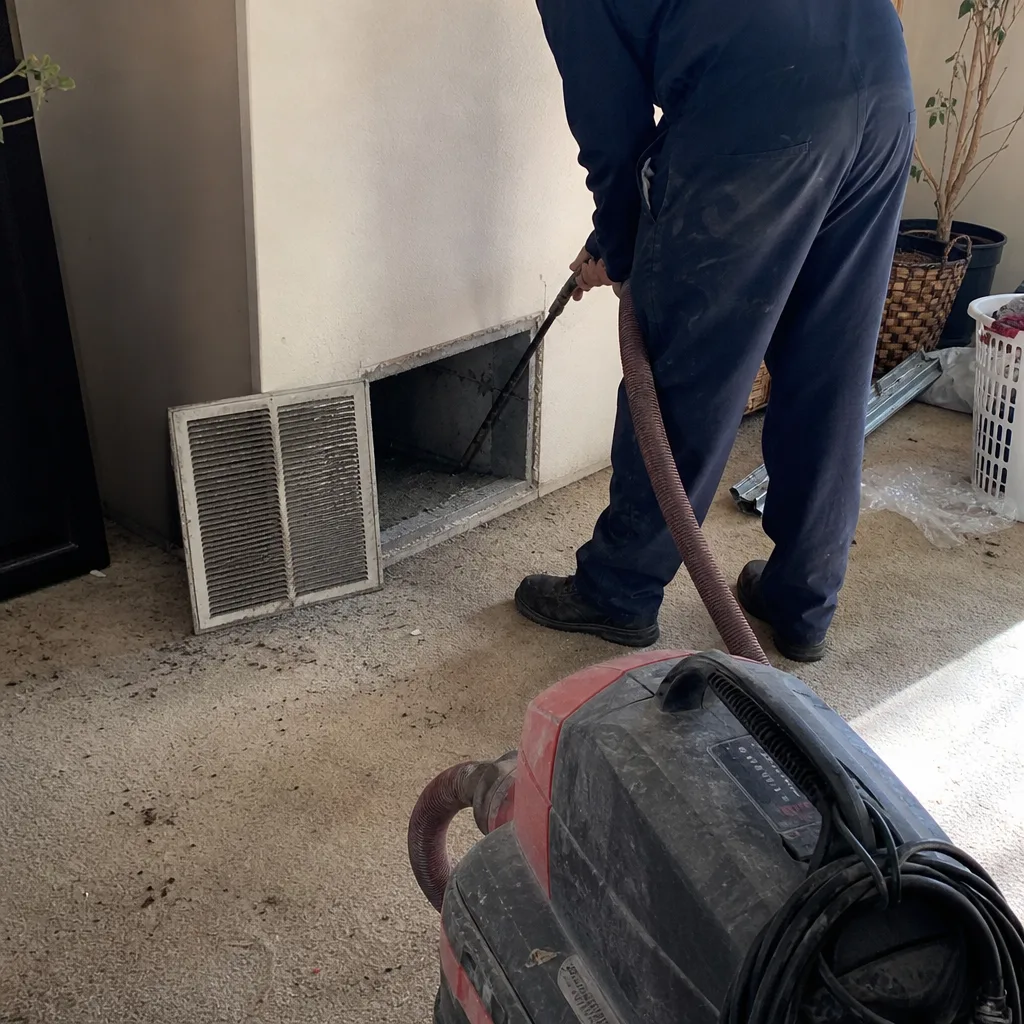 Before
 After
 Before
 After
 Before
 After